
 Chinese
 Russian
 Arabic
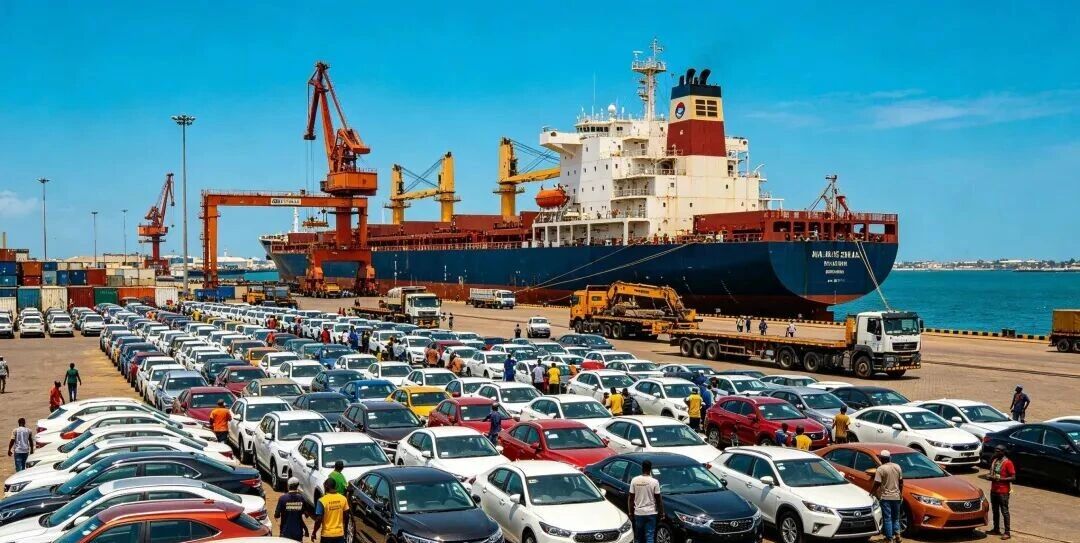
Implementation of heavy policies! The West African automobile market has ushered in a historic turning point-the federal government of Nigeria officially issued fiscal policy measures for 2026, which will significantly reduce the import tariff on passenger cars (including four-wheel drive vehicles and station cars) from 70% to 40%, a drop of more than 30%., pressing the "acceleration button" for this core African automobile market and opening up new growth space for China cars to sail to West Africa.
1. Policy core: 70%→40%, a significant reduction in tariffs releases market vitality
As Africa's most populous country (with a total population of more than 220 million) and the core of West Africa's economy, Nigeria has long been Africa's largest automobile consumer market. The annual scale of imported vehicles ranks first in Africa. Among them, the import volume of used cars has stabilized at 500,000 all year round. More than vehicles, the sales ratio of new and used cars is as high as 1:4. 95% of vehicles rely on imports. The market gap is extremely huge-currently, Nigeria only owns 1 car for every 22 people, and only 5 cars are owned by 1,000 people, far lower than the global average, consumption potential needs to be released urgently.
This "relaxation" of tariffs is not an isolated measure, but an important part of Nigeria's wide-ranging fiscal reform in 2026. According to an official announcement from the Ministry of Finance of Nigeria on April 1, this tariff adjustment covers 127 commodities. The core goals are to stimulate growth in key industries, optimize the trade environment, and replace the old policies implemented in 2023. Among them, the tariff on passenger cars has been reduced from 70% set in 2015 to 40%, becoming a key area of this adjustment, directly reducing importers 'costs and giving end consumers the hope of purchasing imported vehicles at more affordable prices.

2. Details of the New Deal: Tariff reduction ≠ comprehensive liberalization, two major thresholds need to be noted
It is worth noting that this tariff reduction is not a "comprehensive liberalization" but is accompanied by the dual requirements of "localization binding + compliance certification upgrade" and constitutes a new access rule for the Nigeria automobile market. According to the New Deal, if foreign-invested automobile companies want to enjoy tariff dividends, they must cooperate with local authorized assemblers before importing and selling them. They must establish a local assembly plant within 3 years after operation. By 2030, 30% of parts and components will be purchased locally. If they fail to meet the standards, they will face penalties such as reduced import quotas and increased taxes and fees; At the same time, all imported vehicles (including new and used vehicles) need to complete pre-shipment certification in advance. New vehicles need to provide additional documents such as SONCAP certification and "Vehicle Free Crime Certificate". Missing documents will directly lead to failure of customs clearance.
3. Opportunities for China automobile companies: The cost-effective advantage is prominent, and localization is the key
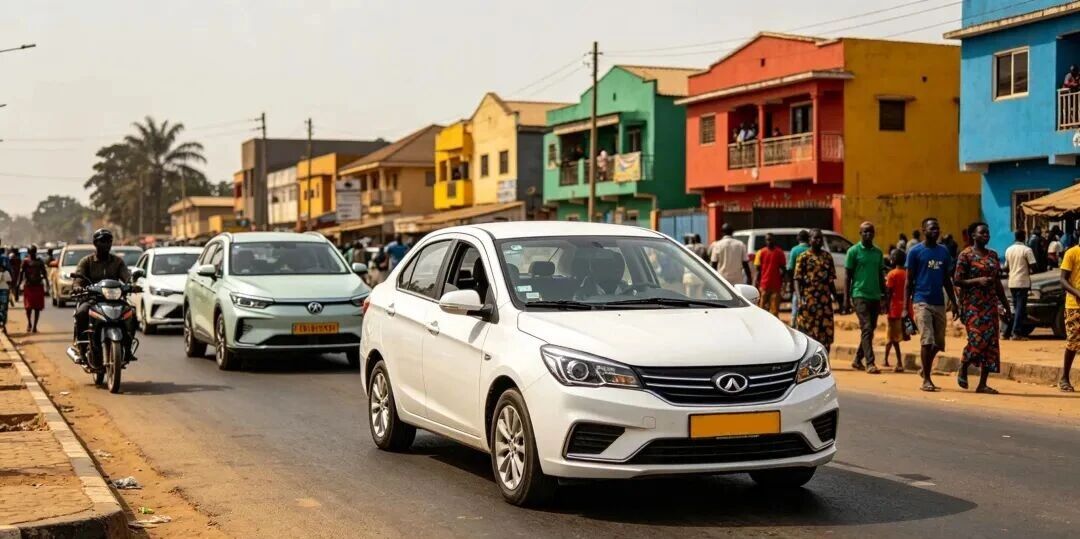
For China auto companies, this is undoubtedly an opportunity to go to sea that cannot be missed. Data shows that China's automobile exports to Nigeria will increase by 42% year-on-year in 2025. Chery, BYD, Jianghuai and other brands have taken the lead in deploying. Among them, Chery plans to build a CKD assembly plant in Lagos in the first quarter of 2026, becoming a benchmark for localized layout. The core advantage of China car companies is that after assembling economical fuel vehicles and new energy vehicles through KD spare parts, the price can be reduced to 60%-70% of that of imported vehicles, which perfectly fits the mainstream purchasing power of Nigeria; At the same time, there is strong local demand for China's commercial vehicles (heavy trucks, pickup trucks, and light passengers), accounting for 60% of total exports to Nigeria, matching the rigid needs of Nigeria's infrastructure, logistics, and mining, while the growth rate of new energy vehicle exports is more than 50%. Brands such as BYD have deployed charging networks through local partners to seize the opportunity of electrification.
4. Behind the opportunities: Challenges coexist and these problems need to be solved
But behind the opportunities, China car companies also need to deal with multiple challenges. At present, the Nigeria automobile market is still dominated by Japanese cars, accounting for more than 70%, and China brands account for less than 10%. Brand recognition needs to be improved; at the same time, most China automobile companies are still stuck in the stage of "spare parts export + simple assembly" and lack in-depth cooperation in the local supply chain. The local procurement requirement for 30% of parts and components has become a rigid threshold; In addition, problems such as complex customs clearance and certification processes, uneven after-sales network coverage (only concentrated in core cities such as Lagos and Abuja), and fluctuations in the Naira exchange rate may also affect the efficiency of sea layout.
5. Industry Outlook: The West African market is about to be "loosened", and China car companies are expected to break through
Industry analysts pointed out that the "loosening" of tariffs in Nigeria is essentially promoting the transformation of the automobile market from "dominated by low-cost old used cars" to "upgraded new compliant cars and cost-effective models." For China car companies that want to dig into the West African market, relying solely on low-cost strategies is unsustainable. Only by complying with policy guidance and deepening localized layout-giving priority to SKD/CKD assembly model, and cooperating with local parts can we transform cost-effective advantages into market competitiveness by cooperating with companies to increase procurement ratios, complete compliance certification ahead of schedule, and improve after-sales network sinking.
In the long run, Nigeria is the "wind vane" of the West African automobile market, and its tariff adjustment may drive neighboring countries such as Ghana and Cote d'Ivoire to follow suit, forming an overall "loosening" trend of the West African automobile market. With the gradual release of the consumption potential of a population of 220 million, coupled with the support of the advantages of China's entire automobile industry chain, China automobile companies are expected to break through the monopoly of Japanese automobiles in this blue ocean market and achieve the leap from "product export" to "ecological sea sailing."
Source: Leading the way to the sea by Gaoshen's car
[Disclaimer] The content of this website (including pictures and texts) originates from the Internet, and the copyright belongs to the original author. Respect the rights and interests of originality, and select content is only used for information sharing. If copyright disputes are involved, please contact us to handle them in a timely manner

 Online Evaluation
 I am Buyer
 Export Services
 subsites


 023-62852688
  No. 1-1, No. 2899, Longzhou Avenue, Banan District, Chongqing City
 Headquarters


