
 Chinese
 Russian
 Arabic
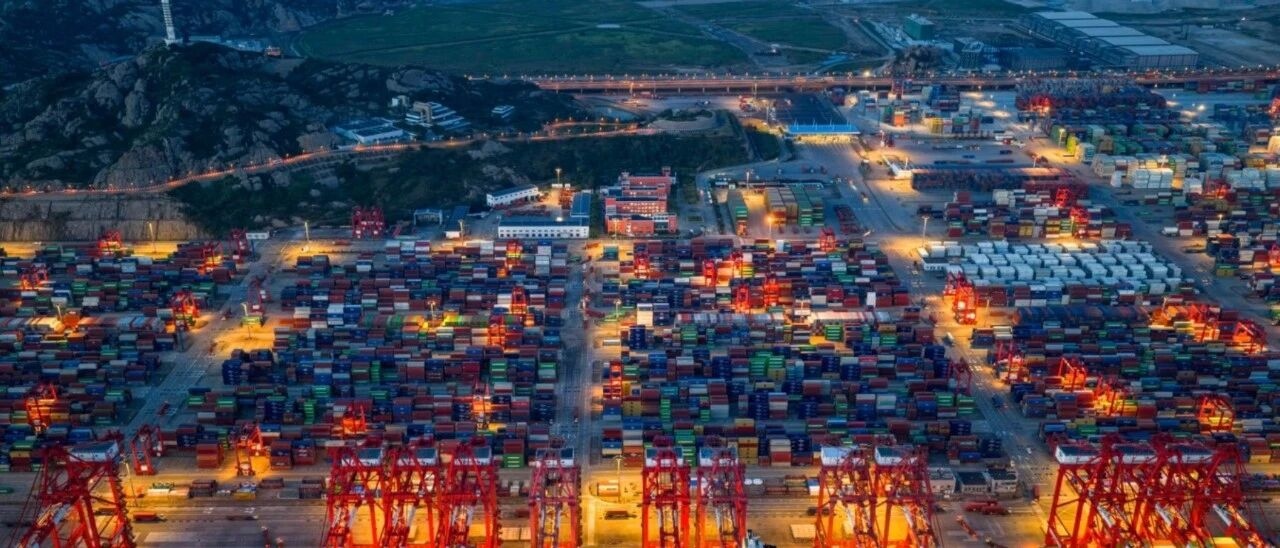
The automobile market in West Africa's largest economy is finally waiting for policy relaxation! When the latest fiscal and tax reform plan is implemented in 2026, the news that Nigeria has lowered import tariffs on complete vehicles has instantly ignited the African automobile trade circle. For China automobile companies and import traders, is this really good news that you can laugh while lying down? Today, let's take a look at the opportunities and doorways behind the New Deal.
What has the New Deal changed?


The core of Nigeria's new fiscal and taxation policy this time is to target the stubborn problem of excessively high vehicle tax rates:
The tariff rate is directly reduced: theimport tariff on the original vehicle remains at a maximum of 35%. Under the new policy, different displacement models are generally reduced by 5-10 percentage points, and the tariff on new energy vehicles has dropped by 15%;
The customs clearance process has been simplified:the previous additional surcharge for imported passenger cars has been eliminated, the multi-department inspection process has been integrated, and the customs clearance time has been shortened from an average of 14 days to 7 days;
Tilt new energy vehicles:Further reduce or exempt value-added tax on imports of pure electric vehicles and encourage zero-emission vehicles to enter the Nigeria market.
As the country with the largest population and largest economic aggregate in West Africa, Nigeria has always been the core market for African car consumption. However, high tariff policies have previously blocked many imported cars-a 100,000-yuan family car made in China, plus 35% tariffs, value-added tax and customs clearance fees, the price directly doubles after arrival, and ordinary consumers cannot afford it.
The New Deal is good, who will it benefit?
China car companies: The key to opening the West African market has finally been obtained
Nigeria has a very low car ownership, with less than 10 cars per 100 people per capita, resulting in a huge market gap. Previously, due to high tariff restrictions, many China car companies could only enter by assembling CKD parts. Not only was the cost of building factories high, but they also had to deal with the problem of insufficient localized supply chains. After this tariff reduction, the cost of exporting complete vehicles directly to Nigeria has dropped significantly. Affordable passenger cars and commercial vehicles of China brands can be sold directly, and the cost-effective advantage is immediately apparent.
Local dealers: With more car sources, profit margins will also increase
Previously, the imported car market in Nigeria was monopolized by a small number of second-hand luxury cars and local assembly cars. Dealers had high cost to get cars and few models to choose from. After the implementation of the new policy, small and medium-sized dealers can also buy new imported cars in batches. Ordinary consumers can buy new cars at a lower price, and the market circulation speed will definitely accelerate.
New energy track: A new blue ocean has emerged
The new policy's tariff tilt on new energy vehicles is very obvious. China's new energy brands can just take this opportunity to seize the West African market. Nigeria is rich in oil resources, but in recent years, there has been a large power gap, and the policy dividends for promoting new energy vehicles are gradually released. This tariff reduction is equivalent to giving a green light to new energy imports.
Behind the opportunities, we still need to pay attention to these pits
The policy is a good policy, but the old problems in the Nigeria market have not yet been completely solved:
The problem of foreign exchange shortage still exists, and the local Naira exchange rate fluctuates greatly, so we still need to be vigilant about the risk of payment back;
Infrastructure is imperfect, gas stations and charging piles are not covered enough, and the promotion of new energy vehicles will take time to cultivate the market;
The effect of the implementation of the policy remains to be observed. Corruption problems in customs clearance still exist in some ports in Nigeria. Whether the actual implementation can be followed by Shangguan Xuan remains to be observed.
Looking at the entire African market, Kenya in East Africa and Nigeria in West Africa have gradually lowered import tariffs on complete vehicles in recent years, indicating that the African automobile consumer market is transforming from second-hand old cars to affordable new cars. For China's automobile industry, which already has overcapacity and urgently needs to expand overseas markets, this is undoubtedly a very clear signal.
If you are planning African car trade or planning to sail to Nigeria, this new policy is indeed a window that cannot be missed-after all, West Africa's largest car market has finally opened its arms to imported cars.
Source: Xinglian Automobile Sea Base
[Disclaimer] The content of this website (including pictures and texts) originates from the Internet, and the copyright belongs to the original author. Respect the rights and interests of originality, and select content is only used for information sharing. If copyright disputes are involved, please contact us to handle them in a timely manner

 Online Evaluation
 I am Buyer
 Export Services
 subsites


 023-62852688
  No. 1-1, No. 2899, Longzhou Avenue, Banan District, Chongqing City
 Headquarters


