
 Chinese
 Russian
 Arabic
The threshold for importing cars in Ukraine has been significantly increased in 2026. The past operation of "buying a car, shipping and customs clearance" can be implemented smoothly, but this year is no longer so simple...
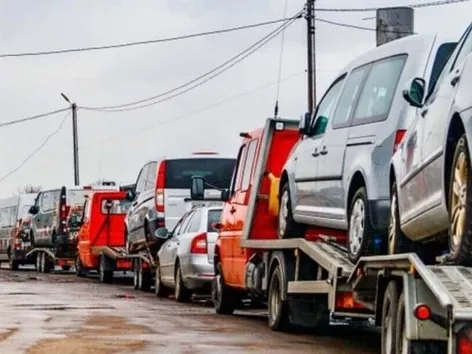
According to reports on the Ukraine automobile import market, the threshold for importing automobiles in Ukraine has been significantly increased in 2026. The past operation of "buying a car, shipping and customs clearance" can be implemented smoothly is no longer so simple this year.With the adjustment of tax system, stricter environmental standards and the elimination of tax incentives for electric vehicles, the cost and logic of vehicle imports in Ukraine have changed. For China's second-hand car exporters, this means that Ukraine is no longer a market that can be easily entered by relying on low-cost car sources. Almost every item of model, source, documentation and emission standards must be clearly calculated.
Reports show that Ukraine has successively updated its automobile import rules since 2025 and gradually moved closer to EU standards. By 2026, these changes will basically be fully effective. The core changes at present are mainly concentrated in several aspects: First, environmental protection requirements have been further tightened, and imported vehicles must at least meet the Euro-6 standard; Second, some tax incentives have been cancelled, especially the tax exemption dividends enjoyed by electric vehicles in the past no longer exist; Third, the original import tariff, consumption tax and value-added tax frameworks are still in place, but the review is stricter; Fourth, restrictions on vehicles from specific countries have been increased, especially Russian-related vehicles; Fifth, customs verification of vehicle documents, origin and true value has been more detailed.
From an actual operation point of view, whether Ukraine can import a car now depends on two things first: emission standards and vehicle sources. According to the report, the Euro-6 has almost become a hard threshold. Many models that are more than 10 years old or even 12 years old will be blocked out because of insufficient emission levels, even if the car condition is in good condition and the price is cheap.For exporters, this is very critical, because Ukraine customs not only looks at "whether the car can be driven," but also looks at "the car symbol does not meet the standards."
In terms of origin, vehicles from the European Union are relatively easier to clear customs.The reason is simple: it is easier for this type of vehicle to meet Uzbekistan's requirements in terms of environmental protection, technical documents and certificate of origin, and the customs also less questions its documents. On the contrary, customs will now focus on checking vehicle history, true prices and declaration parameters to prevent underreporting and false declarations. This also means that the past idea of "passing documents first and making up prices later" has become increasingly difficult in Ukraine.
In terms of costs, the tax structure of imported cars from Ukraine is still relatively clear, but the total cost is not low. The basic framework listed in the report is: import tariffs are usually 10% of the value of the vehicle; consumption tax is calculated based on displacement, age of the vehicle and fuel type. The older the vehicle, the higher the tax; and the value-added tax is unified at 20%, and it is calculated based on the sum of "car price + tariff + consumption tax".In other words, the accounts are not calculated separately, but are stacked layer upon layer. It is generally believed in the industry that the cost of vehicles after customs clearance is usually 30% to 50% higher than the original purchase price, and some models are even higher.For diesel vehicles, the consumption tax is generally higher than that of gasoline vehicles, and large-displacement models are more likely to be "eaten" by taxes and fees.
The situation of electric vehicles is particularly noteworthy. In the past, electric vehicles in Ukraine were imported almost duty-free, with obvious advantages; but by 2026, this advantage has disappeared, and electric vehicles will also have to pay a 20% value-added tax according to the standard.The report pointed out that this directly raised the terminal cost of electric vehicles, especially some already low-priced electric vehicles, the original duty-free price advantage was significantly weakened. In other words, the account that "trams are more cost-effective than oil trucks" in the Ukraine market will now be recalculated. Although electric vehicles still have advantages in terms of use and maintenance costs, the tax burden on the import side is no longer so friendly.
In terms of documents, Ukraine customs now also has very detailed requirements. Imported vehicles generally need to prepare sales contracts or invoices, vehicle registration certificates, payment certificates, customs declarations, and certificates of compliance with environmental and technical requirements.The report specifically reminds that once the price, mileage and vehicle parameters are inconsistent with the declaration information, it is most likely to lead to re-inspection and delay. Many problems are not due to taxes and fees, but to incomplete document chains or inconsistent data. For exporters, this is often more fatal than "whether the tax rate is high or not".
The report also mentioned that after buying a car into Ukraine, it is best to consider vehicle insurance arrangements as early as possible, such as purchasing a Mini-CASCO that covers major risks, to avoid additional expenses caused by accidents, scratches or other accidents. Although this part is more biased towards end users, it also shows that the Ukraine market is now very sensitive to the "comprehensive cost after purchasing a car," not just how much money is spent on imports.
written in the end
To put it bluntly, Ukraine's new regulations on imported cars in 2026 raise the threshold of the market: old cars are not easy to enter, trams are no longer cheap, and cars with unclear sources are more difficult to pass. For China second-hand car exporters, the next step in Ukraine can no longer rely on the "low-cost vehicle source + rapid shipment" approach, but must first make a solid model of vehicle emissions, origin, documents and tax fees. Whoever can do compliance thoroughly will have the opportunity to continue to do so in this market.
Source: Guangdong Good Car
[Disclaimer] The content of this website (including pictures and texts) originates from the Internet, and the copyright belongs to the original author. Respect the rights and interests of originality, and select content is only used for information sharing. If copyright disputes are involved, please contact us to handle them promptly

 Online Evaluation
 I am Buyer
 Export Services
 subsites


 023-62852688
  No. 1-1, No. 2899, Longzhou Avenue, Banan District, Chongqing City
 Headquarters


