
 Chinese
 Russian
 Arabic
In order to maintain foreign exchange reserves and relieve pressure on external departments, Sri Lanka will temporarily impose a 50% customs import tax surcharge on various types of imported motor vehicles starting today, with an implementation period of three months...
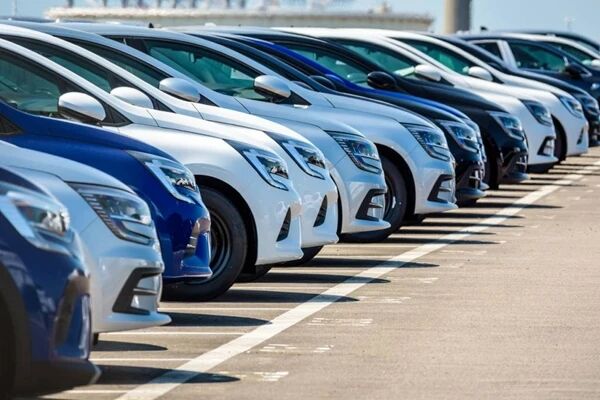
According to the Ministry of Finance of Sri Lanka, in order to maintain foreign exchange reserves and relieve pressure on external departments, Sri Lanka will temporarily impose a 50% customs import tax surcharge on various types of imported motor vehicles starting today, with an implementation period of three months. This measure covers a wide range of areas, including buses, buses, hybridvehicles, electric vehicles, ambulances, RVs and other special vehicles. It is uniformly applicable according to different displacements and vehicle ages. It also applies to general tax rates and preferential tax rates. Two types of import situations.
It is worth noting that Sri Lanka has not suddenly returned to full tightening. Last year, after the 2022 economic crisis, the local government gradually relaxed its almost complete ban on automobile imports; but this new surcharge shows that the government is still controlling demand by raising import thresholds even though the pressure on the balance of payments and foreign exchange has not yet been completely alleviated. The Ministry of Finance made it clear thatletters of credit (LC) issued on or before May 15 will not be affected by this surcharge, which also means that in the next period, whoever can catch up with the old document window will be able to avoid new costs.
The logic given by Sri Lanka officials is straightforward: under the IMF-supported economic recovery framework, the balance between foreign exchange and the external sector must be stabilized first before talking about the recovery of the auto market. In other words, it is not that vehicle imports cannot be done, but that must be done at higher costs. For China's second-hand car export practitioners, the most practical impact of such policies is that CIF prices and terminal selling prices will be rapidly increased, and buyers will be more cautious in placing orders.
The Sri Lanka Automobile Importers Association has issued a warning that this surcharge may increase car pricesby at least another 1.5 million Sri Lanka rupees, which will further reduce consumer affordability and slow down the recovery of the automobile and transportation-related industries. Former Finance Minister Ali Sabri publicly supported the government's decision, arguing that it was a "prudent" approach to protect an already fragile economy in the context of global instability.
written in the end
The signal of this policy is clear: the Sri Lanka market has not been closed, but it has entered a stage of "high costs, strong constraints, and checking the document window." Especially if the customer is still using the previous quotation logic, it is easy for profits to be swallowed and orders to be temporarily put on hold after the tax changes. If there is a subsequent source of vehicles destined for Sri Lanka, the most important thing is not to discuss the price of the vehicle first, but to first check the time of the letter of credit, the tax caliber and the final customs clearance cost. Otherwise, it seems that a deal can be concluded and may not be able to make money after landing.
Source: Guangdong Good Car
[Disclaimer] The content of this website (including pictures and texts) originates from the Internet, and the copyright belongs to the original author. Respect the rights and interests of originality, and select content is only used for information sharing. If copyright disputes are involved, please contact us to handle them promptly

 Online Evaluation
 I am Buyer
 Export Services
 subsites


 023-62852688
  No. 1-1, No. 2899, Longzhou Avenue, Banan District, Chongqing City
 Headquarters


