
 Chinese
 Russian
 Arabic
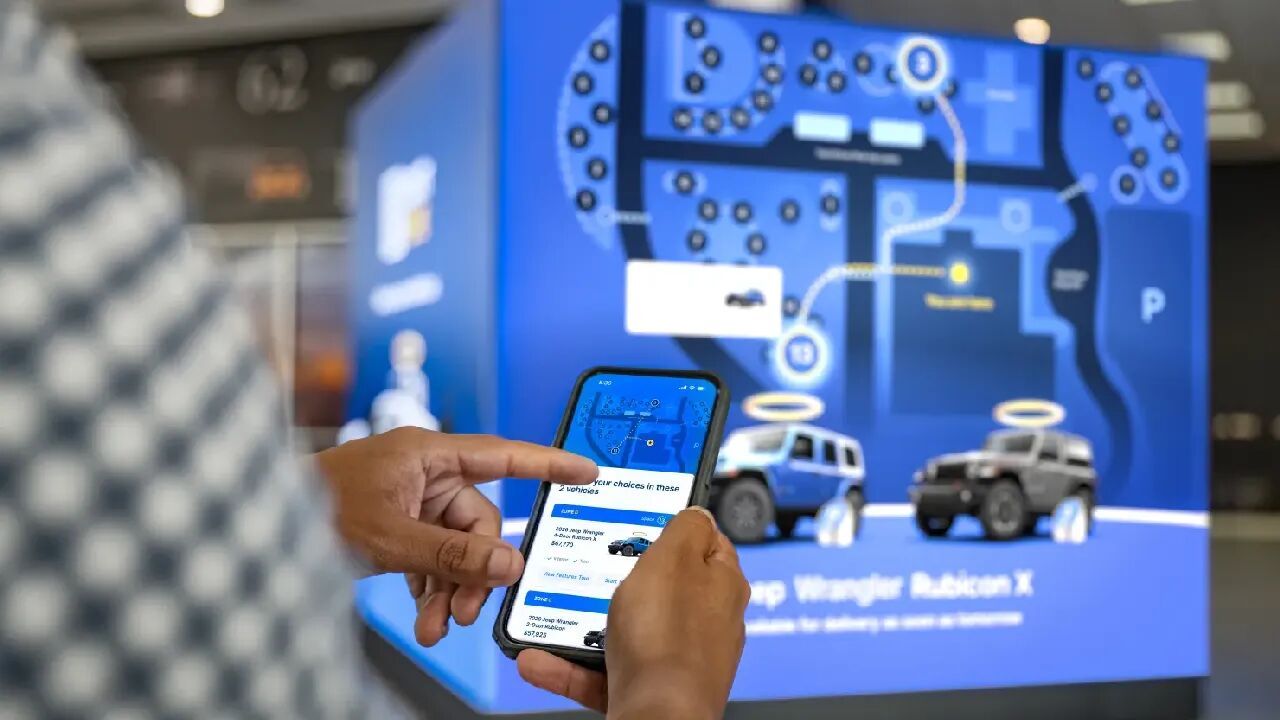
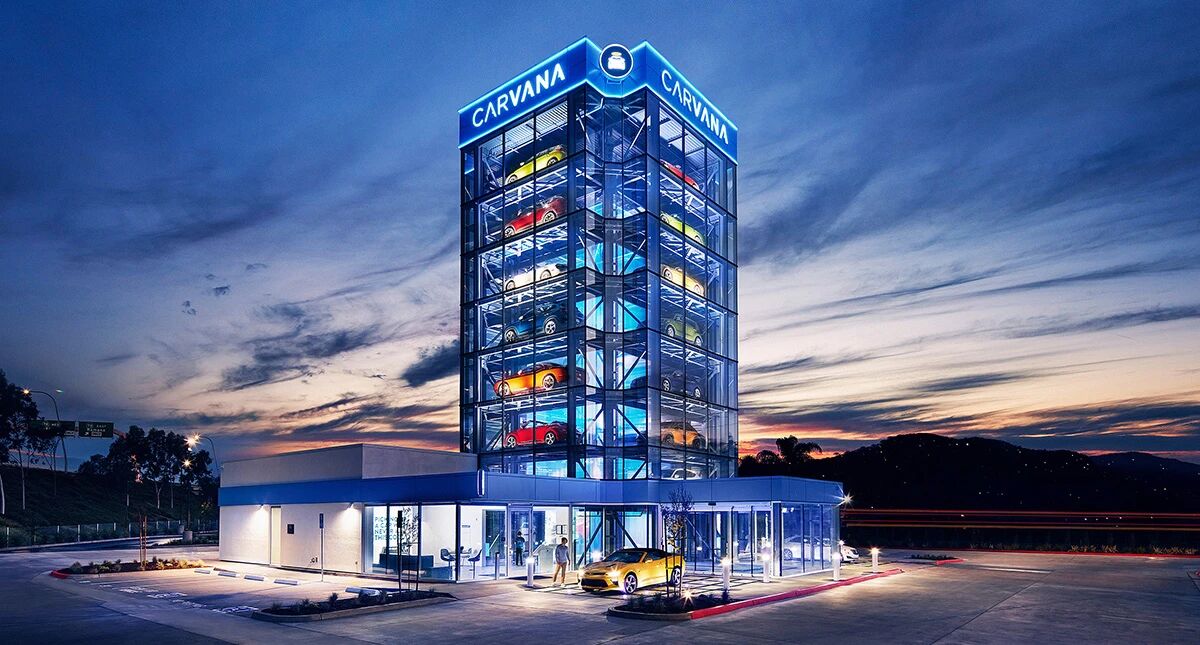
Recently, Carvana, an American auto retailer that is deeply involved in online used car tracks and has made its mark with car vending machines, has acquired seven Stellantis brand franchises in the past 18 months. The news that it has officially entered the field of new car sales has once again attracted attention from overseas media.
Carvana abandoned the traditional 4S store sales system and renamed the store "Test Drive Experience Center". The exhibition venue was named "Experience Park". It implemented a national price. It only undertook the function of watching and testing cars offline, and all transactions were completed online and closed loop.
Carvana's entry into the new car authorized dealership business is one of the most disruptive events in the U.S. auto retail industry in decades."
According to data from NADA (National Automobile Dealers Association), there are 16990 licensed car dealers in the United States, and total industry sales exceeded US$1.3 trillion last year. The franchise system has always been cautious about change. However, in recent years, whether it is the impact of the epidemic or the large-scale development of listed dealer groups, the business models of American dealers have also been flexibly adjusted in order to survive.
In fact, Carvana's move is by no means a simple broadening of business boundaries, but a strategic complement to an integrated circulation system of "new car + used car + finance + national logistics".
Dismantling business logic: Why do you have to build a new car?
Carvana started relying on online second-hand car retail, standardized testing, 7-day car refunds without reason, national vehicle distribution, auto financial services, etc. to build barriers and gain a foothold on second-hand car tracks. However, industry growth bottlenecks have gradually emerged, and new cars have been laid out. It is an inevitable choice under multiple demands.
1. Make up for the closed loop of vehicle sources and replace the core of used cars with new cars
The United States is a mature automobile market, and replacement is the core supply channel for used cars. Traditional authorized 4S stores hold new car replacement resources. Independent used car platforms have long been able to purchase individual retail car sources in a scattered manner, and the stability of car sources is insufficient.
After Carvana acquired the authorized store of Stellantis, it has official new car sales qualifications. When customers come to the store to purchase new cars, they will simultaneously complete the evaluation of old car replacement and directly lock in the source of first-hand replacement vehicles; at the same time, they can enter the used car auction channel of exclusive dealers in the main engine factory to obtain quasi-new cars in batches., test drive cars, and rental retired cars can solve the pain point of fragmentation of used car sources.
Reported data shows that 75% of new car customers in Carvana stores were originally used car browsing users on the platform, and new and old customers diverted in both directions, forming an internal circulation of traffic.
2. Optimize the profit structure and maintain the core profit pillar of auto finance
The gross profit of Carvana's vehicle sales is not high, and the price difference between single vehicles is only a few hundred dollars; financial-related businesses contributed more than 60% of the gross profit in 2025. After excluding one-time tax gains and losses in the fourth quarter of 2025, nearly 95% of its adjusted operating income comes from car loan sales business.
Unlike domestic platforms that only provide financial diversion, Carvana has built a complete integrated closed loop of credit initiation, risk control and asset securitization, and financial business is the core engine of its profit. The new new car business can attract consumer groups with better qualifications and longer loan cycles, optimize the quality of financial assets, and reduce the overall bad debt rate.
The gross profit margin of the traditional used car business continues to be squeezed by peer CarMax. The new car business can receive quarterly rebates from the main engine factory and bulk purchase price spreads, forming a dual engine of "low-volatile new car revenue + highly elastic used car retail profit" to hedge against fluctuations in the residual value of used cars. Risk.
3. Reconstruct the form of offline stores and subvert the traditional distribution and sales system
Carvana completely reshaped store operating rules to solve the root cause of the problems of traditional car dealers 'sales promotion and lack of customer trust.
Personnel system innovation: For the newly opened Stellantis New Car Test Drive Experience Center in 2026, the traditional sales commission system has been eliminated. The store is only equipped with hourly service specialists with a salary range of US$17 -24 per hour. There is no performance evaluation. It is only responsible for answering questions and guiding online operations to eliminate forced sales and bundled consumption;
Adopt a one-price transparent system: unified landing prices across the platform, no hidden service fees or bargaining links, only real-car experience is provided offline, transactions, loans, and transfers are all completed online, and customers independently control the decision-making rhythm;
Adopt national shared inventory + cross-regional logistics: Relying on its own long-distance transportation fleet and opening up inventory in 7 stores, southern customers can remotely purchase existing vehicles from Arizona and Atlanta stores, breaking through the inventory limit of single store and greatly improving inventory turnover efficiency.
4. Lay out direct electric vehicle channels in advance to reserve long-term growth entrances
The essence of Carvana's acquisition of new car stores is a retail performance capability test. It is understood that Carvana has obtained warrants to buy shares in electric vehicle startup Slate Auto, which is preparing to launch a low-cost electric vehicle priced at approximately $25,000 and is scheduled to be delivered before the end of the year.
Similar to pure electric vehicle companies such as Tesla and Rivian, Slate said on its website that it will "not have traditional dealers" but will sell directly to customers. Although Slate Auto did not elaborate on how to solve logistics problems during customers 'car purchase, it does not rule out sales through Carvana physical stores in the future, which may help alleviate logistics problems.
Carvana hits two major pain points for domestic used cars
At present, the domestic automobile circulation industry is in a severe reshuffle cycle. New car dealers are losing money on a large scale, and the underlying contradictions of the scattered, chaotic and weak used car industry are prominent. Carvana has opened up a path for the integration of old and new vehicles, accurately hitting the existing shortcomings of the industry.
Pain point 1: The old and new car businesses are separated, and a large outflow of replacement vehicles
Among the more than 30,000 4S stores in China, the vast majority are small and medium-sized single-brand dealers. The price of the new car sector is seriously upside down. For single stores or small group stores, the used car business cannot be systematized, and almost all the used cars replaced are wholesale to retail car dealers.
Second-hand car chain platforms and hypermarkets cannot obtain stable replacement vehicle sources. They can only collect vehicles from multiple channels, and the vehicle sources are scattered.
Carvana relies on new car sales to directly lock in and replace existing stocks to form its own first-hand vehicle source supply. This is the closed-loop capability missing from domestic used car platforms.
Pain point 2: Financial maturity of used car
Although used car finance in China is developing rapidly and the financial penetration rate is close to 50%, used car finance has limited bank participation and complex loan approval. Many consumers still need to buy a car in full.
Carvana's profit structure is diverse: new car rebates, used car retail, financial business, and extended warranty services are evenly distributed, and financial business contributes the vast majority of profits.
It is worth mentioning here that the financial penetration rate of used cars in the United States is about 36%, which is even lower than that of China in terms of numbers, but the financial ecosystem is very mature. According to industry estimates, the financial penetration rate of Carvana's own business can reach 70%, which is much higher than the average level of the U.S. used car industry.
This is because Carvana's car purchase process uses online transactions, real-time credit granting and loan pre-approval are deeply embedded in the car purchase process, and a large amount of Carvana's profits come from loan sales income rather than selling the car itself. Carvana's financial report clearly lists sales financing receivables as one of its core sources of income.
This is also where China can learn from: its core is to turn finance into an important part of customer acquisition, pricing and profits, rather than an additional service after selling cars. (Written by Yu Jiang)
Source: SG Auto Automobile Management and Services
[Disclaimer] The content of this website (including pictures and texts) originates from the Internet, and the copyright belongs to the original author. Respect the rights and interests of originality, and select content is only used for information sharing. If copyright disputes are involved, please contact us to handle them in a timely manner

 Online Evaluation
 I am Buyer
 Export Services
 subsites


 023-62852688
  No. 1-1, No. 2899, Longzhou Avenue, Banan District, Chongqing City
 Headquarters


