
 Chinese
 Russian
 Arabic
With President's Order 104 officially lifting the restriction that "individuals and companies can only apply for compliance certification for one imported car for their own use every year", the local auto market is ushering in the most important opening measure in recent years...
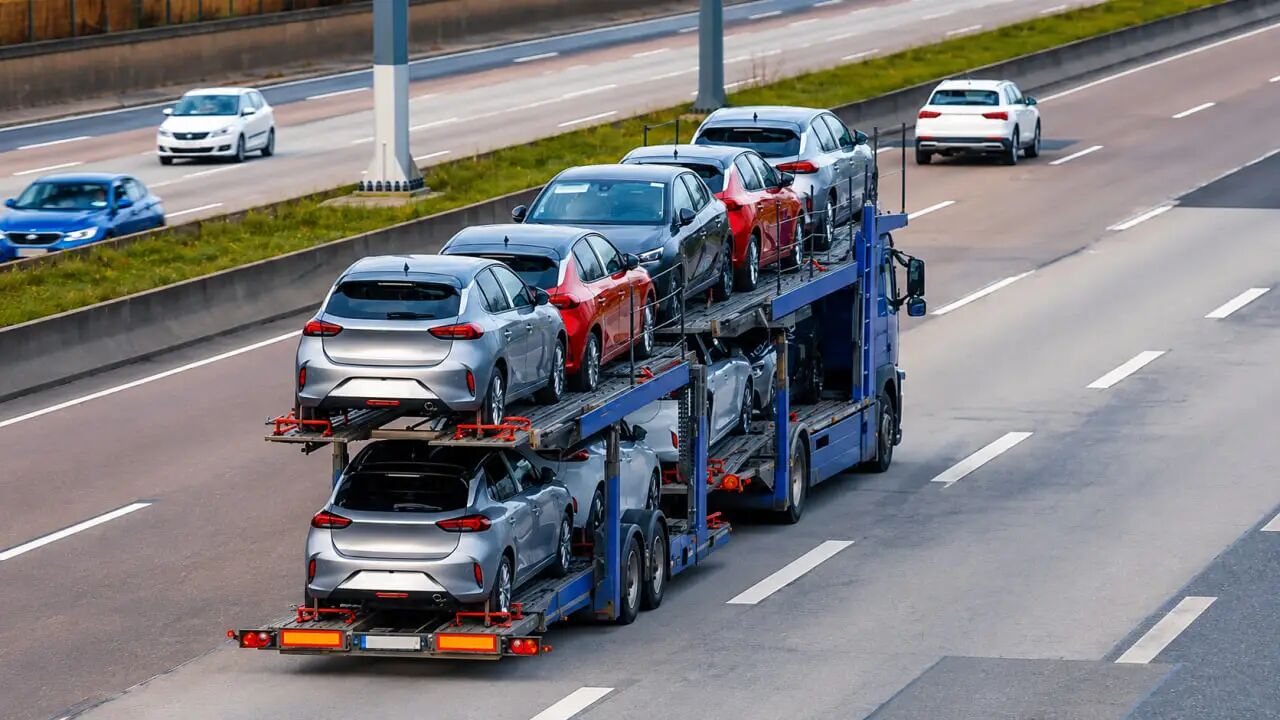
According to Uzbekistan's "Kursiv Uzbekistan" report, with the President's Order No. 104 officially lifting the restriction that "individuals and enterprises can only apply for compliance certification for one self-use imported car every year," the local automobile market is ushering in the most important opening measure in recent years. Many experts interviewed believe that this will further promote market competition, expand import channels, and bring more vehicle choices to consumers. However, since costs such as tariffs, value-added tax and scrapping fees still exist, market prices will not appear in the short term. Significant decline.
Import entities will be more diverse, and new energy vehicles are most likely to benefit
Uzbekistan has been implementing a "one car per year" certification system since 2017. Individuals can only apply for compliance certification for one imported car each year, which actually limits the amount of individual imports. Officials explained at the time that the move was mainly to protect consumer rights and ensure that imported vehicles meet technical and environmental standards.
However, economist Nodirbek Shergoziyev believes that during the actual implementation process, this system has also played a role in protecting the local automobile industry and restricting individual commercial imports.
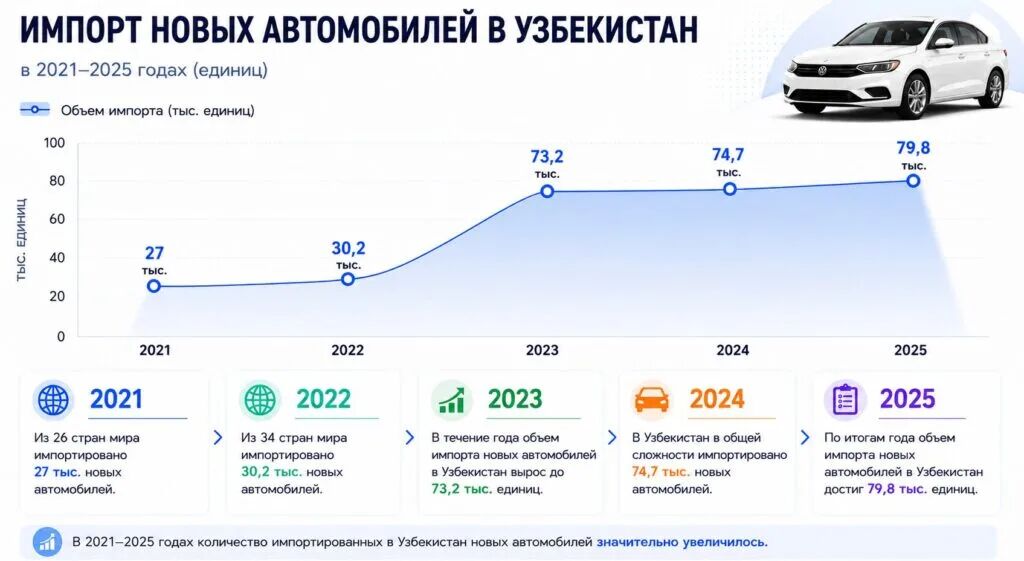
2021-2025 New car imports in Uzbekistan
With the lifting of restrictions, experts generally predict that import entities will become more diverse in the future, with authorized dealers no longer dominating, and the activity of independent importers and individuals is expected to increase. Some past practices that required borrowing in the name of others to complete imports are also expected to decrease.
Iqboljon Kasimov, head of research at the Higher School of Business and Entrepreneurship in Uzbekistan, predicts that driven by high demand, new energy vehicles and hybrid cars may become the most direct beneficiaries, especially the import volume of China brand electric vehicles and mid-to-high-priced models will increase significantly. He predicted that after the implementation of the new regulations, Uzbek car imports are expected to increase by 10% to 30%.
Competition intensifies, but there will be no "big drop" in car prices
Regarding the price issue that consumers are most concerned about, the two experts have basically the same judgment: competition will increase, but the price reduction will not be too large.
Sergoziyev believes that some market segments, such as electric vehicles, hybrid cars and mid-to-high-end imported vehicles, may experience a certain degree of price cuts due to increased supply; however, economic models still have to bear tariffs, value-added tax, scrapping fees and logistics costs, making it difficult for prices to drop significantly.
Kasimov believes that when more importers enter the market, it will reduce the high premium space of some dealers and also create certain price pressure on the used car market. However, he also stressed that the market should not be expected to see significant price cuts until the import tax system has undergone fundamental changes.
Local car companies will face more intense competition
The report believes that after the quantitative restrictions are lifted, local manufacturers will face a more open market environment.
However, the two experts have slightly different views on the extent of the impact. Sergoziyev believes that this is a "controllable risk" because barriers such as tariffs, value-added tax and scrapping fees still exist, and local companies still have certain protection.
Kasimov believes that if imported models are more attractive in terms of price and quality, some consumers may turn to imported cars. But in the long run, this will instead encourage local companies to improve product quality, launch more new models, and enhance export competitiveness.
As of April 1, 2026, the number of motor vehicles in Uzbekistan has exceeded 4.9 million, and automobile consumption demand remains at a high level.
written in the end
The lifting of the "one car a year" restriction means that the Uzbek car market is continuing to move towards opening up, but this does not mean that the import threshold is fully liberalized. For China's second-hand car exporters, what deserves more attention is the changes in market structure: the purchasing capabilities of independent importers and individuals are expected to increase in the future, while China brand electric vehicles, hybrid cars and mid-range models may benefit first. However, as tariffs, value-added taxes, scrapping fees and logistics costs still exist, market competition will be more reflected in model selection and service capabilities rather than simply price wars. For companies preparing to deploy the Uzbek market, now is the window period to establish channels and improve after-sales and parts supply systems.
Source: Guangdong Good Car
[Disclaimer] The content of this website (including pictures and texts) originates from the Internet, and the copyright belongs to the original author. Respect the rights and interests of originality, and select content is only used for information sharing. If copyright disputes are involved, please contact us to handle them in a timely manner

 Online Evaluation
 I am Buyer
 Export Services
 subsites


 023-62852688
  No. 1-1, No. 2899, Longzhou Avenue, Banan District, Chongqing City
 Headquarters


