
 Chinese
 Russian
 Arabic

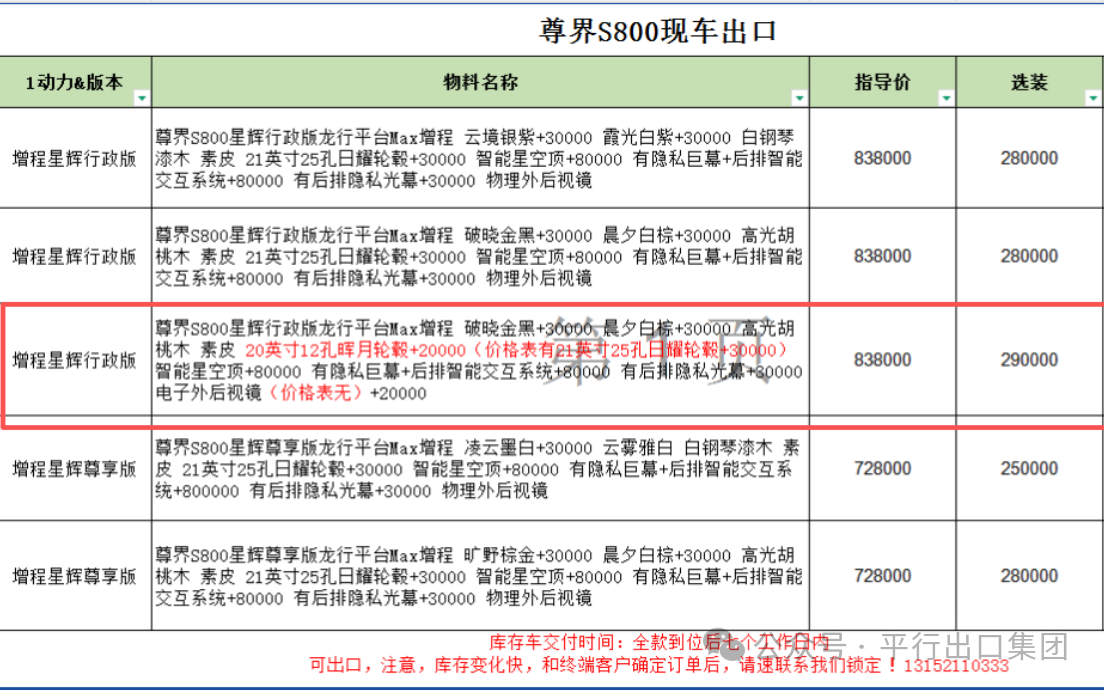
The automobile export tax refund policy will not change in the short term, but the tax refund review will be more stringent and the tax refund cycle will also become longer. Export companies must make their own capital and quotation expectations! nbsp; For tax rebates for exported automobiles (including new and used automobiles), the policy framework for export tax rebates for complete automobiles will not change in the short term, but the review end has been substantially tightened, and the lengthening of the tax refund cycle is changing from "sporadic" to "normal".
The vehicle tax rate is stable, but "stability" does not mean "easing"
2026 is the most intensive regulatory upgrade in recent years, and the core changes focus on three aspects:
First, the "four-stream-in-one" penetration verification has been fully implemented. Tax, customs, banking, and foreign exchange data have been fully networked, and customs declarations, contracts, invoices, and collection of foreign exchange must be logically consistent. Third-party collection of foreign exchange (payment of foreign exchange by non-importers) is listed as the top priority of verification. If a reasonable explanation cannot be provided, relevant businesses may be suspended for tax refunds or even paid back.
Second, the application period is rigid. Starting from January 1, 2026, export businesses must complete tax refund declarations within 36 months from the date of customs declaration for export. If overdue periods are exceeded, they will be regarded as domestic sales taxation, and there will be no room for "deferred processing". This means that companies can no longer "wait for the documents to be submitted before submitting" as in the past, and the constraints on the time window are hard.
Third, the probability of triggering a communication call has increased significantly. The proportion of letters triggered by "supplier abnormalities" across the country has increased by 17% year-on-year, and the tax department is changing from an "approval type" to a "risk control type". Situations such as initial declaration, large amounts involved, and abnormal tax credit of suppliers will greatly increase the probability of being transferred by letter.
Tax refund cycle: the reality of funds slipping from "month" to "quarter"
The normal review process takes about 1-3 months, but once a communication is triggered, 3 months is the starting point, and it is not uncommon to extend it to 6 months or even longer. Cross-border supply chain data tracking shows that after the implementation of the regional peak-shifting review mechanism, the average receipt period of tax refund funds for medium-sized export manufacturing enterprises has been extended by 7 working days.
For automobile exports, the lengthening of this cycle is particularly sensitive. From port collection, customs declaration to shipping schedule arrangements, every link of automobile exports relies on capital turnover, and tax refunds account for a large proportion of the cost structure of vehicle exports. For every month that the tax refund is delayed, the corresponding capital occupation cost will directly erode the already small export profits.
Two things companies need to do: write capital costs and tax refund cycles into their quotation models
On the capital side, it is recommended to include the tax refund receipt period into the review of order profit-not to calculate the book gross profit once at the time of signing the contract, but to do a retrospective calculation after the tax refund is actually received. If a company relies on agency advances, if the annualized interest rate exceeds 10%, even if the agency fee is waived, the account may not be cost-effective. Products such as export tax refund account pledged loans and "export tax refund loans" have been implemented in many places and can be used as options for short-term liquidity supplements.
On the quotation side, overseas distributors are already incorporating the tax refund expectations of China companies into the purchase bargaining model. Not only have some exporters failed to truly obtain tax refund benefits, but have borne the financial pressure of the tax refund cycle. During quotation negotiations, it should not be assumed that the tax refund will be "received on time". If the tax refund cycle is extended from 1 month to 4 months, changes in capital costs should be consciously reflected in the quotation, or the conditions and time arrangements for tax refund should be clarified in the contract.
In short: Policies have not changed, but the "friction" of implementation is increasing. Managing the tax refund cycle as a risk variable that needs to be priced is more in line with current reality than relying on it as a deterministic source of income.

Source: Parallel Export Group
[Disclaimer] The content of this website (including pictures and texts) originates from the Internet, and the copyright belongs to the original author. Respect the rights and interests of originality, and select content is only used for information sharing. If copyright disputes are involved, please contact us to handle them promptly

 Online Evaluation
 I am Buyer
 Export Services
 subsites


 023-62852688
 No. 1-1, No. 2899, Longzhou Avenue, Banan District, Chongqing City

 Headquarters


