
 Chinese
 Russian
 Arabic

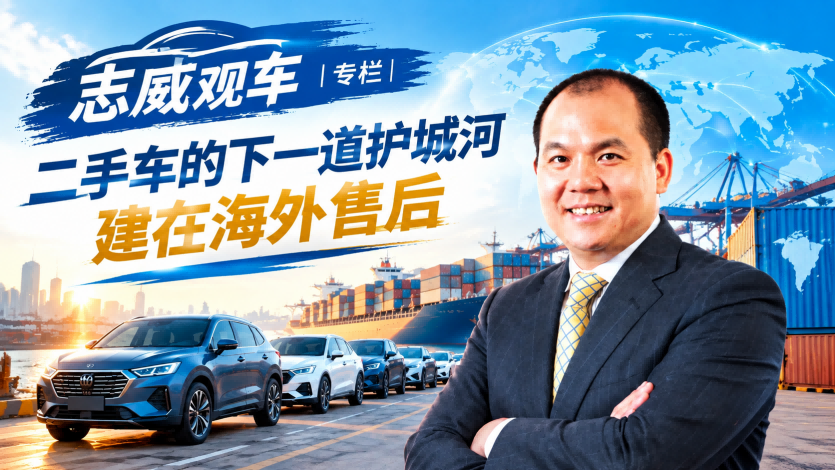
The first half of the used car export was about selling cars, and the second half was about establishing services. Cars can travel across the ocean, and brands must take root on the shore...
At the beginning of September, there was one more thing in the industry that seemed inconspicuous but significant. The Used Car Export Branch of the All-China Automobile Dealers Chamber of Commerce, in conjunction with a cross-border quality assurance service provider, launched the preparation of the group standard for the "Specifications for Quality Assurance and After-sales Service for Used Car Exports". The standard should set unified terms for the qualifications of overseas maintenance outlets, the timeliness of parts supply, and the training mechanism of technicians. It also wants to link testing ratings, warranty insurance, overseas warehouses, and maintenance outlets into a complete service chain.
Lessons learned in the industry come earlier than standards. There was once a used car of a China brand sold to Africa. The customer smashed a front bumper and waited for parts for a year. The customer left a message and would never buy used China cars again. One car destroys a customer, and one customer destroys a market. The channels that have been worked hard to open at low prices are ultimately defeated in after-sales.
Some organizations have conducted statistics that exported used cars are becoming "long-kilometer vehicles", with cars 3 to 5 years old becoming the main force. The older the car, the greater the chance it will be issued with a warranty and the greater the reliance it will on the after-sales network. The wind direction is already clear. Selling is only the beginning of business. Repair, spare parts, and guarantee of cars after they arrive overseas are becoming a new battlefield for determining reputation and repurchase.
Zhiwei Guanche
My judgment is that the competition for used car exports is moving from vehicle condition to after-sales sales. The next moat will be built overseas. Whoever first spreads the service network to the target market will lock in repurchase and brand premiums.
I wrote in my previous comments that used car exports have entered a period of platform integration, and this round of washing is about capabilities. For the abilities to be replenished during the integration period, the first question is placed in the performance stage. When the car arrives overseas, the buyer does not understand China cars and is not familiar with China parts. If something goes wrong, no one can find it to repair it. One transaction becomes the last transaction. After the 180-day red line washed out the arbitrageurs, the remaining companies began to fight for their real skills, and the first test question for their real skills was overseas after-sales.
The ready-made comparison is right in front of you. Japan has been exporting used cars for decades, relying on a system that can pre-lock in after-sales risks. Before the vehicle leaves the port, a third-party agency completes the inspection and issues a globally recognized vehicle condition report; traders embed extended warranty products into the transaction link, cooperate with multinational insurance institutions, and rely on local maintenance chains to complete claims; global core nodes re-deploy regional spare parts warehouses. Pre-testing, insurance binding, shared maintenance, and regional spare parts warehouses lock in most of the risks in the after-sales link before the transaction. The scale of China's second-hand car exports has caught up, and the lessons of the service system are just beginning to make up for them.
After-sales sales should be operated as an asset that can be repeatedly realized. When a car is exported, the price of the car is a one-time income, but after sales, it carries the opportunity for the brand to repeatedly realize its cash in overseas markets. Whoever has a parts warehouse close to the customer and whose maintenance outlets are dense enough can continue to make money in the next order or order. Behind this judgment is the structure, not the slogan. The industry's gross profit has dropped from 20% to about 5%. It is no longer possible to support enterprises solely based on price differences. Repurchases and premiums brought by services are becoming a new source of profit.
Impact dismantling
After-sales competition reshapes the distribution of value throughout the export chain.
For top exporters, this is an opportunity to open the gap. Among these four cards, vehicle sources, testing, funds, and overseas networks, the gold content of overseas networks is rising rapidly. Whoever builds a regional parts warehouse first and reduces the waiting time for parts from a month or two to a few days will have the certainty that overseas buyers care about most.
For small and medium-sized car dealers, this is a window to re-select the location. Overseas self-built networks have a large investment and a long cycle, making it difficult for small and medium-sized players to complete them independently. However, they can borrow ships to go to sea and cooperate with cross-border quality assurance service providers and overseas maintenance chains to turn themselves into a node on the service network. The era of fighting alone is over. Connecting other people's networks and walking together is the only realistic way out for small and medium-sized players.
For overseas buyers, this is an upgrade from buying a car to buying a guarantee. Standardized warranties and claims settlement make non-standard used car transactions predictable. Only when buyers dare to buy and repurchase will the entire market grow bigger. For the domestic market, the high requirements of exports for after-sales will also force domestic vehicle source testing and maintenance levels to move upwards.
Business inspiration
When it comes to business, I have four suggestions.
First, design after-sales as a product. Export does not end when the car is delivered. It is necessary to think clearly in advance who will repair the car after it goes overseas, where the parts will come from, and how to cash out the guarantees, and incorporate these designs into every business.
Second, priority should be given to building regional parts warehouses. Accessories are the heart of the after-sales network. It is more practical to use a small number of high-frequency accessories to build warehouses in key markets first and suppress the waiting time than to lay a large number of outlets.
Third, form alliances with professional service providers. In terms of quality assurance, insurance, and maintenance, existing domestic service providers have accumulated networks and experience overseas. Instead of starting from scratch, it is better to use their networks to quickly implement them and focus on the vehicle sources and channels they are best at.
Fourth, use data to reverse select products. Collect overseas maintenance records and fault feedbacks one by one, and in turn guide domestic vehicle collection and maintenance. Which models have high failure rates in the target market and which parts supply cannot keep up with, the data will tell you what vehicles to collect in the next batch.
The first half of the used car export was about selling cars, and the second half was about establishing services. Cars can travel across the ocean, and brands must take root on the shore.
Source: Guangdong Good Car
[Disclaimer] The content of this website (including pictures and texts) originates from the Internet, and the copyright belongs to the original author. Respect the rights and interests of originality, and select content is only used for information sharing. If copyright disputes are involved, please contact us to handle them promptly

 Online Evaluation
 I am Buyer
 Export Services
 subsites


 023-62852688
 No. 1-1, No. 2899, Longzhou Avenue, Banan District, Chongqing City

 Headquarters


