
 Chinese
 Russian
 Arabic
In 2025, the global automobile export landscape will continue to diverge, and emerging markets will become the core battlefield for China automobile companies to break through. In northern Africa, Algeria, with nearly 40% of used cars, strong car consumption demand, and significant tariff differences, has made the KD (spare parts export) model the key to breaking the situation.
For car companies that want to deepen the Algeria market, it is better to understand the underlying logic of the KD model rather than be discouraged by the high tariff barriers for complete vehicle exports. This is not only a general solution to "reduce tariff costs," but also a precise strategy that adapts to the characteristics of the Algeria market.
1. Understand first: the two core models of KD parts export
The essence of KD parts export is "car-dismantling export + local assembly". It is divided into two categories: SKD and CKD according to the degree of dismantling, which adapt to the production capacity and market layout of different companies:
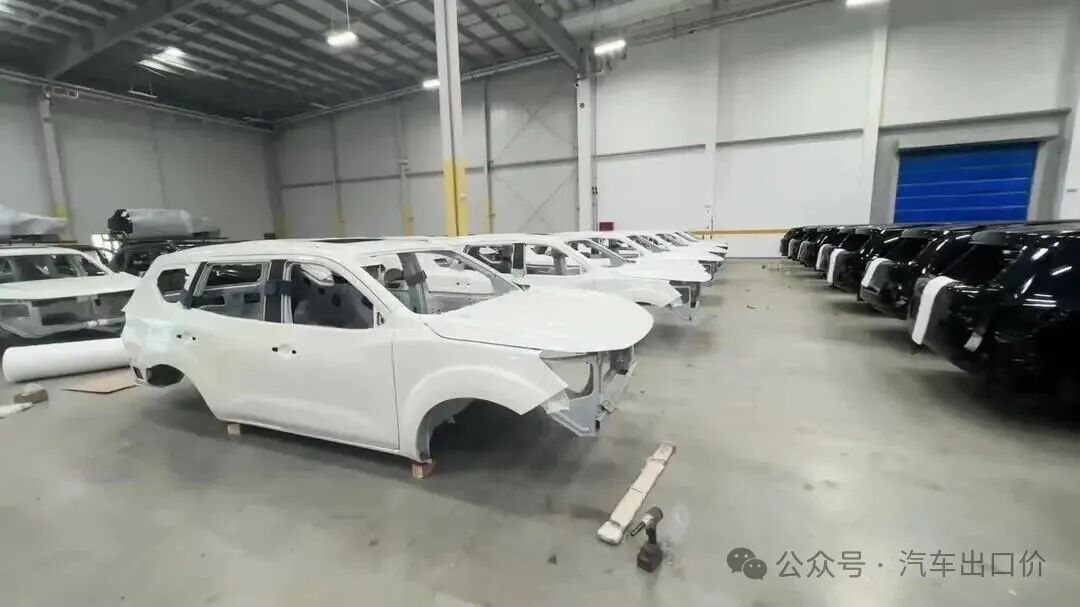
SKD (semi-spare parts export): Thecore assembly remains intact. For example, the welding and coating parts of the cab and body do not require secondary processing, and the disassembly degree of the entire vehicle is 30%-50%. The advantages are low assembly threshold and short cycle, which is suitable for companies that have just entered the Algeria market and have not yet established mature factories.
CKD (All Bulk Parts Export):Metal parts are not welded or painted, and need to be welded, sprayed and assembled at the destination, with a disassembly degree of 70%-90%. Although the requirements for local factories are higher, they can enjoy preferential tariffs on spare parts to the greatest extent and make it easier to comply with Algeria's localized production policies.
Simply put, SKD is a "quick ticket" and CKD is a "deep rooted tool". Both models can avoid the high tariffs on complete vehicle imports, which is also their core advantage compared with traditional complete vehicle exports.
2. Why must Algeria focus on arranging KD parts?
The core adaptation scenario of the KD part model is "a significant tariff gap between complete vehicles and spare parts in the destination country." Algeria just fits this condition perfectly and has additional market dividends:
1. The tariff differences are wide, and the cost advantage of KD parts is outstanding
Algeria's automobile import policy is very oriented:
Import tariffs on complete vehicles are as high as 30%-45%, and the larger the displacement, the higher the tax rate. When value-added tax, statistical tax, etc. are superimposed, the final comprehensive tax burden often exceeds 50%;
Import tariffs on auto parts are only 10%-15%. Among them, if key parts such as engines and batteries are used for localized assembly, additional tax exemptions can be applied for with the localized assembly certificate.
In contrast, adopting the KD part export model can reduce costs by 20%-30% in the tariff link alone, completely offsetting the additional expenses for dismantling and transportation.
2. Strong market demand, huge space for replacing used cars
Algeria is Africa's second largest automobile market, with annual demand for automobiles exceeding 600,000, but nearly 40% of them are used cars. Local consumers are in urgent need of models with high cost performance and strong durability. However, the price of economical fuel vehicles and new energy models of China car companies can be reduced to 60%-70% of imported vehicles after localized assembly through KD parts, accurately matching the mass consumer group.
3. Policies support localization, and KD pieces are long-term passes
The Algeria government has vigorously promoted "industrial localization" in recent years and clearly stated that if foreign-invested automobile companies adopt CKD model for assembly, and local parts purchases account for more than 30%, they can enjoy policies such as tax exemptions and preferential entry into industrial parks; on the contrary, pure vehicle imports will face problems such as quota restrictions and extension of approval cycles. The KD component model has become an inevitable choice for long-term cultivation.
3. Practical operation of KD parts export from Algeria: 3 key steps
The export of KD parts is not "tearing the car down and leaving". It is necessary to open the entire chain of "domestic dismantling-international transportation-local assembly". Combined with the characteristics of the Algeria market, the following three points should be focused on:
1. Domestic end: compliance dismantling + parts certification
Dismantling must comply with industry standards: Select a qualified dismantling factory to ensure that key components such as roof side rails, door panel reinforcements, and suspension brackets are intact to avoid damage during transportation;
Parts and components need to adapt to local regulations: Algeria has clear requirements for vehicle safety and environmental protection, and COC certification of parts and components needs to be completed in advance to avoid being returned during customs clearance.
2. Transport end: Select the right port + optimize packaging
Priority is given to major ports such as Algiers Port and Oran Port, with mature logistics facilities and higher customs clearance efficiency;
Parts and components need to be packaged in categories and clearly marked, with emphasis on protecting vulnerable parts (such as window reinforcements and electronic components). At the same time, CIF prices should be calculated in advance to prepare for tariff declaration.
3. Local end: Get the assembly factory + policy docking
Core premise: Have an own or cooperative assembly factory in Algeria, and the factory must have basic production capacity such as welding, spraying, and final assembly (SKD model can simplify production capacity requirements);
Policy connection: Connect with the local Ministry of Industry and Customs in advance to clarify the tax preference application process for KD imports and the accounting standards for local procurement ratios to avoid additional costs due to deviations in policy understanding.
4. Opportunities and challenges coexist: these pits must be avoided in advance
opportunities
China car companies have obvious advantages: compared with European and American car companies, the parts supply chain of China models is more complete and the cost is lower, and core components such as motors, electronic controls, and batteries of new energy vehicles can enjoy additional tax exemption policies in Algeria.
Market competition is not yet saturated: At present, KD parts assembly in Algeria is mainly dominated by European and American car companies such as Renault and Peugeot. China car companies still have large market gaps to seize due to their cost-effective advantages.
challenges
Logistics costs are high: Algeria is located in North Africa, and the shipping cycle is about 30-40 days. Inventory needs to be planned in advance to avoid supply cuts;
Insufficient localization supporting facilities: It is difficult to purchase some parts and components (such as tires and glass) locally, and a cross-border supply chain needs to be established in advance to ensure that the proportion of local procurement meets the standard.
Conclusion:
In 2026, the increase in automobile exports will be in emerging markets, and Algeria's KD parts model is the golden path for China automobile companies to achieve "cost breakthrough + localization and root." Only by advance layout, compliance operations, and resource linkage can we seize the opportunity in this potential market!
Source: Automobile export price
[Disclaimer] The content of this website (including pictures and texts) originates from the Internet, and the copyright belongs to the original author. Respect the rights and interests of originality, and select content is only used for information sharing. If copyright disputes are involved, please contact us to handle the deletion in a timely manner.

 Online Evaluation
 I am Buyer
 Export Services
 subsites


 023-62852688
  No. 1-1, No. 2899, Longzhou Avenue, Banan District, Chongqing City
 Headquarters


