
 Chinese
 Russian
 Arabic
Imports of used electric vehicles plunged 94.5% month-on-month, almost "stopping abruptly". The overall decline was described by local analysts as a "catastrophic decline"...
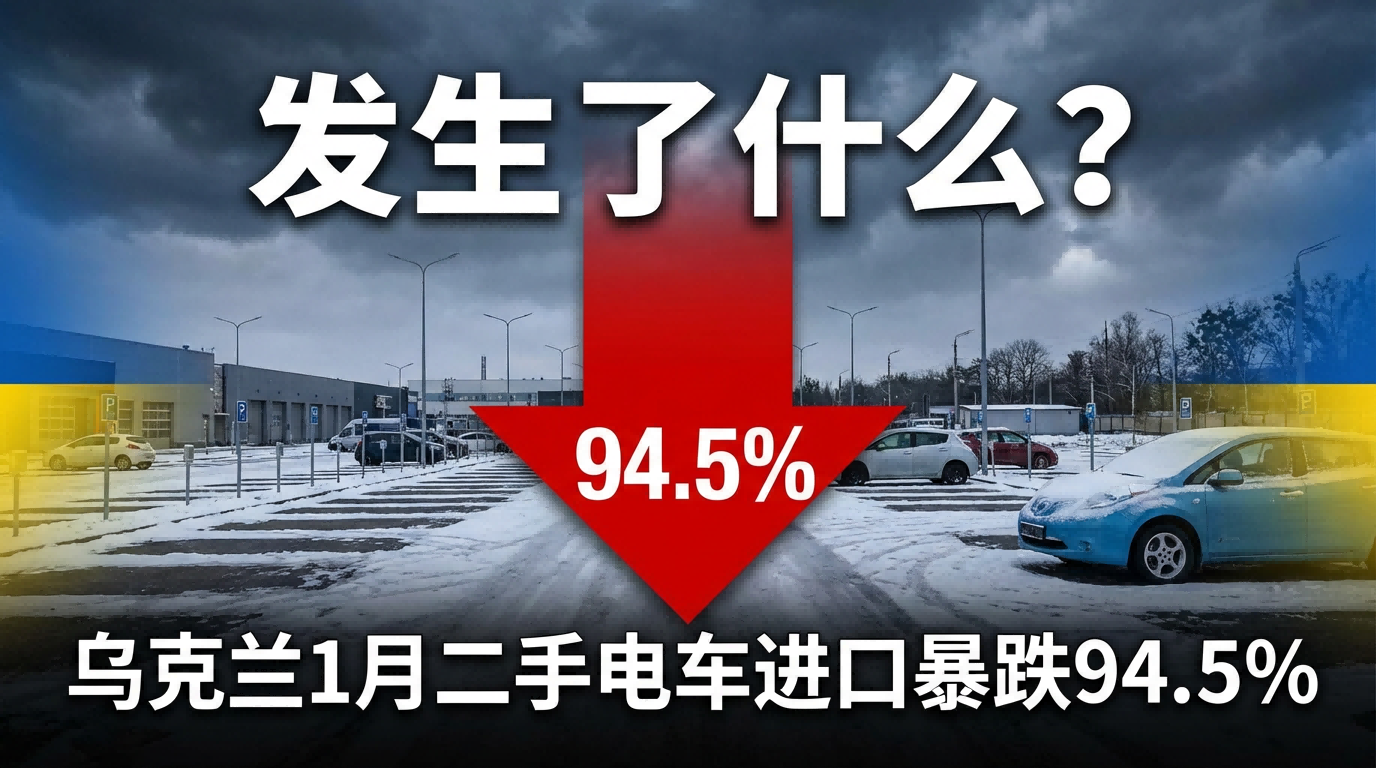
[Kiev News] Ukraine's electric market suffered a "predictable but highly disruptive" import decline in January 2026. Monitoring released by Ukraine's "Automobile Market Research Institute"(丨 н с т и тут и следо в а н ия а в т орынка) showed that due to the withdrawal of value-added tax (VAT) incentives for electric vehicles and the return of tax burden, the import structure of electric vehicles changed sharply in January: the import volume of used electric vehicles plunged 94.5% month-on-month, almost "stopping". The overall decline was described by local analysts as a "catastrophic decline."
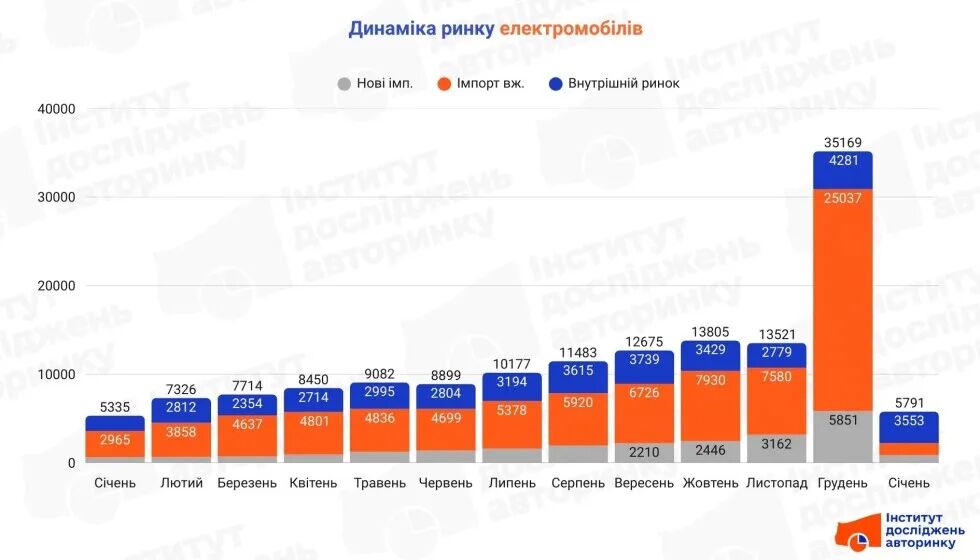
According to statistics from the research institute, in January, the only relatively stable sector in Ukraine's electric vehicle transactions was not imports, but domestic second-hand circulation: 3553 domestic resales were completed that month, although it dropped 17% from December, but the year-on-year growth reached 105%. Based on this, the research institute judged that the inventory of electric vehicles used market in Ukraine has formed an independent cycle and "no longer fully follows customs policies."
Cooling at the inlet side is more direct. Data shows that in January, Ukraine imported 1374 second-hand electric vehicles, which fell into the abyss "month-on-month and fell by 53.7% year-on-year. The research institute pointed out that the import volume in December 2025 will still be in the tens of thousands, while the traffic flow will be almost interrupted by January; those vehicles that still complete entry in January are mostly regarded as "final orders" that have not caught up with customs clearance and registration across the New Year.
New car imports were also affected: 864 new electric vehicles were imported in January, down 85.2% month-on-month. However, unlike used cars, imports of new electric vehicles still achieved a year-on-year growth of 35.6%. The research institute believes that this reflects the inertia between the official distribution system and the procurement of some enterprises/institutions. Demand has not disappeared, but the pace has been disrupted by changes in the tax system in the short term.
As for "why did it fall so sharply", the explanation given by the research institute is very clear: the return of value-added tax is the main reason. The logical chain includes three points: First, there was an obvious "rush" in December 2025, and consumers who originally planned to buy cars in 2026 concentrated on making deals in advance in December to avoid tax burdens; second, the return of tax burdens means that the price of imported electric vehicles has increased by at least about 20%, and buyers and the carrier/trade chain have entered a wait-and-see period; Third, since vehicles already in Ukraine are no longer subject to new import taxes, demand quickly shifted to "domestic spot", driving resales to double year-on-year.
Stanislav Buchatsky, head of the Automotive Market Research Institute, said that the cancellation of the discount did not "kill" interest in electric vehicles, but only changed the purchase path: consumers are consuming domestic inventories formed during the previous "zero value-added tax" period, and the domestic second-hand market has become a buffer in the short term. Automotive expert Ostap Novitsky reminded that the return of value-added tax is critical, but it is not the only variable; under the "perfect storm" of multiple unfavorable factors, the economic account of electric vehicles is only for people with low electricity prices at night and self-built charging conditions. Otherwise,"saving electricity bills" will not necessarily offset the uncertainty of car purchase and use.
[Brief Comment] For China automobile exporters, the signal from the Ukraine market is that the era of relying on low-cost second-hand trams has temporarily come to an end, and short-term demand will be more "internally circulated" in local stocks. However, new car imports are still positive year-on-year, indicating that formal channels and project-based orders are still in place. The research institute predicts that the market will gradually adapt to the new rules around the middle of the year, and the export rhythm is more likely to show a pattern of "downturn in the first half of the year and recovery in the second half".
Source:https://minfin.com.ua/2026/02/03/167469922/
Source: Guangdong Good Car
[Disclaimer] The content of this website (including pictures and texts) originates from the Internet, and the copyright belongs to the original author. Respect the rights and interests of originality, and select content is only used for information sharing. If copyright disputes are involved, please contact us to handle the deletion in a timely manner.

 Online Evaluation
 I am Buyer
 Export Services
 subsites


 023-62852688
  No. 1-1, No. 2899, Longzhou Avenue, Banan District, Chongqing City
 Headquarters


