
 Chinese
 Russian
 Arabic
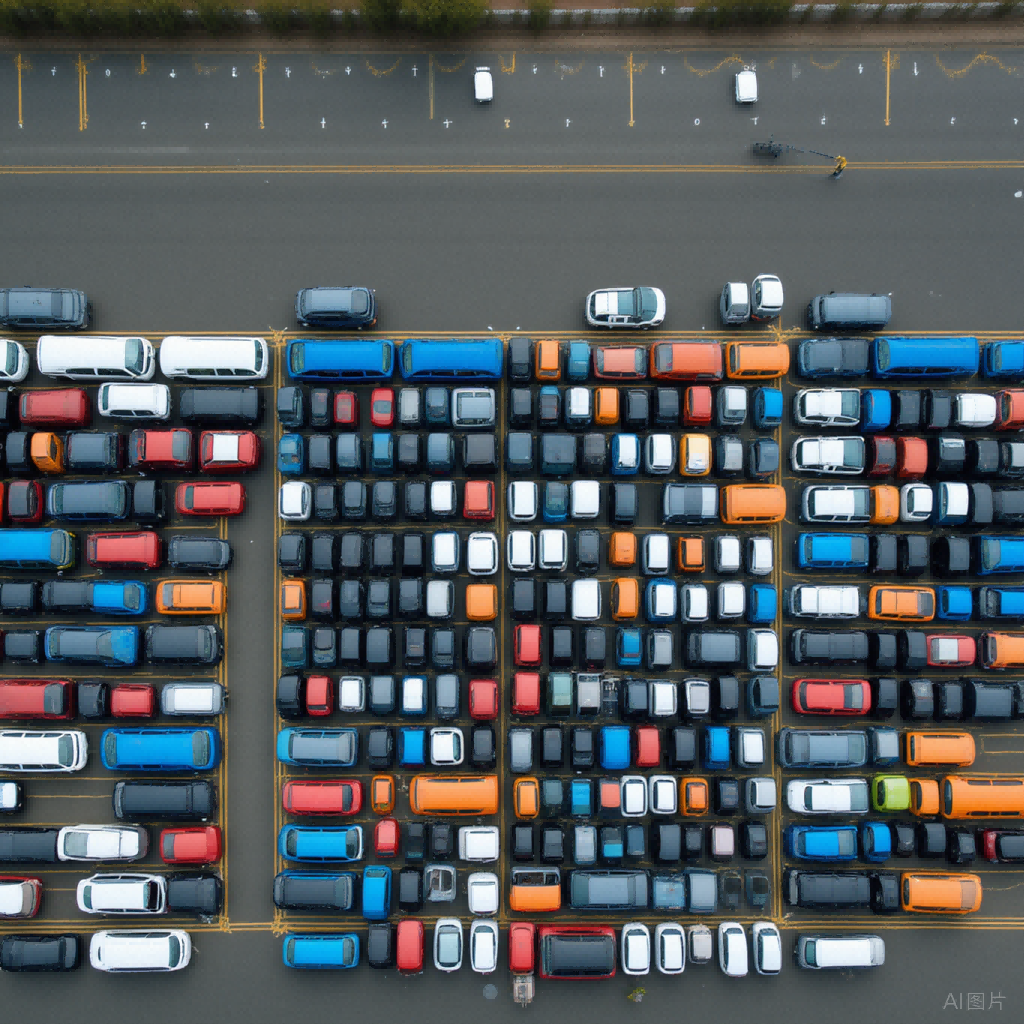
In 2025, China car companies will achieve new breakthroughs in the European market. Statistics from market research firm Dataforce show that under the leadership of SAIC MG, BYD, Chery and other car companies, in December 2025, the monthly sales of China car companies in Europe exceeded the 100,000 mark for the first time, a year-on-year increase of more than doubled, and the monthly market share climbed to 9.5%. From a full-year perspective, sales of China car companies in Europe will surge 99% year-on-year to 811,000 units in 2025, and their market share will climb to a record 6.1%.
This set of figures is by no means simple sales data, but a milestone for China's automobile industry to move from "product export" to "ecological roots." As the birthplace of the global automobile industry, Europe is not only the "home" of traditional giants such as Volkswagen Group, BMW, and Mercedes-Benz, but also has a consumer group that is extremely strict on automobile quality and safety standards, as well as a deep local brand loyalty. The significance of China automobile companies achieving explosive growth here far exceeds the increase in market share. It indicates that China's automobile industry has successfully broken through the shackles of low-cost labels in global competition and built a new competitiveness of the "trinity" of technology, localization and policy response.
The achievement of this milestone is first and foremost the inevitable result of China automobile companies accurately responding to trade policy changes and flexibly adjusting market strategies. At the end of October 2024, the EU began to impose a countervailing tariff of up to 35.3% on pure electric vehicles made in China, plus a basic tariff of 10%. The comprehensive tax rate for some models exceeded 45%, and trade barriers suddenly increased. Faced with challenges, China car companies did not passively put pressure on them, but quickly found policy gaps and shifted their focus to plug-in hybrid models that still apply the 10% basic tariff.
This shift is not a temporary change, but is based on a deep insight into the real pain points of the European market. Charging facilities in Europe are insufficient, and driving anxiety remains a major concern for consumers to buy cars. The "oil and electricity" characteristics of the plug-in and hybrid models just meet the transitional needs of the European market. BYD Seal U plug-in and hybrid version ranks first in Europe with a sales volume of 73,000 units in 2025, confirming the accuracy of the strategy. In January 2026, China and the EU reached a consensus on a pure electric vehicle price commitment mechanism, and also used institutional solutions to eliminate long-term policy uncertainty and lay a solid foundation for further sales growth.
The in-depth advancement of localized layout has provided core support for China car companies to "take root" in the European market. From manufacturing to supply chain supporting, from R & D innovation to service ecology, the systematic restructuring of China car companies in Europe is accelerating. BYD has invested 4 billion euros to build a passenger car factory in Hungary and plans to be officially put into operation in the second quarter of 2026. It will not only circumvent EU trade barriers, but also use Hungary's superior geographical location to radiate to the entire European market; Xiaopeng Automobile and GAC Group both reached a cooperation with Magna and used the latter's Austrian Graz factory to achieve localized production in Europe; Chery is also a joint venture with Spanish car company EV MOTORS to revitalize Nissan's old factory and achieve the end of 2024 with its first model rolling off the production line.
This kind of localization is not only the implementation of production capacity, but also a deep adaptation to European industrial rules and consumption habits. For example, Xiaopeng Automobile will open its Munich R & D center in 2025 to ensure that its products accurately match the needs of European users; zero-running relies on Stellantis's European R & D center for chassis adjustment and regulatory adaptation.
What is more noteworthy is that behind the sales breakthrough is a fundamental leap in the strength of China's automobile products. From plug-in hybrids to pure electricity, from mini cars to mid-size cars, China car companies have accurately adapted the needs of the European market with a product matrix of all categories, completely reversing the old perception of "low prices and low quality." In the European market, China cars are no longer synonymous with cheapness, but use technological advantages to create competitiveness of "higher prices". In the Euro NCAP safety test, many China brand models received five-star ratings.
The independent control of core technologies has become the basis for China brands to establish a firm foothold in the European market. The implementation of technologies such as CTB body integration and high-specific energy batteries has enabled China models to compete with or even surpass some traditional European brands in terms of driving, performance, and safety; and intelligent configurations such as smart cockpits and smart driving have allowed China brands to form differentiated competitive advantages.
It is worth noting that the rise of China automobile companies in Europe is not a simple market competition, but a complementary advantage and mutual benefit under the electrification transformation of the global automobile industry. At today's European Auto Show, the booths of China car companies have become the new focus. Established European car companies such as BMW, Mercedes-Benz, Stellantis, and Renault have cooperated with China companies to introduce China's battery and smart driving technologies to accelerate their electrification transformation; Volkswagen Group has also obtained core technologies of electronic and electrical architecture from Xiaopeng Automobile to accelerate intelligent upgrades. The technological advantages of China automobile companies and the engineering heritage of European automobile companies are integrated to promote the development of the global automobile industry in a more efficient and intelligent direction.
Source: China Automobile News
[Disclaimer] The content of this website (including pictures and texts) originates from the Internet, and the copyright belongs to the original author. Respect the rights and interests of originality, and select content is only used for information sharing. If copyright disputes are involved, please contact us to handle the deletion in a timely manner.

 Online Evaluation
 I am Buyer
 Export Services
 subsites


 023-62852688
  No. 1-1, No. 2899, Longzhou Avenue, Banan District, Chongqing City
 Headquarters


