
 Chinese
 Russian
 Arabic
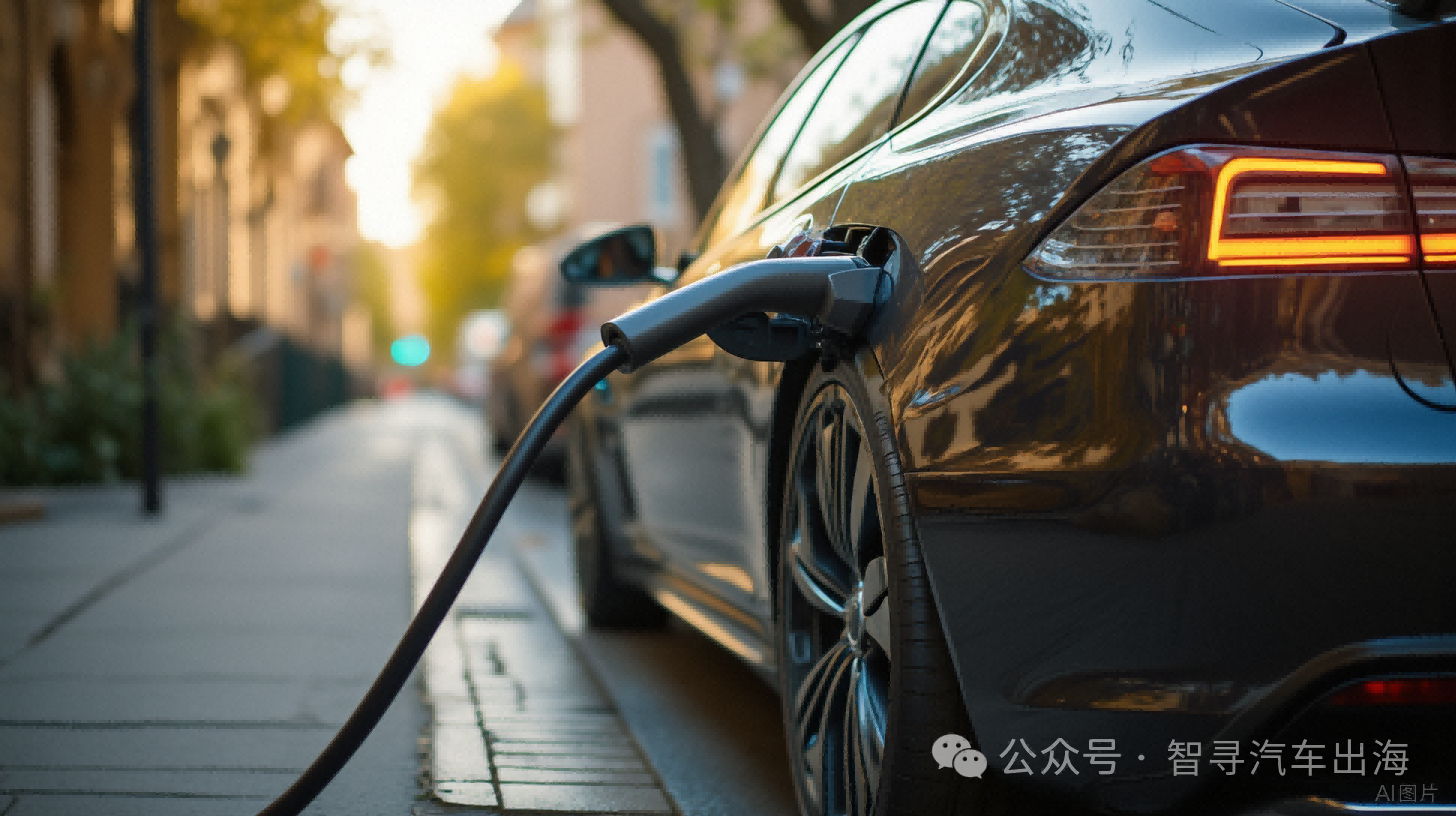
In the export chain of new energy used vehicles, power batteries are the core value carrier that is different from traditional fuel-based vehicles. Their health status directly determines the export pricing and customs clearance pass rate of vehicles, and also affects overseas consumers 'trust in China's new energy used vehicles. Degree of trust is the most risky and professional core link in the export process.
According to industry data, battery problems accounted for as much as 68% of complaints related to domestic new energy used vehicles in 2025. Many companies have been detained, lost orders, and even lost exports due to non-compliance in battery testing and mismatch in testing standards. Qualification.
Different from the engine testing of traditional fuel vehicles, battery testing of new energy used vehicles needs to take into account compliance, safety and practicality, and needs to strictly align domestic testing regulations with overseas target market requirements. Combined with the "Technical Specifications for the Identification and Evaluation of Used New Energy Passenger Vehicles" and the latest requirements of major markets around the world, this article will dismantle the core logic of battery testing from four dimensions: testing standards, mandatory inspection items, practical operation methods and key points to avoid pits. Provide practical guidance for export practitioners and maintain the bottom line of export compliance and quality.
Core items must be inspected/three dimensions are indispensable
Battery testing for new energy used vehicles is not a single "health test", but a full-dimensional test covering safety, performance, and consistency. Each item is directly related to the export compliance and market acceptance of the vehicle. Inspection items can be divided into three categories.
1. Battery Health (SOH) Testing: Core Pricing Indicator
Battery health (SOH) is the core indicator of testing. The calculation formula is "current actual capacity/rated capacity ×100%". It is also the core item of the domestic national standard compulsory testing in 2025, which directly determines the valuation and overseas market acceptance of vehicles.
Different markets have different requirements for SOH, which can be divided into three categories: first, strict standards, represented by the European Union, require SOH≥80%, and vehicles below this value cannot be cleared; second, regular standards, Southeast Asia, Middle East, Central Asia and other markets require SOH≥70%. Some markets can relax appropriately based on the age of the vehicle, but additional battery maintenance records need to be provided; The third is loose standards. There are no clear numerical requirements in some markets such as Africa, but it is necessary to ensure that the battery can be charged and discharged normally without significant attenuation.
From the actual impact, for every 10% drop in SOH, the actual battery life of the vehicle will shrink by 15%-25%, and the valuation will also drop by 8%-12% simultaneously; if the SOH is lower than 70%, the vehicle price may be reduced by another 15%., and there are serious safety hazards. Not only is it impossible to export, but even if it enters overseas markets, complaints and recalls may also be triggered.
2. Battery safety testing: the top priority for customs clearance
Battery safety is the core focus of overseas customs testing. Once a safety hazard is detected, customs clearance will be directly prohibited, and companies will even be fined huge. Safety testing needs to cover safety hazards throughout the battery life cycle. The core testing content includes the following points:
The first is the battery pack tightness test, focusing on checking whether there is liquid leakage or water inflow in the battery pack to avoid short circuit and thermal runaway caused by lax sealing; the second is the thermal management system test to confirm that the thermal management system is working normally and can effectively Control the battery charge and discharge temperature, among which the charge and discharge temperature of lithium iron phosphate batteries needs to be ≤65℃, and the ternary lithium battery needs to be ≤60℃, which is suitable for the climatic environment of different regions; The third is cell status testing, which checks each cell for problems such as bulging, damage, and liquid leakage to prevent inferior cells from flowing into the market; the fourth is protection function testing, which detects whether the battery short circuit, overcharge, and overdischarge protection functions are normal. At the same time, the insulation resistance is detected and is required to be ≥500Ω/V to avoid the risk of leakage.
Especially for tropical markets such as the Middle East and Southeast Asia, it is necessary to additionally test the high temperature resistance of the battery. It is recommended to optimize the thermal management procedures in advance and install heat sinks to avoid battery performance degradation or safety accidents caused by high temperatures.
3. Battery consistency and cycle count testing: ensuring service life
Battery consistency and cycle times directly affect the battery life and vehicle experience, and are also the focus of overseas consumers, especially in the mid-to-high-end market.
Battery consistency testing mainly checks the voltage, internal resistance, and capacity deviations of the battery cell. If the voltage difference between a single charge is greater than 0.1V, there is a hidden danger of short circuit or thermal runaway, and the battery cell needs to be repaired or replaced in time; at the same time, it is necessary to check whether the function of the battery management system (BMS) is normal to ensure that it can accurately monitor the battery status and provide timely feedback on abnormal conditions.
The number of charge and discharge cycles is the "countdown timer" of battery life. The design cycle life of different types of batteries is different: the design cycle life of lithium iron phosphate batteries is ≥800 times, and the ternary lithium batteries is ≥500 times. After exceeding the design life by 80%, the battery performance will be significantly reduced, the battery life will shrink, and the charging efficiency will be reduced. Such vehicles are not recommended to be exported. Even if they are exported, overseas buyers must be clearly notified to avoid disputes.
Practical pit avoidance and detection methods/Novices can apply to reduce risks
Due to the lack of professional battery testing experience, many export companies are prone to problems such as false testing, invalid reports, and inconsistent standards, which not only causes economic losses, but also affects the company's overseas reputation. Combined with the practical experience of the industry, we summarize the three key points to avoid pitfalls and three types of testing methods to help practitioners get started quickly.
1. Three practical points to avoid pitfalls
The first is to put an end to "detection fraud". In order to reduce costs, some companies falsify test reports and tamper with SOH data. Once detected by overseas customs, they will face huge fines, vehicles will be detained, or even blacklisted in target markets, which will affect the long-term export qualifications of the company and lose the gain. Compliance testing is a prerequisite for long-term sailing, so don't take chances.
The second is to attach importance to the credibility of test reports. Select authoritative testing institutions at home and abroad (such as China Automobile Research Institute, 268V New Energy Testing Center, etc.), and the testing reports issued by them will be more recognized globally and can effectively reduce customs clearance risks; at the same time, the testing reports must be completely retained, including testing data, testing personnel qualifications, testing equipment calibration records, etc., serve as an important basis for customs clearance and after-sales.
The third is to optimize testing based on market demand. Different markets have different climates and usage habits, and testing priorities need to be adjusted in a targeted manner: the tropical market focuses on testing battery high temperature resistance, the European market additionally tests battery carbon emissions and recycling compliance, and the African market focuses on checking battery safety hazards to avoid testing key deviations lead to failure in customs clearance.
2. Three types of testing methods: from preliminary screening to authoritative certification
Method 1: Self-inspection of the vehicle-mounted system (preliminary screening of pits in 1 minute). The operation is simple and requires no professional equipment. Open the on-board central control screen, enter the "Vehicle Settings-Battery Management" menu, and directly view the SOH value and the cumulative cycle number; if only "Battery Health Status" is displayed, you need to confirm that it is marked "Good"(corresponding to SOH≥85%). If "Maintenance Required" is displayed, there is a high probability that the SOH is less than 80%, and further in-depth testing is needed. This method is suitable for preliminary screening and cannot be used as a basis for export testing, but it can quickly eliminate obviously unqualified vehicles.
Method 2: 4S shop/manufacturer background query (the most authoritative). Prepare the vehicle driving license and original purchase certificate, go to the corresponding brand 4S store to apply for "battery health inquiry", and retrieve real-time SOH value, cycle number, fault maintenance records, charge and discharge history and other data from the BMS background of the car company, so that the car dealer can be seen through the tamper with the manifest information, the data authority is the highest, suitable as a reference basis for export testing.
Method 3: Third-party testing (required for high-value vehicles). For vehicles that are more than 3 years old, high-value or exported to strict markets such as Europe and the United States, it is recommended to make an appointment with an authoritative third-party testing agency to conduct in-depth testing with professional equipment. The test report will include in detail full-dimensional data such as SOH value, cell status, battery pack tightness, and insulation resistance, which can be directly used as customs clearance certificates; at the same time, the formula of "charging degree ÷ factory full power degree ×100%" can be used to roughly measure SOH and cross-verify it with the test report. The error is basically reliable within 3%, which can further reduce risks.
Summary/Battery testing is the core support for export competitiveness
For the export of new energy used vehicles, battery testing is not an "extra link", but a "core lifeline" that determines the success or failure of exports-a compliance test report is a pass for customs clearance, and high-quality battery status is the basis for pricing. The testing process is a guarantee for brand reputation. With the tightening of domestic new energy used vehicle export policies in 2026 and the continuous improvement of battery quality requirements in overseas markets, the professionalism and standardization of battery testing will become the core competitiveness of companies going abroad.
For export practitioners, it is necessary to abandon the concept of "focusing on sales and neglecting testing", establish a standardized battery testing process, accurately match domestic and foreign testing standards, select authoritative testing institutions, and strictly control battery quality; at the same time, continue to pay attention to overseas market testing policy updates, targeted optimization of testing plans, and avoid compliance risks. Only by adhering to the bottom line of battery testing can we move forward steadily in the blue ocean of new energy used car exports and enhance the global recognition of China's new energy used cars.
Source: Zhixun Car Going to Sea
[Disclaimer] The content of this website (including pictures and texts) originates from the Internet, and the copyright belongs to the original author. Respect the rights and interests of originality, and select content is only used for information sharing. If copyright disputes are involved, please contact us to handle the deletion in time

 Online Evaluation
 I am Buyer
 Export Services
 subsites


 023-62852688
  No. 1-1, No. 2899, Longzhou Avenue, Banan District, Chongqing City
 Headquarters


