
 Chinese
 Russian
 Arabic
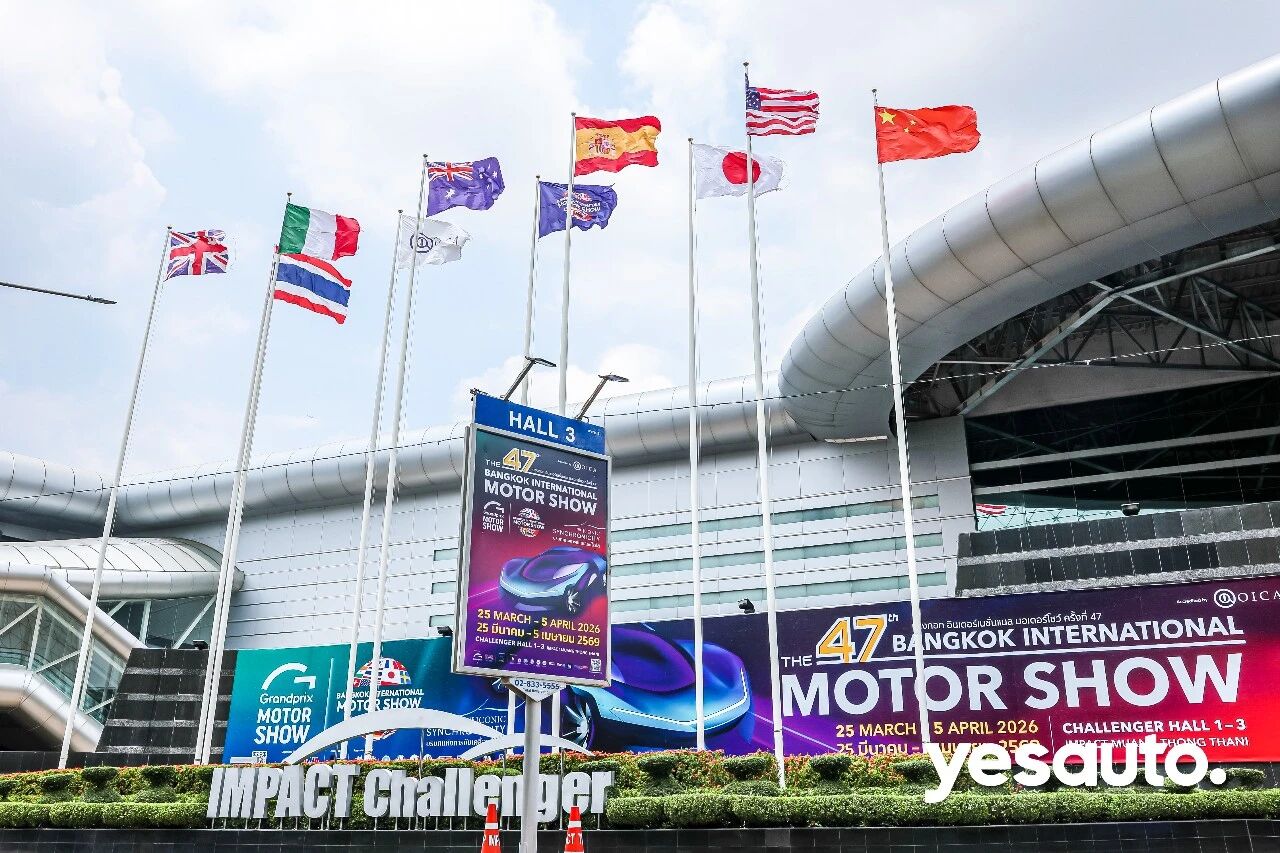
title map| Bangkok International Auto Show, Thailand
"Outstanding results, obvious resistance, ability to fight, and blurred image." This is a true portrayal of China car companies going abroad.
On March 25, 2026, the 47th Bangkok International Auto Show kicked off. Outside the exhibition hall, there is the hot and humid atmosphere of the tropical monsoon and the unique calm rhythm of Thailand; inside the exhibition hall, there is a secret battle and wrestling between Chinese, Japanese, European and American car companies in competing for the Southeast Asian market.
At this auto show, the China Corps became the most watched participating force: mainstream brands such as BYD, MG, GAC Aian, and Great Wall made their collective appearances, and all of them appeared from small cars to high-end MPV models. China brands completed their transformation from participating "spectators" to the main force in the market.
Another surprise is that China's auto service platform is fully deployed at this Thailand Auto Show. Car Home launched an 8-hour full live broadcast of the Chinese-English bilingual auto show and large-scale overseas reporting. Many Southeast Asian users have this opportunity to learn about China brands on a large scale for the first time. The China automobile industry has also been able to intuitively feel the enthusiasm of the Southeast Asian market on such a large scale. The gap between China automobile companies and local users is being broken.
However, China car companies are also facing real resistance in Southeast Asia. There are 60 years of deep cultivation of Japanese brands, high barriers to European brands, and rules and culture that are completely different from those in China.
In 2025, Japanese brands will still have a market share of 69.3% in Thailand, and Toyota will rank first with a market share of 36.2%. Although China brands have leapt to second place with a 21.5% share, there is still a clear gap between them and truly shaking the foundation of the Japanese system. A series of domestic industrial chain integration methods such as price cuts and capacity expansion have proved to be not suitable for the Southeast Asian market. China car companies urgently need an opportunity in Southeast Asia to break through the invisible ceiling and complete a sales counterattack.
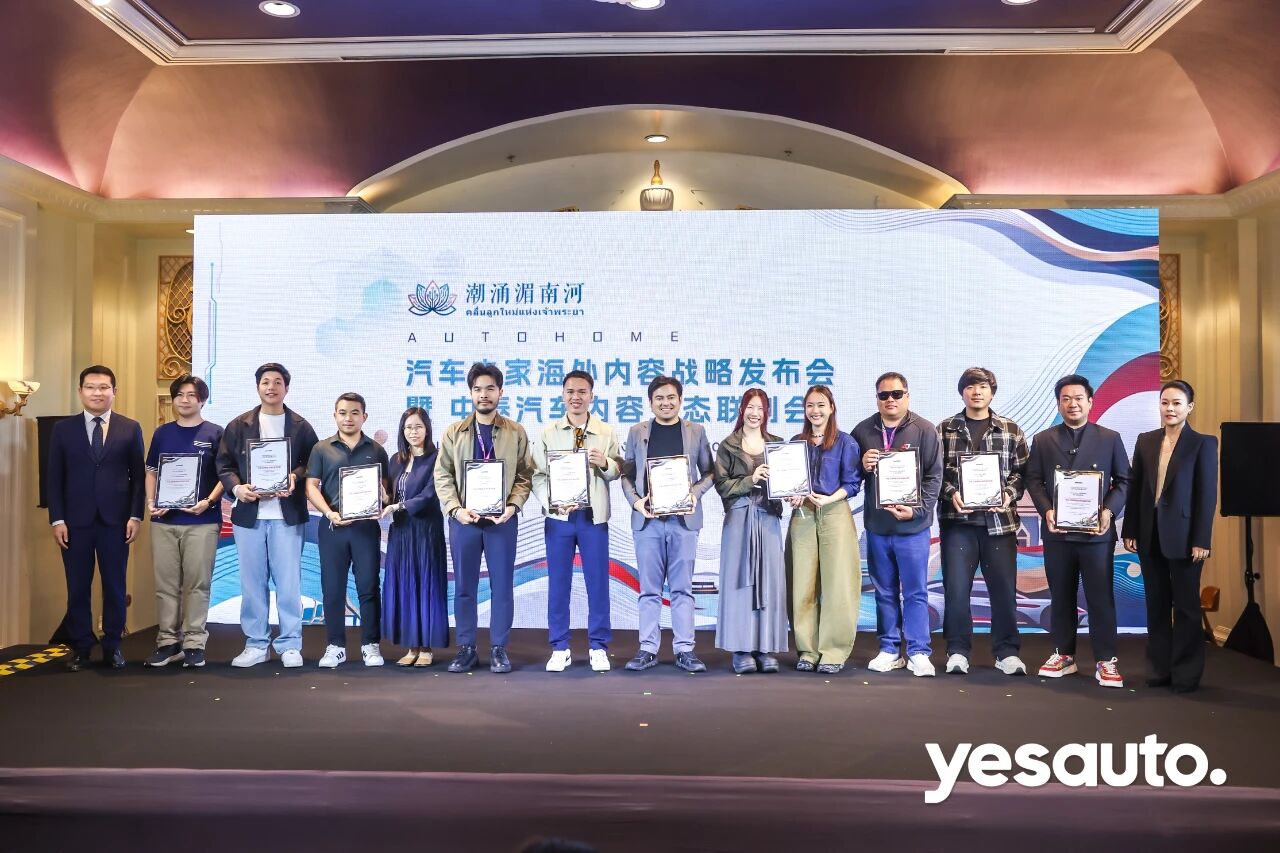
Under this current situation, AutoHome announced at this auto show that its overseas platform YesAuto Thailand Station was officially launched. At the press conference, a series of sharing and discussions also deepened the topic of China's cars sailing to sea:
How can China brands expand their results? What role can media platforms play? Can the content traffic methods accumulated in China be replicated in Southeast Asia? What lessons can the experience of other industries bring from sailing? Can automotive media use automobiles to expand overseas reach, penetrate into local users, content, suppliers, and resources, and become an overseas ecological hub for automobile companies?
Faced with the "unknown sea" of Southeast Asia, discussing these issues has become valuable enough and interesting.
Southeast Asian myth: Isn't the stronger the industrial chain, the better?
To be realistic, car companies have almost completed all the easy routes to sea.
Some of our companies have been deep in the sea for more than a decade. These regular options have been completed quickly, but they have also quickly reached the growth ceiling. It always feels like there is still a step away from the turning point of sales breakthroughs. Unfortunately, some past experiences have become harmful path dependence.
Affected by overcapacity in China, market competition has further intensified. Taking the Thai market as an example, some China brands have been stimulated by the new EV3.5 policy. At the same time, in order to launch attacks on Japanese brands, they have chosen to introduce the domestic price war model to Thailand and frequently lowered terminal prices.
This simple and crude price reduction strategy not only aroused strong dissatisfaction among early car buyers, led to a decline in brand reputation and a sharp drop in the residual value of used cars, but also made the Thai market, which focuses on localized ecological balance, wary of low-price dumping.
What is more serious is that the "production capacity" approach is unsustainable. The planned annual production capacity of China automobile companies in Thailand has reached 550,000 units, but the new policy requires that the ratio of imports to local production reach 1:2 in 2026 and will be tightened to 1:3 in 2027. The speed of production capacity release far exceeds the market's digestion capacity, and some automobile companies have already retreated due to backlash.
At this time, the car companies suddenly realized that the stronger the industrial chain, the better.
In an interview with Tiger Sniff, Cui Fangfang, editor-in-chief of Auto House, mentioned three real dilemmas for China automobile enterprises to go to Southeast Asia: one is that it is difficult to quickly reverse negative labels such as brand value dislocation and low price maintenance; the other is that there are shortcomings in localization operation capability, including price reduction, capacity expansion, insurance, after-sales service and other supporting facilities. Third, there is insufficient cultural narrative ability, lack of in-depth understanding of local culture, values, and consumer psychology, and inability to tell brand stories well in localized language.
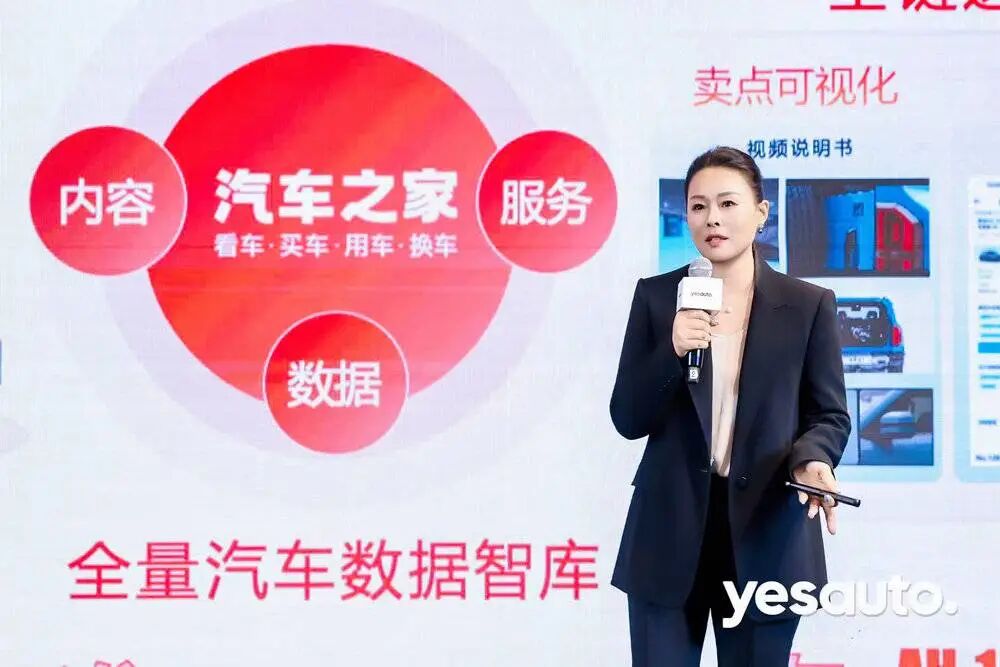
Cui Fangfang, editor-in-chief of Automobile Home
The reality is that in Thailand, which emphasizes "Sanuk" culture, and Southeast Asia, which is deeply connected to society, it is often easier to break through industries with hard power than to break through cognition with soft power.
Therefore, the appearance of professional service platforms such as Car Home comes at the right time.
How to break awareness?
What is the consumer perception of China automobile brands in Southeast Asia?
At present, the overall brand recognition is low and no effective positive label has been formed. It is even associated with negative perceptions such as low prices, lack of value preservation, and dumping. J.D. Power2024 Thailand New Car Club pre-survey shows that the primary reason why consumers do not consider buying China brands is that they are worried about product quality.
How to reverse it? Cui Fangfang said that professional and rich localized content, accurate market data insight, and full ecological role connection across the entire link are irreplaceable values of the AutoHome platform.
The first is to create sound volume and content output. Taking this year's Thailand Auto Show as an example, AutoHome launched an 8-hour full live broadcast in both Chinese and English. The editorial team exported dry goods content on site, covering global social media matrices such as YouTube, Facebook, TikTok, INS, and X. High-intensity and high-density professional reporting is the first time in the history of the Bangkok Auto Show. It directly transformed the collective appearance of China brands into a phenomenal communication event, and the market effect cannot be underestimated.
Through its overseas platform YesAuto, Auto Home has outlined a new narrative paradigm for the brand from information integration to value resonance.
The "Chejiahao" platform of Auto Home brings together more than 50,000 professional creators, producing 100,000 + high-quality content annually and covering 600 million + fans. At the same time, the massive amount of UGC accumulated in the Auto Home station constitutes a rare native data asset and a precious first-hand information database in the industry.
Under this logic, brand stories are no longer self-speaking advertisements, but are naturally embedded in the user's car purchase chain as the optimal solution to users 'pain points.
More importantly, it reshapes the brand discourse system with "localized thinking". Car Home's strategy is not a translation of the China model, but the growth of local narratives. By deeply cultivating the Thai context and gaining insight into local aesthetics, it has helped China brands break through the barriers of cross-cultural communication and allowed brand images to take root in local infrastructure and service systems.
With the launch of the YesAuto Thailand station at Auto Home, in addition to the high-intensity reports mentioned above, the "YesAuto Creators Starlight Project" has also been launched, announcing that the first batch of 100 new Thai creators will be signed in 2026, covering car evaluation and lifestyle., technology digital, Short videos hosting, women's car purchase, new energy experience and other categories, creating a creator ecosystem of "deep co-creation + operation incubation".
The second is data insight. In order to help China car companies familiarize themselves with the Thai market, Auto Home simultaneously released the "2026 China's Automobile Journey to Sea-Thailand Chapter" insight report to systematically sort out the changes in the Thai car market from "Asian Detroit" to electrification, and provide localized cognitive coordinates for China car companies.
Finally, there is in-depth service. At the press conference, Dong Jianping, general manager of Haier Electric in Thailand, detailed Haier's successful experience in Thailand. Dong Jianping emphasized that the era of working alone is over. Only by uniting local partners, integrating high-quality resources, deepening user needs, and creating a 1+1 2 ecological synergy can we achieve long-term development.
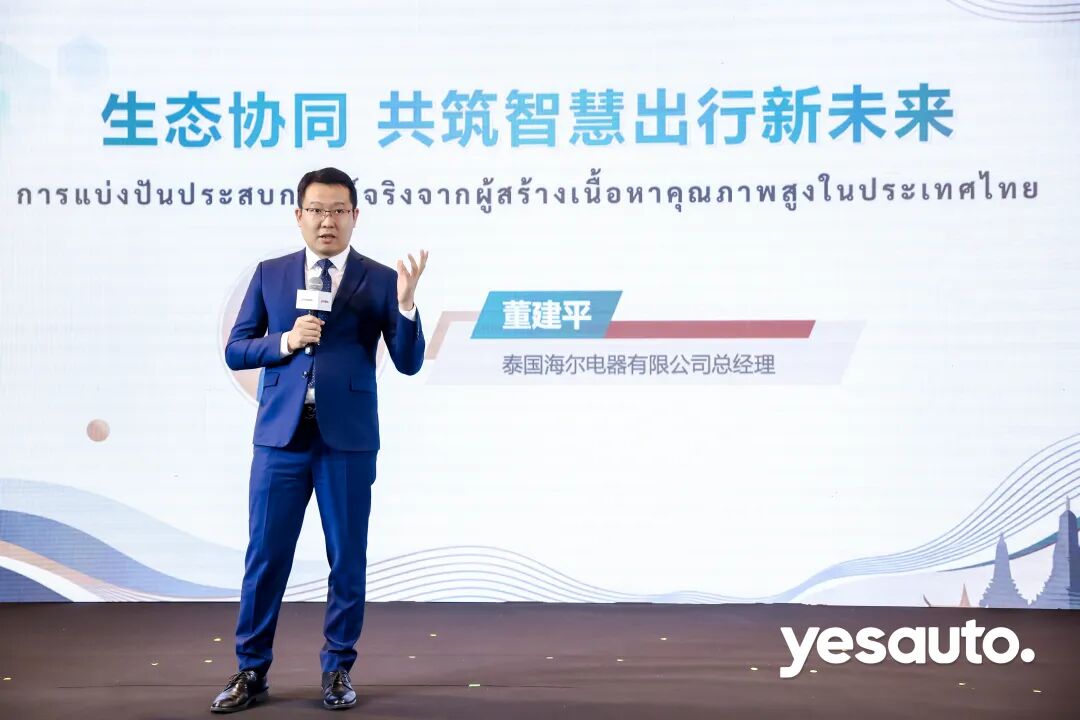
Dong Jianping, General Manager of Haier Electric, Thailand
The ultimate goal of Car Home is to transform from a content producer to a hub for sea: relying on the production capacity of selecting and purchasing data assets and professional content, linking local dealers, supply chains, financial institutions, government and enterprise departments and other resources to replicate the domestic "see-Select-buy-use-exchange" full-link operation experience to localize the Thai and even Southeast Asian markets.
This is exactly the underlying support that China car companies urgently need in the process of globalization. Through the perspective of car home construction, brands can examine their many blind spots in global operations: from filling the information gap in regional markets and reshaping brand expression in cross-cultural contexts to deeply connecting industrial resources and avoiding risks. In this process, China's professional content platforms are no longer just information disseminators, but also strategic collaborators who coexist and prosper with automobile companies.
Perhaps it was precisely because of this that Automobile Home proposed to become the "preferred content ecosystem platform for China automobile companies to go abroad" and transform themselves from "content factory to ecological hub."
From the Chao Phraya River to the sea
Obviously, Thailand is just the first step in the car home's opening up the world map.
Previously, Car Home had a certain global reach, achieving information services in 170 countries and regions around the world through overseas official websites and global social media matrices.
Now it is taking the Thailand Auto Show as an opportunity to move deeper into overseas markets. Auto Home said it will continue to carry out a series of localization actions in the Thai market after that. Including setting up a local team, implementing a dedicated operation platform YesAuto, building local cooperation resources, introducing PK opt-to-buy tools, etc. Completing such full-dimensional and in-depth operations is tantamount to a second venture locally.
It is worth mentioning that Car Home in Thailand is not just a media service, nor is it just a car information service, but a one-stop car comprehensive service platform that provides users with a full-scene experience.
Car Home already has a database of 100% China models in China, as well as mature methodologies such as the AH-100 evaluation system, allowing it to quickly replicate its successful experience in the Thai market. If it lays a solid foundation in Thailand, establishes in-depth cooperation with local dealers, financial institutions, and logistics partners, coupled with AI efficiency improvement and ESG taking root, it should establish institutional advantages in the short term. It can be seen that Car Home is not moving China's platform to Thailand, but to grow a platform belonging to Thailand.
What after that? Cui Fangfang believes that the media is the "peer" of car companies going abroad, the "amplifier" of brand value, and the "connector" of industrial collaboration. She explained to Hu Xian the three-step plan for the global layout of Auto Home:
2026 is the "year of taking root". Let YesAuto Thailand Station be put into operation, complete the construction of local teams and the construction of local content ecology, and achieve full coverage of information on popular Thai models, so that every popular car sold in Thailand can be checked and understood;2027 is the "year of service upgrade". We will gradually try to explore online car selection + offline delivery services to help car companies achieve the integration of product, efficiency and sales; 2028 is the "year of global growth", copying the Thai model to other countries and radiating global potential markets.
It is foreseeable that once Thailand's sea-going model is successfully implemented, Car Home will be quickly promoted and replicated in several other regions, and then become an "ecological hub" on a global scale.
At that time, the media, as a companion and accelerator for car companies to go abroad, will help car companies reduce trial and error costs, amplify brand value, and promote industrial collaboration on a global scale. China automobile brands will also take advantage of the trend to complete the leap from products to influence and speak.
This is what we would like to see. We look forward to the continued export of China's automobile industry, and we look forward to the professional service platform represented by Auto Home to work with China automobile companies to jointly write a new narrative of the globalization of China's automobiles.
Source: Tiger Sniff APP
[Disclaimer] The content of this website (including pictures and texts) originates from the Internet, and the copyright belongs to the original author. Respect the rights and interests of originality, and select content is only used for information sharing. If copyright disputes are involved, please contact us to handle the deletion in a timely manner.

 Online Evaluation
 I am Buyer
 Export Services
 subsites


 023-62852688
  No. 1-1, No. 2899, Longzhou Avenue, Banan District, Chongqing City
 Headquarters


