
 Chinese
 Russian
 Arabic
Although it is not easy for China complete vehicles to enter Brazil directly, in the future, if we use regional cooperation, CKD/SKD assembly, enter from the markets of MERCOSUR member states, and then penetrate into regional core markets, it may be more realistic than a single breakthrough...
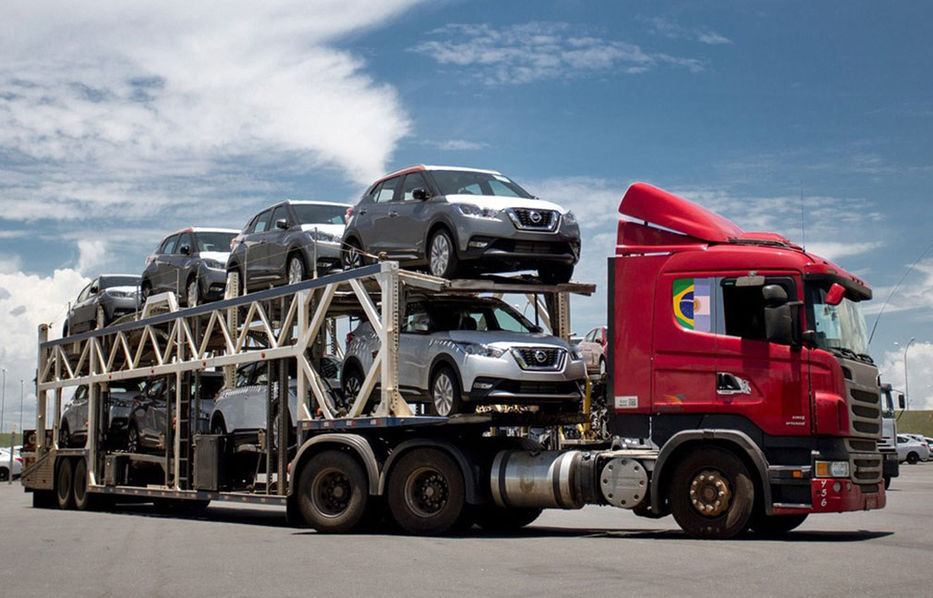
Brazil's automobile import policy has recently undergone new changes.
According to Spanish-language media reports, the Brazilian government officially announced a new resolution on Wednesday: in the future, when importing cars and auto parts from Argentina, Paraguay and Uruguay, member states of the Common Market of the South (MERCOSUR),there is no need to apply for import licenses in advance. The new rules will take effect immediately from the next day.
On the surface, this is just a simplification of administrative procedures; but if you look at it in the context of the South American automobile trade pattern, this is actually another step taken by Brazil in regional automobile circulation. For China's used car exporters, although this news does not directly mean that "China cars can enter Brazil more easily," it will affect the flow of cars around Brazil, the regional competition pattern, and may even change the way to enter the South American market in the future.
What has Brazil changed this time?
According to the Brazilian Ministry of Economy, the core of this new measure is to cancel theimport pre-licensesrequired in the past to import cars from Argentina, Paraguay and Uruguay. In the future, when relevant vehicles enter Brazil, they will no longer need to issue an import license in advance by the Foreign Trade Secretariat (Secex) of the Brazilian Ministry of Economy. Instead, theywill be supervised by other methods after customs clearance and release.
Brazilian Foreign Trade Secretary Lucas Ferraz said that eliminating prior licensing and moving to post-event controls would "speed up the import process, reduce costs, and benefit Brazilian importers and consumers."
In other words, Brazil has not completely liberalized car imports, but has changed its supervision method from "approval first and later" to "inspection later". Such changes are common in many countries and are essentially aimed at improving customs clearance efficiency, reducing paperwork burdens and reducing trade frictions.
A simple comment:
For people who do trade, what they fear most is not supervision, but slow approval, long process, and uncontrollable time. The core of Brazil's adjustment this time is to make the flow of regional cars smoother.
This is not comprehensive opening up, but "accelerating within the framework"
It needs to be noted that Brazil's simplification of procedureshas not changed the existing automobile trade agreement with its MERCOSUR partners. In other words, the original bilateral or regional automobile agreements, import quotas, rules of origin, etc. will continue to be effective.
Brazil's Ministry of Economy also emphasized that this facilitation measure will not harm the interests of domestic automakers, because Argentina, Paraguay and Uruguay still need to abide by existing industry agreements with Brazil, including quota arrangements.
This is very critical. Because many people see the "cancellation of import licenses", they can easily mistake them into thinking that Brazil has fully liberalized cars in neighboring countries. Actually it's not. Brazil has only reduced administrative procedures, but has not eliminated institutional borders on car trade.
This is like changing a highway toll station from manual to ETC. Traffic is faster, but the road is still the same road and the rules have not changed.
The automobile trade in MERCOSUR is not completely free.
Although MERCOSUR has always been regarded as one of the largest free trade areas in Latin America and is theoretically part of a customs union, in the automobile industry, trade among member states has not been completely liberalized, but has been specifically bound by bilateral agreements.
The report mentioned that the timetable for comprehensive liberalization of automobile trade in the southern Communist Party of Chinais 2029. Prior to this, trade in automobiles and parts was still mainly carried out based on bilateral agreements signed between Brazil and various member states.
The most important of these agreements is of course the car agreement between Brazil and Argentina. Brazil and Argentina are the two largest automobile markets in MERCOSUR and each other's most important automobile trading partners.
According to current rules, for every US dollar of automotive industry products imported by Brazil from Argentina, it can export US$1.80 of related products to Argentina; if Brazil exports exceed this proportion, the excess will be subject to tariffs. According to the agreement, this ratio will gradually increase to 3:1 by 2028, and full free trade will be achieved from July 2029.
What does this arrangement mean? This shows that although Brazil accepts regional integration, it is still very cautious in the automobile industry. It hopes to gradually liberalize rather than achieve it in one step.
This is also in line with Brazil's consistent idea of industrial protection-openness can be done, but it must be controllable, and buffer space must be left for domestic industries.
What is the difference between the situation in Paraguay and Uruguay?
Compared with Argentina, the automobile trade arrangements between Brazil and Paraguay and Uruguay are more differentiated.
Brazil and Paraguay signed a new bilateral car agreement in February 2020. The agreement allows cars and parts produced in Paraguay to enter Brazil freely, while Brazilian vehicles entering Paraguay are subject to a 2% tariff, which will subsequently be gradually reduced and is planned to drop to zero by the end of 2022.
The agreement between Brazil and Uruguay was signed in 2015. Since then, both sides have eliminated import quotas. As long as at least 55% of the parts and components of vehicles produced in Uruguay come from MERCOSUR and at least 60% of the parts and components of vehicles produced in Brazil come from MERCOSUR, the two sides can achieve bilateral free trade.
It can be seen from here that MERCOSUR's automobile trade is not a unified template, but highly relies on separate negotiations and setting thresholds and transition periods among countries.
For China companies, this means that if they want to truly deepen South America in the future, they cannot just study "what is the Brazilian import tax?" but must study regional rules, the proportion of origin, bilateral agreements and localization requirements. These things are more important than a single tariff.
What practical implications are there for China used car exporters?
Let's start with the conclusion: This policy will provide very limited help to China's direct export of used cars to Brazil in the short term, but it is valuable for understanding the structure of the South American market.
The reason is simple. This facilitation measure only applies to partner countries within MERCOSUR and not to China. In other words, China exporters will not directly enjoy the benefits of simplified import procedures in Brazil because of this new rule.
But it still deserves attention, at least in several ways.
First,regional barriers in the Brazilian market are gradually shifting from "tariff barriers" to "rule barriers."
In the past, people always liked to focus on tax rates, thinking that if the tax was low, there would be opportunities, but if the tax was high, there would be no opportunities. In fact, in the automobile trade between Brazil and MERCOSUR, the more critical issues are agreement status, rules of origin, bilateral arrangements and industrial policy position. Whoever is within the rules has faster customs clearance and lower costs; whoever is outside the rules, even if the product is good, may not be able to enter easily.
Second,the accelerated flow of cars in South America means that China cars will face stronger regional competition.
If vehicles and parts from Argentina, Uruguay, and Paraguay make it easier to enter Brazil, the supply sources in Brazil's local market will be richer. For China brands, whether it is new cars or possible second-hand car business in the future, the competitors are not only Europe, America, Japan and South Korea, but also the increasingly closely linked South American regional industrial chain.
Third,it may also force China companies to consider "entering" South America.
Although it is not easy for China's complete vehicles to enter Brazil directly, in the future, if we use regional cooperation, CKD/SKD assembly, establish supply relations with MERCOSUR member states, or cut in from surrounding markets and then penetrate into regional core markets, it may be more realistic than a single breakthrough.
Source of information:https://www.montevideo.com.uy/Airbag/Brasil-facilita-importacion-de-autos-procedures-de-los-paises-del-Mercosur-uc796929
Source: Guangdong Good Car
[Disclaimer] The content of this website (including pictures and texts) originates from the Internet, and the copyright belongs to the original author. Respect the rights and interests of originality, and select content is only used for information sharing. If copyright disputes are involved, please contact us to handle the deletion in a timely manner.

 Online Evaluation
 I am Buyer
 Export Services
 subsites


 023-62852688
  No. 1-1, No. 2899, Longzhou Avenue, Banan District, Chongqing City
 Headquarters


