
 Chinese
 Russian
 Arabic
While the popularity of passenger cars going to sea has not yet faded, another more explosive track has emerged-China commercial vehicles are sweeping the global market with an unstoppable attitude, becoming a new business card for China's manufacturing industry to go global, rewriting the century-old pattern of the global commercial vehicle industry.
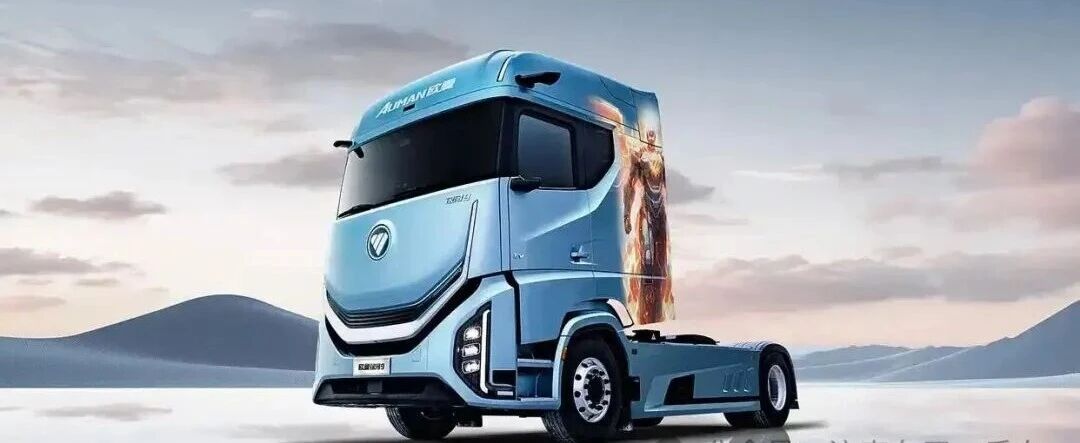
Once upon a time,"Made in China" was still labeled as "cost-effective" in the overseas commercial vehicle market. Most of them used low-end products to cut in, making it difficult to break through the monopoly of European and American giants. But today, this situation has been completely broken: from mining sites in Southeast Asia to urban streets in Latin America, from high-end markets in Europe to transportation corridors in Central Asia, China's commercial vehicles are everywhere, from "product going to sea" to "ecological going to sea", and from "follower" to "leader".
Groups of eye-catching data bear witness to the explosive growth of China's commercial vehicles going to sea, and also confirm the real arrival of this outlet. In 2025, China's commercial vehicle exports exceeded the million mark for the first time, reaching 1.06 million, a year-on-year increase of 17.2%. Among them, the growth rate of new energy commercial vehicle exports was as high as 86.8%, showing strong growth momentum. Entering 2026, this momentum will continue. Export volume in January increased by 23.6% year-on-year. Overseas markets have become the core driving force for the growth of commercial vehicle sales in China, opening a new two-wheel drive pattern of "domestic demand recovery and export power."
Under the wind, it has never been an accidental outbreak, but the inevitable result of years of accumulation and development of China's commercial vehicle industry. Once upon a time, the right to speak in the global commercial vehicle market was firmly grasped by century-old giants in Europe and the United States. There were Kenworth and West Star in North America, and Daimler and Volvo in Europe. With their mature technological accumulation and brand mentality, they built insurmountable market barriers. However, China commercial vehicle companies have quietly cultivated and continued to make efforts in the three dimensions of technological innovation, industrial chain improvement, and localized operations, and have finally embarked on their own path of globalization.
Technological breakthrough is the core confidence for China's commercial vehicles to go abroad. Today's commercial vehicles in China have long gotten rid of the label of "low-end imitation" and have achieved a leap from following to leading the way in the fields of new energy and intelligence. In the technology paths of pure electric, hydrogen fuel, and hybrid power, China companies have made major breakthroughs, forming independent and controllable technical systems in key areas such as batteries, motors, and electronic controls, and even integrating mature intelligent driving and intelligent cockpit technology in the passenger car field adapts to commercial vehicle scenarios, allowing intelligence to truly transform into user-perceptible operational value. BAIC Foton's high-end pickup truck TUNLAND V9 won the International Pickup Truck Awards (IPUA) 2026 Award. Foton's pure electric trucks have entered the markets of developed countries such as Germany and Italy. Ankai Bus has passed many international certifications such as EU WVTA and US DOT. These all confirm that the technical strength of China's commercial vehicles has been recognized globally.
The complete industrial chain lays a solid foundation for the road to sea. China has the most complete electric vehicle industry chain system in the world, with power battery production capacity accounting for more than 60% of the world's share. This vertical integration capability allows China commercial vehicle companies to quickly respond to the diversified needs of overseas markets in a more cost-effective way, forming competitive advantages that are difficult to replicate. From vehicle manufacturing to parts supply, from R & D and design to testing and certification, China's commercial vehicle industry has formed a closed loop, which can efficiently complete product iteration and market delivery, supporting the demand for large-scale sea trips.
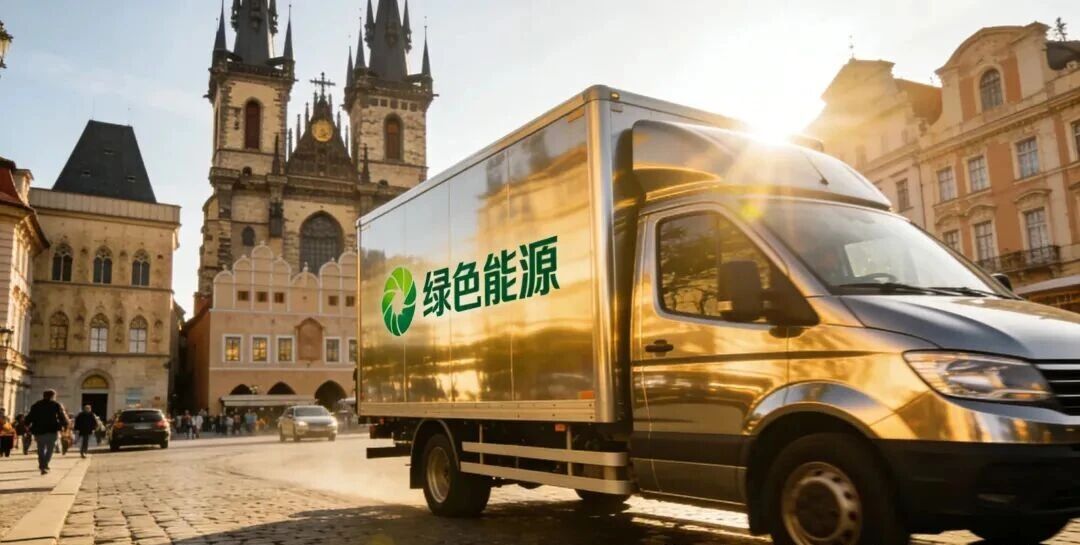
The deep cultivation of localization will allow China's commercial vehicles to truly "take root" in the global market. Simple vehicle exports have long been unsustainable. Building a localized ecosystem covering R & D, production, supply, sales, and services has become the key to the stability and long-term development of China companies. BAIC Foton completed and put into operation a factory in Brazil, rolled off the production of the 2000th heavy truck in Thailand, localized production of heavy trucks and pickup trucks in South Africa, signed a contract for a localized factory in Saudi Arabia, and signed a contract with Dangote Group, Africa's largest industrial group. In February this year, it signed a contract with Over a thousand logistics and transportation orders, deeply integrating into the local economy and society with localized operations. Jiangqi Group tailors electric pickup trucks to meet the needs of the Singapore market, Jinlu Bus optimizes vehicle design based on Tanzanian road conditions, and Foton Motor has deployed more than 220 sales and service outlets and 12 localized factories in Africa. These measures are all solving the problem of "acclimatization" and allowing China's commercial vehicles to truly adapt to the needs of different markets around the world.
From "selling products" to "creating ecology," the sea-going model of China's commercial vehicles is undergoing profound qualitative changes. BAIC Foton innovatively launched an integrated green energy ecosystem of "vehicles + piles + light + storage + load + intelligence", exploring business models such as vehicle-electricity separation and battery banking to provide comprehensive services throughout the life cycle for overseas users; Chery Commercial Vehicles has created a "Car Purchase-Operation-Maintenance-Disposal" one-stop service system for the whole life cycle, coordinating ecological resources such as finance and insurance to solve the operating worries of global users, transforming from a simple equipment manufacturer to a comprehensive service solution. This deep sailing of the entire value chain allows China's commercial vehicles to build a deeper "moat" in global competition.
Of course, under the wind, challenges and opportunities coexist. At present, the proportion of new energy commercial vehicle exports still accounts for less than 8%, which contrasts with the penetration rate in the domestic market. The high-end market of fuel commercial vehicles is still dominated by European and American giants. Geopolitics, trade barriers, and the perfection of overseas service networks are all obstacles that China commercial vehicles need to overcome when going out to sea. However, it is undeniable that the trend of China's commercial vehicles going to sea is irreversible. The milestone of "one million exports" has established China's status as the world's major supplier of commercial vehicles. China's commercial vehicles are transforming from a participant in the global supply chain to a shaper of the global industrial pattern.
Once upon a time, China's manufacturing went to sea based on the "stepping stone" of cost performance; now, China's commercial vehicles go to sea based on the "hard power" of technology, brand and ecology. From passenger cars to commercial vehicles, the track for China's cars to go to sea continues to expand; from product export to technology export and ecological export, the global influence of Made in China continues to increase.
The tuyere has arrived, and the future is promising. The journey of China's commercial vehicles to sea is not only a microcosm of the high-quality development of China's manufacturing industry, but also a vivid practice of China brands going global. It is believed that driven by technological innovation and deep cultivation of localized operations, China's commercial vehicles will continue to sweep the world, truly becoming the "new trump card" of manufacturing in China, and writing a new chapter of globalization belonging to China's automobile industry.
Source: Leading the way to the sea by Gaoshen's car
[Disclaimer] The content of this website (including pictures and texts) originates from the Internet, and the copyright belongs to the original author. Respect the rights and interests of originality, and select content is only used for information sharing. If copyright disputes are involved, please contact us to handle them in a timely manner

 Online Evaluation
 I am Buyer
 Export Services
 subsites


 023-62852688
  No. 1-1, No. 2899, Longzhou Avenue, Banan District, Chongqing City
 Headquarters


