
 Chinese
 Russian
 Arabic
A new change is emerging in the Middle East auto market that deserves vigilance and excitement: more and more consumers are beginning to regard "second-hand electric vehicles" as a realistic choice to hedge against fluctuations in oil prices...
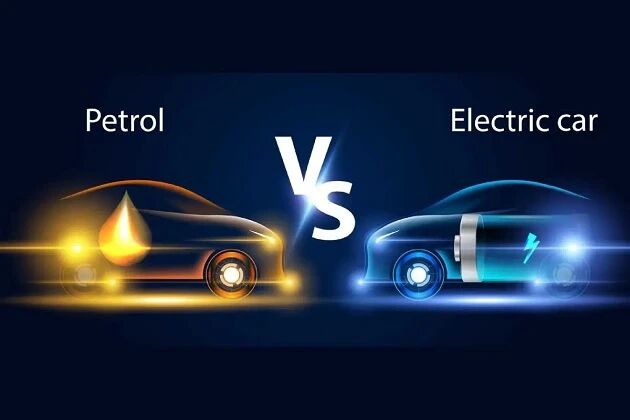
A new change is emerging in the Middle East auto market that deserves vigilance and excitement: more and more consumers are beginning to regard "second-hand electric vehicles" as a realistic choice to hedge against fluctuations in oil prices.
Global consumer preferences are undergoing a "sudden power shift"-a trend driven not by the environmental narratives with a little "attitude" of the past, but by successive oil price shocks, uncertainty in traditional fuel supply chains, and the reality of squeezing household budgets under inflationary pressures. Nowadays, used electric vehicles are no longer the icing on the cake "green consumption", but more like a carefully calculated "economic account".
Why did "second-hand electric vehicles" become popular first?
Once an electric vehicle is used by the first owner, its market value will be significantly depreciated, which causes the "buying threshold" to drop rapidly. As a result, a second-hand electric vehicle that has been discounted has formed a kind of "cost-effective window"-the purchase price is lowered, but the daily use cost is still low, and the overall book becomes better.
More importantly, in the past, the biggest psychological barrier to electric vehicles among middle class middle class in the Middle East is loosening:
One is that new cars are too expensive; the other is that they are worried about battery life. Now, as battery technology matures and vehicle usage data becomes more transparent, second-hand car buyers 'anxiety about "how long the battery will last" is declining, and second-hand electric vehicles have begun to move from "niche adopters" to "mainstream considerations."
Electrification may not be the fastest in the Middle East market, but once consumers start calculating monthly fuel bills and annual maintenance fees, used electric vehicles will often penetrate faster than new ones-because it solves the problem of "affordability".
It's not just fuel money that saves, maintenance costs are the "hidden line"
Electric vehicles have fewer moving parts, and regular maintenance costs can be reduced by up to about 40% compared with fuel vehicles. This is particularly sensitive in the Middle East: many areas have high mileage and high vehicle intensity. What really weighs down on the family budget is not necessarily the purchase price, but the subsequent continuous expenditure (fuel costs, maintenance, repairs, wearing parts).
At the same time, as fast charging networks in major cities expand,"mileage anxiety" is also weakening. Buying used electric vehicles is a "smart investment": it not only conforms to technological trends, but also tries to protect household expenses from being driven by oil prices amid the sharp fluctuations in energy prices caused by geopolitics.
This is a strong inspiration for exporters: When consumers regard cars as a "household expense management tool", product selling points switch from "power and face" to "total cost of ownership (TCO)", and used electric vehicles naturally adapt to this narrative.
Regional level: The Middle East is increasing imports of used electric vehicles from Europe and the United States
At the regional market level, imports of used electric vehicles are heating up, and the current increase comes more from Europe and the United States, benefiting to a certain extent from "emission-oriented" tariff facilitation and tax incentives.
This is actually a "contrast signal" for China's used car export industry:
Demand in the Middle East is on the rise, but the vehicle source structure is still biased towards Europe and the United States.
The reasons are not complicated: second-hand electric vehicles in Europe and the United States are more recognized locally, interface standards are easier to adapt, and early import channels are more mature. However, in terms of supply capacity, China is one of the countries with the strongest stock and industrial chain of new energy vehicles in the world. If the demand for used electric vehicles in the Middle East really enters a growth channel, China's vehicle sources theoretically have more price and supply advantages.
For China used car exporters: Where are the opportunities and the thresholds?
First of all, the core thing for used electric vehicles to run in the Middle East is not "whether there are customers", but "whether customers can be reassured." There are three things customers care about most: battery health, charging compatibility, and after-sales accessibility. Without these three items, no matter how low the price is, it will be regarded as a risky asset.
Second, don't just focus on "pure electricity". Many customers in the Middle East have very different vehicle radii and charging conditions. In some scenarios, technology routes that reduce fuel consumption without relying on charging networks (such as hybrid/plug-in hybrid) may make it easier to open sales-of course, this depends on destination country policies and customer preferences, and cannot be one size fits all.
Third, the export side can change the marketing logic from "new energy is very advanced" to "saving money in an era of uncertain oil prices." It's not that consumers in the Middle East don't accept new technologies, but they care more about certainty.
written in the end
Regional market concerns have shifted from "When will we shift to electrification?" It became "How do we seize opportunities in the second-hand market?" This means that traditional fuel car factories and gas stations will have to rethink their business models, and the used car trade chain will also be reshaped.
For China's used car exporters, the wind may not sweep the Middle East overnight, but it has set the direction: when oil price fluctuations become the norm, used electric vehicles may turn from marginal products to "new demand" in the Middle East market.
Source: Guangdong Good Car
[Disclaimer] The content of this website (including pictures and texts) originates from the Internet, and the copyright belongs to the original author. Respect the rights and interests of originality, and select content is only used for information sharing. If copyright disputes are involved, please contact us to handle the deletion in a timely manner.

 Online Evaluation
 I am Buyer
 Export Services
 subsites


 023-62852688
  No. 1-1, No. 2899, Longzhou Avenue, Banan District, Chongqing City
 Headquarters


