
 Chinese
 Russian
 Arabic
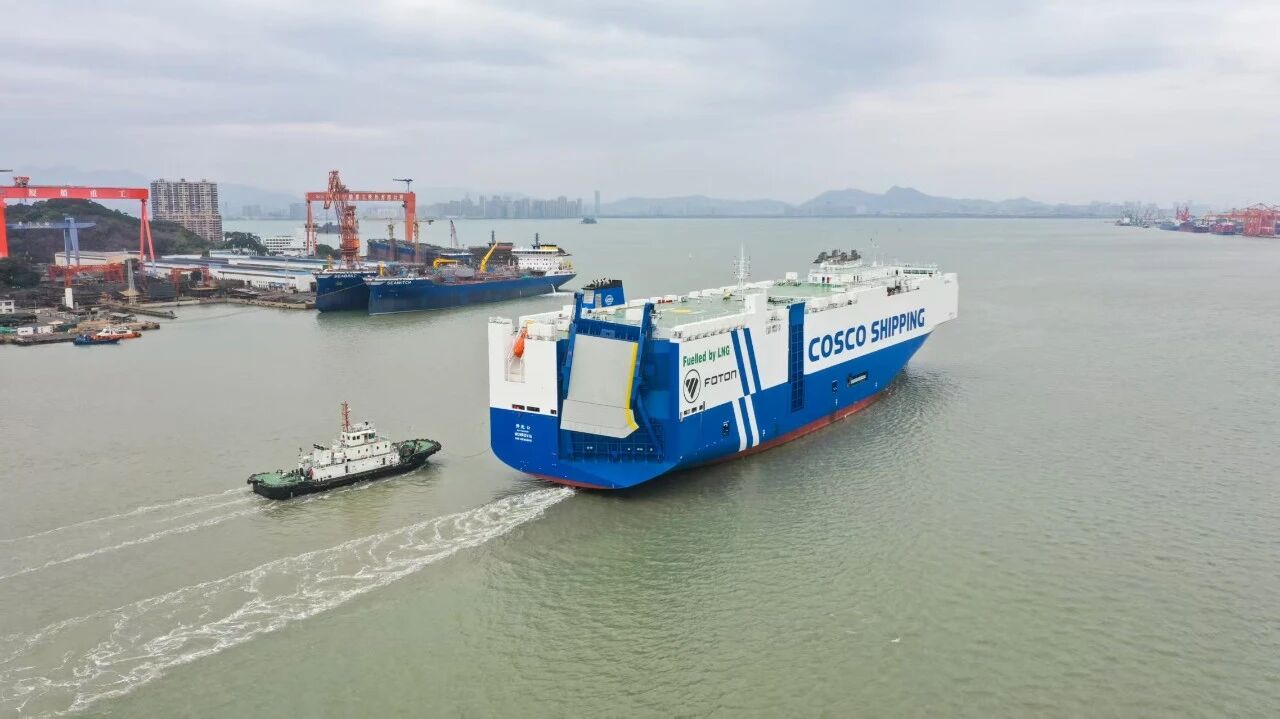
Recently, the entry ##China's new energy vehicle exports has completely exploded.
At the end of March, Damaiyu Port in Taizhou, Zhejiang Province officially opened a new route to Malaysia. The export volume of complete vehicles during the voyage hit a new high for a single shipment in the port area; the export volume of complete vehicles in the Jiangyin Port Area of Fuzhou Port reached 16397 vehicles in the first quarter, a significant increase year-on-year, setting a new record for the same period in history.
While new energy vehicles continue to sell well and the global recognition of China brands continues to increase, a practical problem is becoming more and more prominent: shipping capacity is seriously unable to keep up with, a cabin is difficult to find, cars and other ships, and freight rates remain high., becoming a key bottleneck restricting the globalization of China's automobiles.
Although the difficulty of obtaining a cabin in 01 has eased, the capacity gap is still tight
The problem of tight transportation capacity of automobiles to sea will erupt as early as 2022. At that time, the domestic new energy automobile industry entered a period of rapid growth, and export volume jumped year after year. According to the data released by the China Automobile Association, it exceeded 3 million vehicles in 2022, reached 4.91 million vehicles in 2023, and completed 5.86 million vehicles in 2024. In 2025, it climbed further to nearly 7.1 million vehicles. The industry unanimously predicts that exports will exceed 8 million vehicles in 2026.
The latest data just released further confirms the popularity of automobile exports: 349,000 new energy passenger vehicles were sold in March, a year-on-year increase of 139.9%, and a month-on-month increase of 29.6%. Demand is strong in Europe, Southeast Asia, South America, the Middle East and other regions, with the growth rates in markets such as Brazil, Mexico, and Russia being particularly prominent.
However, behind the soaring export volume, the production capacity of ocean-going automobile carriers has seriously lagged behind. International shipping resources have given priority to protecting local automobile companies. China automobile companies once fell into a passive situation of "having cars but no ships, and it is difficult to deliver orders." Shipping prices have skyrocketed, shipping schedules have frequently been delayed, and vehicle overstocked in ports have become the norm.
After several consecutive years of concentrated industry replenishment, about 60 new car ships have been delivered every year around the world. The shortage of transportation capacity has eased compared with the most severe period, but the overall situation is still tight.
Du Xiaotian, general manager of Guangzhou Yuanfu Automobile Supply Chain Co., Ltd., said that currently, the cabin space on mainstream routes such as Europe, the Red Sea, and the Americas is always in a state of tension. Especially in April this year, affected by Brazil's tariff policy, a large number of car companies needed to complete shipments before the window period. Demand for emergency shipments broke out intensively. The phenomenon of "looking for ships and grabbing cabins" was very common in the market, directly pushing shipping prices up again. Two years ago, the maximum daily rent for cars and boats exceeded US$110,000. Although it has dropped back to US$60,000 to US$70,000, it is still at a historical high, and the tight balance between supply and demand has not fundamentally changed.
According to industry forecasts, China's automobile exports are expected to hit 10 million vehicles around 2030, of which about 70% will need to rely on professional car ships for transportation. Based on the annual transportation capacity of a single ship of 25,000 units, even if the fleet continues to expand in the future, the medium-and long-term capacity gap will still be very significant.
02 Shipbuilding companies and vehicle companies rush in both directions to build ships crazily to make up for the gap
Faced with the persistent shortage of transportation capacity, shipping companies, vehicle companies, and shipyards have joined forces to work simultaneously from three paths: expanding shipbuilding, deep joint ventures, and self-built fleets to effectively improve the supply structure and stabilize the sea channel.
A milestone breakthrough was achieved in the shipbuilding field. On March 31, the world's first 10800-truck LNG dual-fuel vehicle carrier built by CSSC Guangzhou Shipbuilding International for South Korea's HMM was successfully tested in Nansha, Guangzhou, marking that China officially entered the first echelon of building 10,000-car high-end vehicle ships. The ship has a large loading capacity, green and low-carbon, and is highly suitable for the transportation needs of new energy vehicles. At the same time, many domestic shipyards hold a large number of orders for car ships, continuing to supplement high-quality transportation capacity to the industry.
Deep binding and joint ventures between automobile companies and shipping companies have become a new trend. On March 26, BAIC Foton and COSCO Shipping Special Transportation jointly established Guangzhou Yuanfu Automobile Supply Chain Co., Ltd., which specializes in providing BAIC Foton with full-scale integrated logistics services such as vehicle sea transportation, land transportation, warehousing, and distribution. It simultaneously invested in a spraying BAIC Foton Logo's exclusive car ship solves the pain points of "cars waiting for ships, soaring freight rates, and uncertain shipping spaces" from the source with long-term stable transportation capacity. This model not only ensures the security of the supply chain of automobile companies, but also provides stable supply of goods for shipping companies, becoming a replicable cooperation sample in the industry.
At the same time, in order to seize the initiative in shipping, leading car companies have deployed their own fleets. SAIC Anji Logistics has more than 20 car ships, leading the scale; BYD's fleet has reached 8 ships; Geely and Chery each hold 2 to 3 ships, focusing on ensuring transportation in core markets.
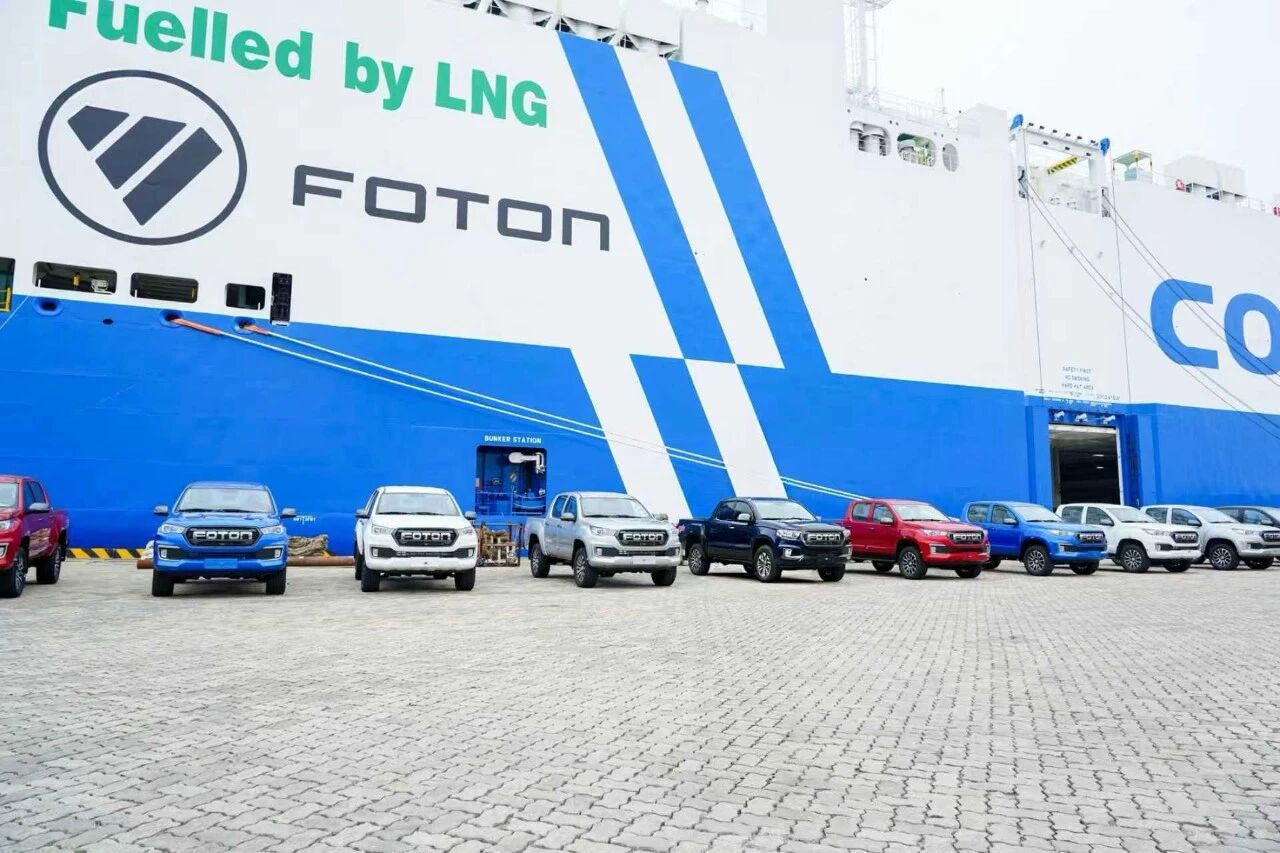
Du Xiaotian believes that car companies can build their own fleets or participate in shipbuilding. On the one hand, they can accurately match their own sailing rhythm and product characteristics and reduce the delivery risks caused by fluctuations in external transportation capacity; on the other hand, they can be based on the special requirements of new energy vehicle transportation. Put forward more professional suggestions on ship design and functional configuration, promote the continuous optimization of the transportation capacity structure, and become an important supplementary force to alleviate industry tensions.
03 Maintaining the bottom line of the supply chain, the local fleet is the real confidence
Global demand for new energy vehicles continues to heat up, creating a rare strategic window for China's new energy vehicle exports. Such a good opportunity, can not let the lack of transport capacity drag down.
In the short term, it is necessary to expand ships and charter ships to relieve the pressure. In the long run, it is necessary to build an autonomous, controllable, green and efficient automobile shipping system with global layout. Drawing lessons from the mature experience of Japan and South Korea is the most stable path. More than 90% of the export share of Japanese automobile manufacturers is carried by three local shipping companies; Korean automobile manufacturers almost all rely on domestic shipping companies. Lessons learned during the epidemic have proved that only domestic capacity can truly maintain the bottom line of supply chain security at critical moments.
Judging from the progress of fleet construction, China's automobile shipping force is growing rapidly. Take COSCO Shipping Special Transportation Offshore Motor Ship Company as an example. As of April 2026, it has operated 31 ships. In 2026, it will continue to deliver and lease new ships. The scale is expected to reach 34 ships by the end of the year. Du Xiaotian introduced that at present, the total capacity of China's local automobile and ship companies is about 76 ships, and it is expected that more than 30 ships will be added during the "15th Five-Year Plan" period. Even so, in the face of export demand of tens of millions of vehicles, it is still necessary to maintain a moderate pace of expansion and continue to increase the proportion of professional cars and ships.
It is worth mentioning that green transformation is becoming the core competitiveness of China's automobile shipping. At present, international environmental protection rules such as the EU carbon tax are becoming increasingly strict, and traditional fuel-fired ships may face high fines and rising operating costs. China's shipping companies are leading the way in the field of green ships. Taking COSCO Shipping Special Transportation Offshore Motor Ship Company as an example, the proportion of LNG clean energy ships has exceeded 80%. In the future, new ships will also explore low-carbon and zero-carbon fuels such as methanol and ammonia energy to better meet global carbon reduction requirements.
Facing the future, China's automobile shipping is upgrading from an industry follower to a participant and leader. Du Xiaotian said that in the past, my country's automobiles relied on foreign shipping companies and international standards to go out to sea. Now, with the growth of local fleets, improvement of technical capabilities, and maturity of service models, China has the ability to extend its automobile manufacturing advantages to the field of shipping services and promote China's transportation standards, operating standards, and safety standards to the world. China Automobile and China Shipping are expected to join hands to move to the center of the global stage and jointly create a new global business card that empowers China Manufacturing and China Services.
Source: China Automobile News
[Disclaimer] The content of this website (including pictures and texts) originates from the Internet, and the copyright belongs to the original author. Respect the rights and interests of originality, and select content is only used for information sharing. If copyright disputes are involved, please contact us to handle them in a timely manner

 Online Evaluation
 I am Buyer
 Export Services
 subsites


 023-62852688
  No. 1-1, No. 2899, Longzhou Avenue, Banan District, Chongqing City
 Headquarters


