
 Chinese
 Russian
 Arabic
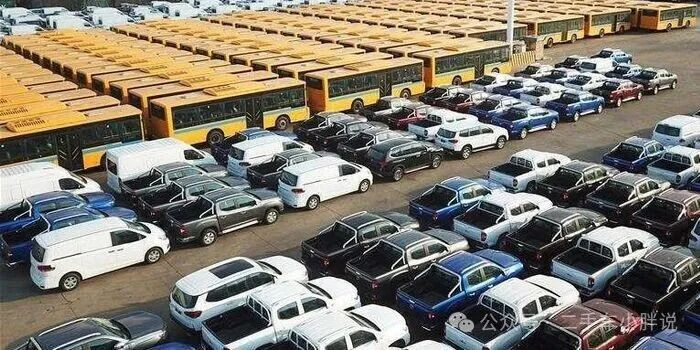
At present, the supply of vehicles in Suifenhe City cannot keep up with orders. A thousand vehicles can be sold for a thousand vehicles. There is too much demand in the market." Ge Jinqiu, general manager of Dr. Cha's overseas business, said that due to the excessive demand, there are also Russian Internet celebrities who come to Suifenhe to buy cars, and they can meet them in the parking lot almost every day.
Since China launched the pilot project on used car exports in 2019, used car exports have "surged forward." Data from China Automobile Dealers Association shows that in 2024, China's total exports of used cars exceeded 436,000 units, a year-on-year increase of 46.5%. Exports cover more than 160 countries and regions in Southeast Asia, the Middle East, Europe, Latin America and other places.
Luo Lei, vice president of China Automobile Dealers Association, said that currently, China's second-hand car exports are in a golden period of policy dividends and market explosions. China's second-hand car exports have provided a solid foundation for China's second-hand car exports.
However, behind the turbulence is also densely covered with reefs: the source of vehicles is highly fragmented, making it difficult for overseas buyers to gather orders for "one container of the same model"; used cars are "one vehicle in one condition", and testing, certification, and communication costs remain high; after-sales and services have been cut off. Since last year, many China's diplomatic missions abroad have received complaints against China's used cars.
How should China's second-hand car exports shift from barbaric growth to "intensive cultivation"? The industry is trying to break through standardization, scale, and standardized development.
At the recently held 2025 China Used Car Export Ecology Conference, the China Automobile Dealers Association and China Car Rental took the lead in establishing the "Used Car Agency Vehicle Source Export Working Group", which plans to gather and integrate multiple vehicle sources to achieve unified standards, transparent vehicle conditions, and synchronize the output of accessories and after-sales systems, forming a trinity ecological closed loop of "vehicle sales-accessory supply-service guarantee", upgrading China's used cars from "fighting each other" to "gathering together to go out to sea". Push the "export heat wave" deeper and further.
Emerging markets are in short supply
"China's used car exports are in a golden period of policy dividends and market explosions." Luo Lei said straight to the point. As China's automobile industry continues to develop in depth, second-hand car sources are being formed in batches on an unprecedented scale and pace.
Operating vehicles retired in batches by leasing companies, iterative updates of compliant online ride-hailing on travel platforms, mortgage vehicles repurchased by financial institutions, systematic release of court auctions, and centralized withdrawal of test drive vehicles from main engine factories are constantly being remitted to the market, forming a sustainable and deep dug source of used cars. Coupled with the national "old-for-new" policy in the past two years, a large number of replacement vehicles have poured in, making the used car market extremely active.
At the same time, the economies of countries co-building the Belt and Road Initiative and other emerging markets continue to heat up, and the demand for automobiles also rises.
Xu Changming, senior economist at the National Information Center, said that automobile popularization follows the "S curve" rule and rises fastest in the range of per capita GDP of 1,000 to 10,000 US dollars. Currently, many emerging markets such as Nigeria, Pakistan, Indonesia, Bangladesh, and Ethiopia are at the forefront of this range, and the automobile penetration rate will increase rapidly with economic growth. Take ASEAN as an example. Its per capita GDP is about US$5730, its population is 690 million, and its annual car sales are only about 3 million, with huge room for growth.
"After excluding right-hand rudder, countries with swing used car policies, and car source exporting countries such as Europe, America, Japan and South Korea, the core target markets for China's used car exports are locked in 117 left-hand rudder emerging countries." Li Jia, vice president of China Car Rental, said that most of them are located in Southeast Asia, West Asia, the Middle East, Eastern Europe, Africa, Latin America and other regions. From 2021 to 2024, the annual growth rate of imported used cars in these countries will be 6%, which is higher than the growth rate of domestic used car sales. In Central and North Asia, China has accounted for about half of its imports of used cars.
Many guests at the meeting believed that compared with other international trade categories, China's second-hand cars are still in a blue ocean period of relatively rich profits. At present, the gross profit margin of China's used car exports is generally around 15%, and companies with sophisticated operations can even touch more than 20%.
Li Jia, vice president of China Car Rental, made an account on the spot: the average origin price of used cars in China was 106,000 yuan, and self-owned brand vehicles accounted for a quarter, of which new energy models accounted for as high as two-thirds. Naturally, they have high cost performance + green environmental protection labels. Relying on the reputation of new energy that has gradually been established overseas, he judged that China's used cars are expected to increase the global share of long-kilometer used car exports from less than 8% to 50% within ten years, with the annual export scale pointing to 5 million units.
As the largest car rental company in China, China Car Rental has long been the first in the field of used car exports. At the meeting, it released its report card for the first time: Since last year, the company has established 6 overseas direct sales offices based on 29 domestic used car central warehouses and 5 port front warehouses, covering the 4000 vehicles on sale in real time. It covers more than 30 countries in the Middle East, Central Asia, North Africa, West Africa, Latin America and other regions.
Gather together to go out to sea to "pass three levels"
Although the future is bright, the barriers to be broken through in exporting used cars are far more complicated than those for new cars.
The first hurdle is "looking for a car". The source of used cars in China is scattered among individual car owners and small car dealers, making large-scale centralized procurement difficult.
"Overseas buyers often order in one container and are also required to find the 'same car'. However, domestic used cars are scattered and difficult to meet demand." Ge Jinqiu said. Li Jia also admitted that even if China Car Rental has 4000 used cars on sale in real time every day, it is still difficult to fully match overseas orders.
The second level is "watching the car". The inconsistent quality and opaque vehicle conditions have become the second "obstacle" to China's second-hand car exports.
"When we buy a car in China, we are very worried about the condition of the car, let alone foreign customers." Ge Jinqiu said that at present, foreign buyers have carried out "front-end vehicle inspections" in China: 4S shop maintenance records, full-process video of the paint film instrument, number of spare keys..."One vehicle, one condition" has brought High testing, certification and communication costs.
What is even more difficult is the disruption of after-sales and service.
Cheng Bei, founder of Wangao (Shanghai) Automotive Technology Co., Ltd., used "lessons learned from motorcycles" to remind the industry: At the beginning of this century, China motorcycles won 80% of Southeast Asia's share at low prices, but due to failure in quality, parts and after-sales, they eventually "handed over" the market to Japanese brands. Today, second-hand car exports are showing the same signs.
"In the early two years, used car dealers only wanted fast sales, regardless of after-sales. Since 2024, many China diplomatic missions abroad have received complaints from local consumers, claiming that China's second-hand cars have no complaints and are difficult to after-sales, and 'quality assurance' has become a verbal promise." Cheng Bei said that the alarm has been sounded.
Liao Zhiyong, vice president of the Used Car Export Branch of China Automobile Dealers Association, said that in the future, the industry must shift from "selling cars" to "selling services", weaving vehicle sources, software and hardware, and after-sales into a chain, and developing in the direction of standardization, scale and standardization.
Many guests also believed that only by integrating scattered institutional vehicle sources, technology, and channel resources into "one network" and allowing China's second-hand car exports to shift from "fighting individually" to "gathering together to go out to sea" can the core competitiveness of China's second-hand car exports be truly improved.
To this end, the "Working Group on Vehicle Source Export of Used Car Agencies" came into being. Luo Lei said that the establishment of a working group is to promote the construction of a centralized procurement platform for vehicle sources, coordinate parts and components exports, link domestic high-quality maintenance companies to go abroad, and strengthen the technical empowerment of overseas partners to form a trinity of "vehicle sales-parts supply-service guarantee" Ecological closed loop to comprehensively enhance the credibility of overseas brands of used cars in China.
It is understood that the working group will focus on four major directions: first, establish vehicle source standards to promote "high quality and low price, and quality to go to sea"; second, promote product standardization and facilitate transactions to provide "the same type, same model, same license year, same vehicle condition level, and same mileage range" batch vehicle source is the core advantage; third, adhere to the transparency of vehicle conditions and integrity; fourth, jointly build a complete overseas service system to ensure the long-term sustainable development of export business. According to estimates, after the platform is completed, 50,000 vehicles can be exported in real time.
Li Yongfeng, general manager of GAC Group's Government and Enterprise Customer Center, believes that unified standards and transparent prices are the "passport" for China's used cars in the global market. Coupled with joint overseas maintenance centers, it can well eliminate consumers 'worries."
"Reliable vehicle sources are the cornerstone of the ecology, and transparent information is a bridge of trust. Only by opening up every link of production-use-circulation-export can China's used cars go far and stand in the global market." Gao Dewu, CEO of China Car Rental, said that at present, the company has taken the lead in laying out and creating a full-chain capability of "pre-sales high-standard preparation + global logistics during sales + after-sales localized support". It will also focus on vehicle testing, repair and maintenance, and cross-border transportation to overseas warranty to build an efficient and reliable cross-border service system.
Source: Used car Xiaopang said
[Disclaimer] The content of this website (including pictures and texts) originates from the Internet, and the copyright belongs to the original author. Respect the rights and interests of originality, and select content is only used for information sharing. If copyright disputes are involved, please contact us to handle them in a timely manner

 Online Evaluation
 I am Buyer
 Export Services
 subsites


 023-62852688
  No. 1-1, No. 2899, Longzhou Avenue, Banan District, Chongqing City
 Headquarters


