
 Chinese
 Russian
 Arabic
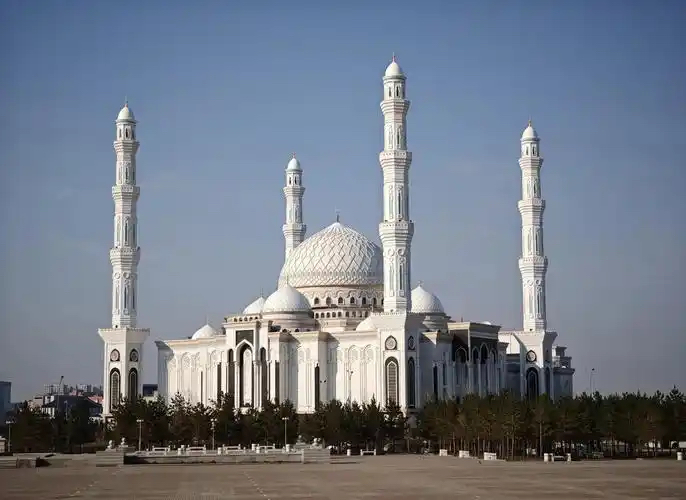
(1) Basic situation
The Republic of Kazakhstan (referred to as Kazakhstan) is located in Central Asia, bordering Russia in the north and China in the east. The capital, Nursultan, has a land area of 2.7249 million square kilometers. It is the largest landlocked country in the world with a population of 19.644 million. According to statistics from the National Bureau of Statistics of Kazakhstan, the GDP of Kazakhstan will reach US$261.338 billion in 2023. The real GDP for the whole year will increase by 5.1% year-on-year, and the per capita GDP will reach US$12256. According to statistics from China Customs, the trade volume between China and Kazakhstan in 2023 will reach US$41.02 billion, a year-on-year increase of approximately 31.6%. Kazakhstan's exports to China will be US$16.32 billion, a year-on-year increase of approximately 9.8%. Imports from China will be US$24.7 billion, a year-on-year increase of approximately 51.5%.
2023 marks the 10th anniversary of the Belt and Road Initiative and is of great significance to China-Kazakhstan bilateral trade. In May 2023, President Tokayev visited China and signed 23 important cooperation agreements to promote China and Kazakhstan to continue in-depth exchanges and cooperation in international transportation, agricultural products, minerals and other aspects. In November 2023, the China-Kazakhstan Mutual Visa Waiver Agreement officially came into effect, continuing to facilitate exchanges between the two sides and helping the two countries prosper their economies and the well-being of their people.
(2) Automobile market situation
Kazakhstan is a left-hand car country, with approximately 207 cars per 1,000 people. There is no Benz automobile brand in Kazakhstan. The development of the automobile industry mainly focuses on vehicle assembly and parts matching. At the same time, imported automobiles are also an important part of the Kazakhstan automobile market. Since 2019, Kazakhstan automobiles have continued to grow steadily. In 2022, Kazakhstan will sell 125,000 vehicles, a year-on-year increase of 3.1%. In 2023, Kazakhstan will sell 200,000 vehicles, a year-on-year increase of 60.3%, and the scale of the automobile market will achieve a major breakthrough. In terms of automobile imports, Kazakhstan mainly imports automobiles from Uzbekistan, Germany, Japan and Lithuania. In recent years, the influence of China brands in Kazakhstan has continued to rise, and brands such as Chery, Jianghuai, and Chang 'an have ranked among the top ten in the market. In terms of localized assembly, Kazakhstan has built factories such as Kia Plant, Astana Automobile Manufacturing Company, and Orbis Manufacturing Company in batches. In 2023, Kazakhstan will produce more than 148,000 vehicles locally, a year-on-year increase of 30%, and the level of localization of production continues to improve.
In terms of new energy vehicles, Kazakhstan strongly supports the development of the new energy vehicle industry. In May 2023, Kazakhstan promulgated a tax exemption policy for imported electric vehicles. Kazakhstan citizens who purchase an electric vehicle from abroad for personal use can be exempted from tariffs and other taxes, effectively promoting the promotion of new energy vehicles and providing favorable conditions for China brands of new energy vehicles to expand the Kazakhstan market.
(3) Policies and regulations on used car import
1. Import policy
Kazakhstan bans the import of right-hand rudder vehicles and stipulates that vehicles with engine displacement exceeding 3 liters shall not be imported. After joining the WTO, Kazakhstan began to reduce tariffs on imported goods, including automobiles, every year. After adjustment in 2020, there were no changes. Currently, tariffs in Kazakhstan are lower than those of the Eurasian Economic Union.
2. Tax policy
Kazakhstan mainly imposes tariffs, value-added tax and scrapping tax on imported used cars. A 15% tariff is imposed on used cars 0-7 years old, and a 15% tariff is imposed on used cars over 7 years old, except for used cars with a displacement of 1500ml-3000ml, but the tariff fee must not be less than 0.6 euros/ml. For first-hand vehicles over 7 years old and with a displacement of 1500ml-3000ml, the tariff is levied at 0.5 euros/ml, but the tariff shall not be less than 15% and no more than 18%. Kazakhstan also charges a 15% tariff on imported electric vehicles, but in May 2023, Kazakhstan promulgated a tax exemption policy for imported electric vehicles. Kazakhstan citizens who purchase an electric vehicle from abroad for personal use can be exempted from tariffs and other taxes. The value-added tax in Kazakhstan is 12%. The scrapping tariff is comprehensively determined based on the age and displacement of imported vehicles.
3. Documents required for import
·Copy of technical passport/certificate of title
·Original vehicle registration certificate·Commercial/purchase invoice·Bill of Lading (BOL)
·Original customs declaration form
·Invoice in the form of vehicle details (VIN number, engine number, year of production, model number, color and reasonable customs value)
·Letter of commitment (up to 12 months for temporary import)
Source: "China's Used Car Export Country Guide 2023"
This article is reproduced from Guangdong good car, only for information sharing, if involved in infringement please contact delete, this site does not assume relevant legal responsibility.

 Online Evaluation
 I am Buyer
 Export Services
 subsites


 023-62852688
  No. 1-1, No. 2899, Longzhou Avenue, Banan District, Chongqing City
 Headquarters


