
 Chinese
 Russian
 Arabic

1. Basic situation
The Republic of Uganda (referred to as Uganda) is a country located in eastern Africa. It spans the Equator and is adjacent to Kenya in the east, Tanzania and Rwanda in the south, Congo (DRC) in the west, and South Sudan in the north. The capital is Kampala. It covers a land area of 242,000 square kilometers and has a population of 46.398 million. According to statistics from the International Monetary Fund, in 2024, Uganda's GDP will be US$55.6 billion, a growth rate of 8.8%, a population of 46.62 million, and a per capita GDP of US$1211. According to China customs data, in 2024, the bilateral trade volume between China and Uganda will be US$1.46 billion, a year-on-year increase of 12.1%. Among them, China's exports to Uzbekistan will reach US$1.38 billion, a year-on-year increase of 12.0%; China's imports from Uzbekistan will reach US$80 million, a year-on-year increase of 13.8%. China mainly exports mechanical and electrical products, clothing and footwear to Uzbekistan, and mainly imports leather, sesame, coffee, cotton, etc. from Uzbekistan. Uzbekistan is a landlocked country, and more than 90% of its import and export materials pass through Kenya's Mombasa Port. Domestic transportation is dominated by roads. According to Ukrainian official statistics, the total length of Uzbekistan's highways is about 78,000 kilometers, carrying 99% of passenger traffic and 95% of freight.
Uganda's proven mineral resources include copper, tin, tungsten, beryl, iron, gold, asbestos, limestone and phosphate. The forest coverage rate is 12%, and hard wood is produced. Rich in aquatic resources, Lake Victoria is one of the largest freshwater fish producing areas in the world. Oil was discovered near Lake Albert in western Uzbekistan, with proven recoverable reserves of approximately 1.2 billion barrels.
2. Automobile market situation
Uganda is a right-hand driving country with approximately 21 cars per 1,000 people. Uganda is a net importer of cars and mainly imports used cars. Most of the country's cars are imported from Japan, India, South Africa, the United Kingdom and Germany. Leading companies in Uganda's automobile market mainly include internationally renowned brands such as Toyota, Honda, Nissan, Volkswagen and BMW. Uganda is a landlocked country and does not have its own port. When importing vehicles, you can use the Port of Mombasa in Kenya or the Port of Dar es Salaam in Tanzania. The cost of transportation through the above two ports is basically the same. The used cars sold in Uganda are older and in poor condition. Due to various reasons, the supply chain of the used car market in Uganda is not smooth. In 2022, the price of used cars in Uganda will increase by 10% to 15%.
According to Focus2move data, in 2017, Uganda's car sales were 2193 units, a decrease of 8.9%, and in 2018, it rebounded slightly to 2231 units, an increase of 2.1%. In 2019, Uganda's car sales hit a record high, reaching 2555 units, an increase of 14.5%. With the outbreak of the COVID-19 epidemic, Uganda's car sales fell to 1815 units in 2020, a decrease of 29% from the previous year. In 2021, it will continue to decline to 1538, a decrease of 15.3%. Until 2022, Uganda's automobile market has rebounded, with sales reaching 1601 vehicles, an increase of 4.1% over the previous year.
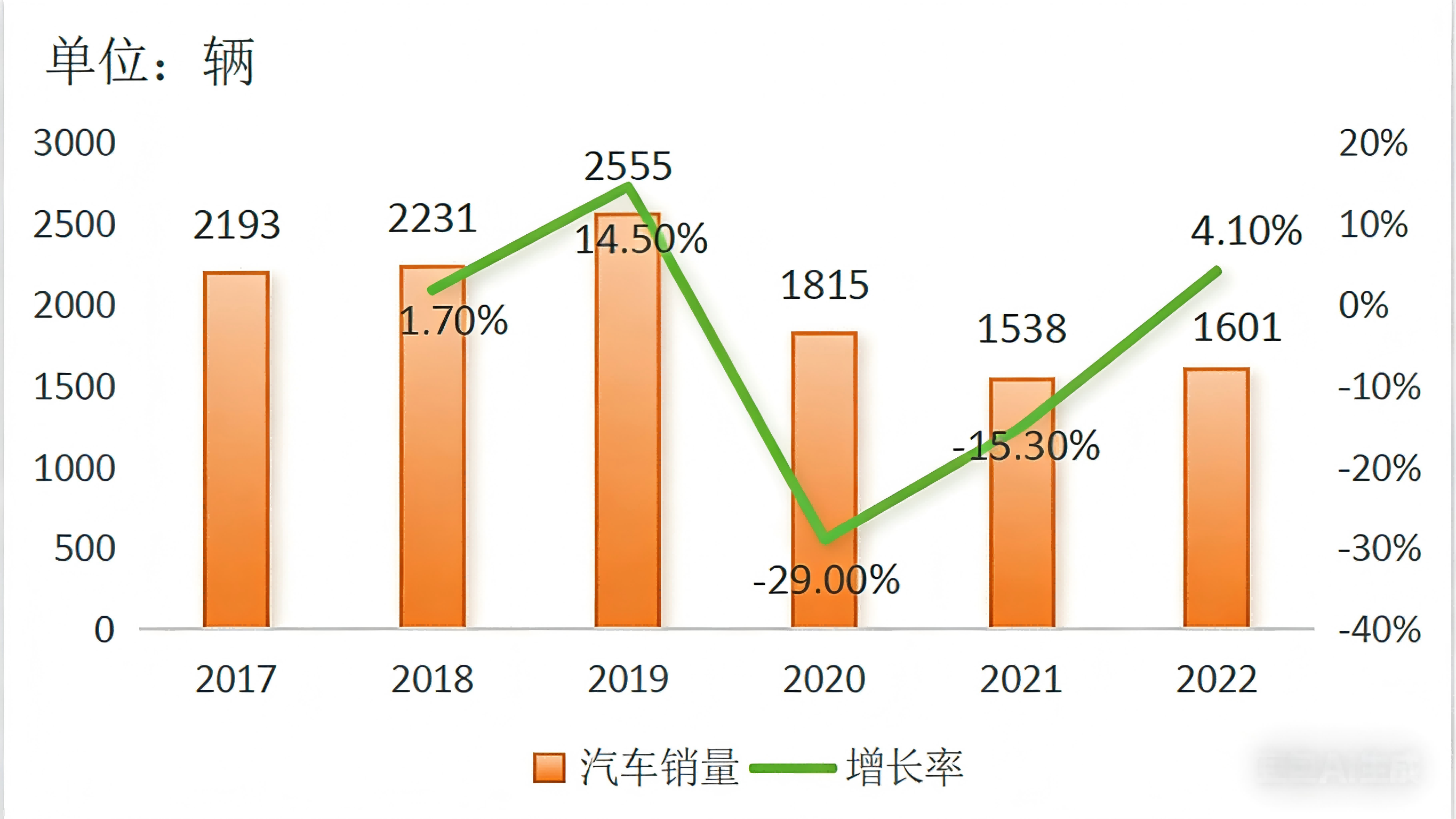
2018-2024 New car sales in Uganda in 2009
Source: Focus2move
3. Policies and regulations on used car import
1. Import policy
Uganda allows the import of both left-hand and right-hand rudder vehicles, and prohibits the import of cars more than 15 years old. At the same time, it is previously issued that imported used cars more than 9 years old must be imported from July 1, 2022. Customs clearance orders under the East African Community Single Customs Area (SCT) have been adjusted to amend the 9-year vehicle age limit to 13 years. Imported used cars in Uganda require testing, and Uganda's National Bureau of Standards (UNBS) has designated JEVIC to conduct a mandatory inspection of used cars "Road Driving Safety Inspection (RWI)" to ensure that they meet specific standards.
2. Tax policy
Uganda's tariffs are determined based on the General Agreement on Trade and Tariffs (GATT) valuation methodology. The taxes or tariffs on imported used cars in Uganda are as follows:
(1)Import duty: 15% of the duty-paid value.
(2)VAT: 17% of the value of VAT.
(3)Import commission: 2% of the duty-paid value.
(4)Withholding tax: 6% of the duty-paid value.
(5)A 10% consumption tax is levied on selected models, and some commercial vehicles also receive tariff exemptions.
3. Documents required for import
● Commercial invoices.
● Original bill of lading
● Two clear and transferable original bills of lading
● Work permit (copy)
● Immigration permit
● Certificate of change of residence
● Reservation certificate
● Original passport of consignee
● Invoice or valuation of vehicle
● Original vehicle logbook or original export document of country of origin
● Inventory (3 copies, in English, signed and dated by the customer)
● List of electrical items (serial number must be attached)
● Tax identification number (issued by the consignee's local employer in Uganda)
Source: "China's Used Car Export Country Guide 2024"
This article is reproduced from the "2024 Country Guide" and is only used for information sharing. If infringement is involved, please contact and delete it. This site does not bear relevant legal responsibilities.

 Online Evaluation
 I am Buyer
 Export Services
 subsites


 023-62852688
  No. 1-1, No. 2899, Longzhou Avenue, Banan District, Chongqing City
 Headquarters


