
 Chinese
 Russian
 Arabic
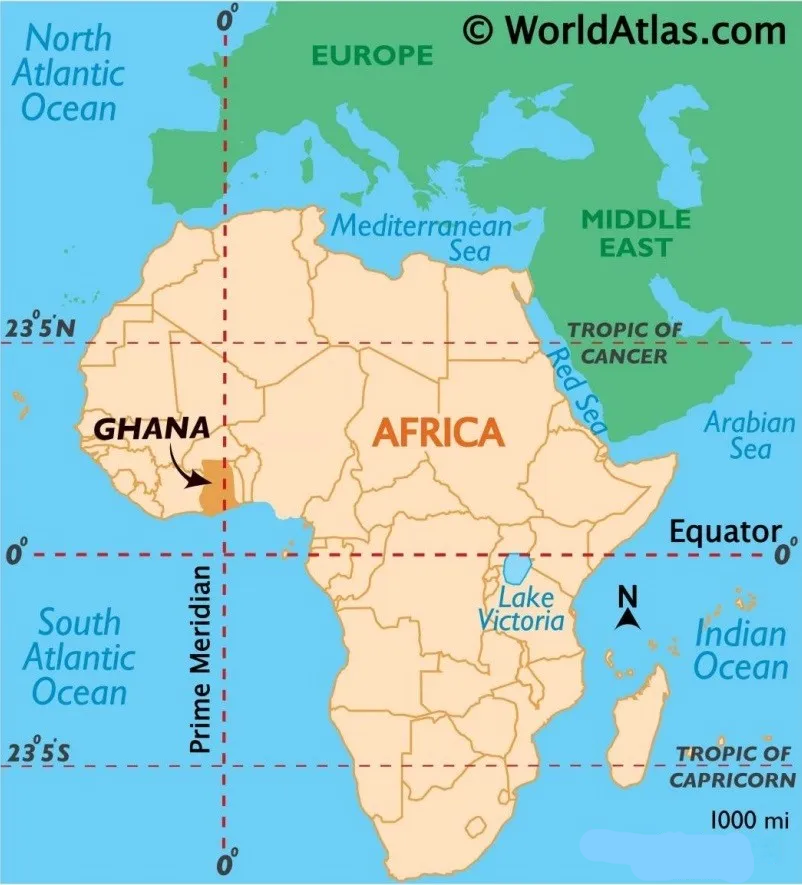
The Republic of Ghana (Ghana for short) is a country in western Africa. Its capital is Accra. It is bounded by the Gulf of Guinea in the Atlantic Ocean in the south, Cote d'Ivoire in the west, Burkina Faso in the north, and Togo in the east. It has a coastline of about 562 kilometers. The land area is 238,500 square kilometers and the population is approximately 33.743 million. There are more than 50 tribes in Ghana, mainly four major tribes: Akan (52.4%), Mosi-Dagomba (15.8%), Ewe (11.9%) and Jia-Adangbe (7.8%). 69% of Ghana's residents profess Protestantism and Catholicism, mainly in the southern region. The official language is English. Ghana is rich in mineral resources, mainly natural resources such as gold, diamonds, bauxite, iron, manganese and oil and gas.
Ghana's economic profile
Ghana is the third largest economy in West Africa. According to the International Monetary Fund, as of October 2023, Ghana's GDP is US$76.63 billion, with a real GDP growth rate of 1.2%, and per capita GDP of US$2330. Ghana also has significant advantages in natural resources such as gold, diamonds, and bauxite, with the mining industry contributing approximately 13.5% to GDP.
In recent years, China's position in Ghana's foreign trade has continued to rise and has become Ghana's largest trading partner. In 2023, the bilateral trade volume between China and Ghana will be US$11.041 billion, an increase of 6.9%. Among them, China's exports to Ghana reached US$9.225 billion, a year-on-year increase of 12.99%; China's imports from Ghana reached US$1.816 billion, a year-on-year decrease of 29.07%.
Ghana's car market
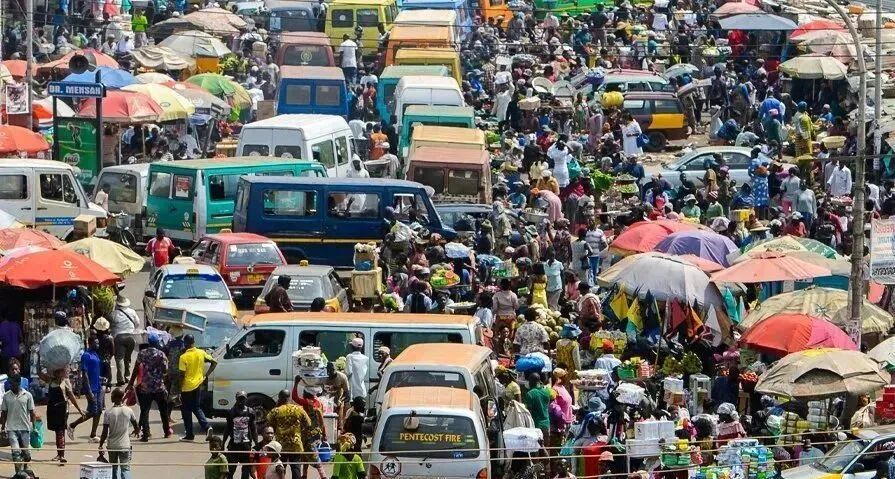
Ghana's automobile market is dominated by imported used car retailers and new car manufacturers. About 100,000 vehicles are imported every year, about 90% of which are used cars, with an estimated annual value of US$1.14 billion. The United States, Japan and Germany are the main suppliers. Relevant data shows that Ghana's automobile market is expected to reach US$10.64 billion by 2028, with an average annual growth rate of 15%.
The 2019 Ghana Automobile Development Policy reduces reliance on used cars by producing new cost-effective cars in the Ghanaian market. On the one hand, Ghana has signed assembly agreements with OEMs such as Volkswagen, Nissan, Toyota, Suzuki and Mark to produce vehicles. In addition, other main engine manufacturers have announced plans to establish assembly plants in Ghana. Chery, Great Wall, MG in China, and Bajaj Auto in India have begun producing cars. On the other hand, local company Kantanka Automotive Co., Ltd. uses CKD kits from China to assemble Kantanka series vehicles, mainly producing cars and SUVs as well as some military vehicles.
Currently, Ghana's electric vehicle market is in its infancy. The Ghanaian government is actively promoting the development of new energy vehicles by building charging infrastructure and introducing electric vehicles into Ghana. In 2020, Ghana's Ministry of Energy announced plans to develop an electric vehicle policy to support the development of the country's electric vehicle industry. The policy includes promoting the construction of charging infrastructure, providing incentives for the purchase of electric vehicles, and supporting local manufacturing of electric vehicles to increase the country's adoption rate of electric vehicles.
Ghana's automobile import policies
1. Import policy
Ghana prohibits the import of accident vehicles and scrapped vehicles. Imported second-hand vehicles must be left-hand vehicles (except for some special purpose vehicles). The import of right-hand vehicles needs to be applied for. At the same time, it is necessary to complete the process in the port and complete the modification of right-hand steering to left-hand steering, and only after customs confirmation can it be allowed to drive on the road in Ghana. From October 2020, Ghana will ban the import of used cars older than 10 years (previously, used cars imported for more than 10 years were subject to an "overage penalty" of 5-100% of the CIF price) to encourage international companies, including Volkswagen and Nissan, to establish local factories and help Ghana become a West African automobile manufacturing hub. From 1 January 2023, used cars imported into Ghana must be accompanied by a valid certificate of compliance issued by a standards body.
2. Policy incentives
Starting from January 1, 2024, Ghana will exempt imported electric vehicles from tariffs for eight years, while electric vehicles designed for public transportation and semi-bulk and fully bulk vehicles imported by registered electric vehicle assembly companies will also be exempt from import tariffs for 8 years. The exemption aims to accelerate the use of electric vehicles in the country and encourage domestic manufacturing and assembly of electric vehicles.
Risk warning for Ghana's automobile market
Economic fluctuations:Ghana's economy is greatly affected by fluctuations in commodity prices in the international market. Economic fluctuations may affect consumers 'ability to purchase cars and market stability.
Low market awareness: TheGhanaian market has relatively low awareness of China brands, and China car companies need to increase brand promotion efforts.
Policy uncertainty:Ghana's policies and regulations may change, especially in terms of trade and investment, which may have an impact on the investment and operations of China car companies.
With the development and further opening up of Ghana's infrastructure and the government's policy support for new energy vehicles, its electric vehicle market will have great market prospects. For the Ghana automobile market, interested parties need to promote and improve the overseas service system, strengthen export supporting service capabilities, including fault repairs, etc., and fully consider the arrangements of local government charging facilities. In terms of technical standards, Ghana's market access system is not complicated and the technical requirements are not particularly high. When entering this market, prospective parties need to pay attention to regulatory agencies, focus on understanding relevant standards, and complete GSA certification to ensure compliance.
Source: Yangtze River Delta new energy vehicle industry offshore base
This article is reproduced from the Yangtze River Delta New Energy Vehicle Industry Offshore Base and is only used for information sharing. If infringement is involved, please contact and delete it. This site does not bear relevant legal responsibilities.

 Online Evaluation
 I am Buyer
 Export Services
 subsites


 023-62852688
  No. 1-1, No. 2899, Longzhou Avenue, Banan District, Chongqing City
 Headquarters


