
 Chinese
 Russian
 Arabic
Russia's parallel imported automobile market has not cooled significantly due to the increase in scrapping tax as expected. Instead, it rebounded in March 2026...
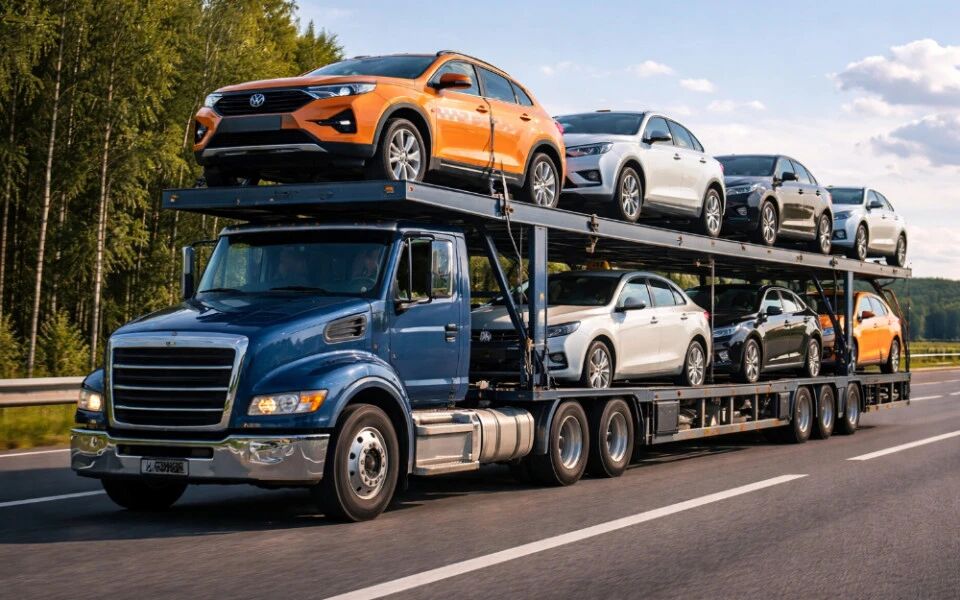
Russia's parallel imported automobile market did not cool down significantly due to the increase in scrapping tax as expected, but rebounded in March 2026.
According to Russian media quoted "Автостат" data, Russia introduced a total of about16,300 new passenger carsthrough parallel import channels in March. The report pointed out that with the tightening of Russia's import car policy in early 2026, especially after the preferential scrapping tax only applies tomodels of 160 horsepower and below, market demand has not disappeared, but has quickly moved towards "easier clearance and more controllable tax burden". Concentration of models.
Russian media believes that the most intuitive manifestation of this change is that consumers have begun to avoid high-power models and instead choose products closer to the policy red line. For buyers, the last thing they want to bear now is to pay a large amount of extra money for customs clearance and scrapping taxes. The result is equivalent to "buying another cheap car." Therefore, the center of gravity of parallel imports has also been adjusted accordingly and moved towards a more moderate power version.
From the perspective of brand structure, Japanese and German brands are still the main force of parallel imports from Russia. Brands such as Mazda, Toyota, Honda, BMW, Volkswagen, Skoda, and Mercedes still account for the majority of the shares. Logistics routes are also changing. More and more vehicles areentering Russia directly from China, or completing their entry through channels such asKazakhstan, Georgia, and Kyrgyzstan.
Currently, the most popular models are still the ones familiar to Russian consumers: Mazda CX-5, Toyota RAV4, Corolla, Honda Freed, Stepwgn, Volkswagen Tayron, Audi Q3, Audi A3. Russian analysis believes that an important reason why these models continue to travel is that most of them fall within 160 horsepower, which can avoid high commercial scrapping taxes, and the total cost of car purchase is relatively controllable.
It is worth noting that China brands have also appeared in parallel imports from Russia, but the overall share is not high. The report mentioned that models such as Zeekr, Li Auto, and Lynk Co already have fixed buyers in the Russian market, but most of them are still in the "early adopters" and "second cars" consumption stage, and there has not yet been a large-scale substitution effect like Toyota and Honda. The Russian media's statement is very straightforward: many consumers still psychologically prefer familiar Japanese brands to China's new power models that "look like alien spacecraft."
In addition to passenger cars, the truck and tractor markets are also changing. The report said that the scale of commercial vehicles imported in parallel is obviously under pressure, and many transportation companies are returning rented vehicles, resulting in large market inventories. Companies that are still entering vehicles preferquasi-new heavy trucks that are one to two years old, which can not only lower costs, but also keep the fleet updated, so that they will not put all their funds on new vehicles. For the Russian logistics industry, this idea of "buying new is not as good as buying new" is becoming a realistic choice.
Another topic that cannot be avoided is the **ERA-GLONASS (УВ С) system that Russian imported cars must face when being licensed. Russian media reminded that in the past, some vehicles could still be imported without the system module, but the market is currently closely observing whether the relevant grace policy will be cancelled. Once policies are formally tightened, assembly and certification costs will likely rise, and queuing times may also lengthen.
According to the report, many buyers and importers have begun to arrange installation in advance to avoid waiting until the policy is clear before queuing up. Russian industry insiders suggest that anyone who is still waiting to see should first confirm whether the vehicle is equipped with UVEOS/ERA-GLONASS modules during the vehicle selection stage. Otherwise, subsequent reinstallation will not only cost money, but may also delay the pace of licensing.
written in the end
This Russian market signal is very clear: Russia has not "weakened its willingness to buy a car", but the logic of buying a car has changed. There is still a window in the Russian market, but profitable cars have shifted from "luxury impulse models" to "policy-adapted models." For China exporters, Russia is still a market worth exploring if vehicle sources, power parameters and licensing compliance can be matched in advance.
Source: Guangdong Good Car
[Disclaimer] The content of this website (including pictures and texts) originates from the Internet, and the copyright belongs to the original author. Respect the rights and interests of originality, and select content is only used for information sharing. If copyright disputes are involved, please contact us to handle them in a timely manner

 Online Evaluation
 I am Buyer
 Export Services
 subsites


 023-62852688
  No. 1-1, No. 2899, Longzhou Avenue, Banan District, Chongqing City
 Headquarters


