
 Chinese
 Russian
 Arabic
China Economics reporters Yin Limei and Zhang Shuo report from Beijing
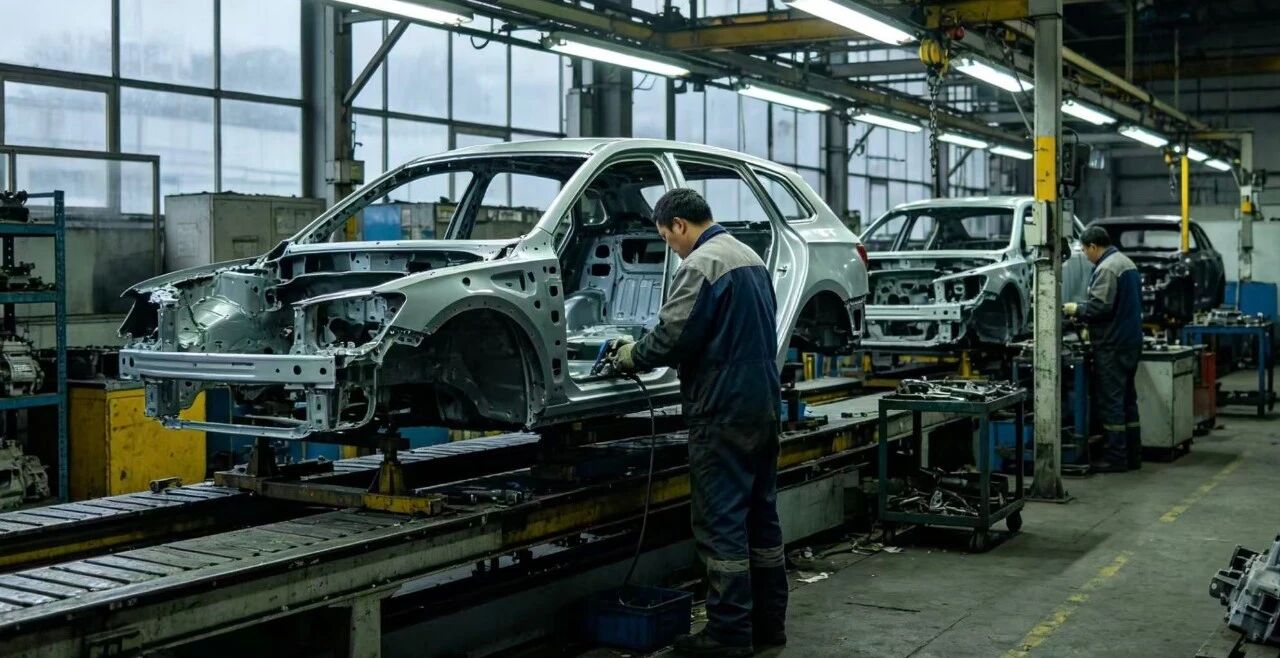
"Increase without increasing income" and "increase income without increasing profits" are the sentences that people in the automobile industry talk about most frequently in public occasions such as major forums and summits.
"From January to February this year, the profit margin of the automobile industry was only 2.9%, which showed greater downward pressure than before. At this stage, the entire manufacturing industry shows a significant situation in which upstream squeezes downstream in terms of profits, and the temperature difference between upstream and downstream is significant." Recently, Cui Dongshu, Secretary-General of the Passenger Car Market Information Joint Branch of China Automobile Dealers Association (hereinafter referred to as the "Passenger Car Association Branch"), made a statement at the Smart Electric Vehicle Development High-Level Forum (2026), once again directly hit the pain point in the automobile circle.
Data provided by Cui Dongshu shows that from January to February 2026, the profit margin of the non-ferrous metals industry was 39.4%, compared with only 9% in 2017; the profit margin of the oil industry jumped from 5% to approximately 30%. In sharp contrast, the profit margin of the automotive industry fell from 8% in 2017 to 2.9%.
Cui Dongshu told "China Business News" and other media that the automobile industry has made huge contributions to the upstream, and the contrast between the upstream and downstream has become increasingly obvious. The middle and lower reaches are especially represented by the automobile industry, which is under tremendous pressure and the current performance is relatively difficult. However, he pointed out that against the background of the industry facing growth pressure, the automobile industry has achieved outstanding results in anti-corruption this year, and the price level has remained stable, which has greatly promoted the healthy development of the industry.
The price war has cooled down
It is an indisputable fact that the profitability of the automobile industry is being challenged. A senior executive of a central automobile enterprise recently said in public: "Simply put, if you rely solely on products, that is, selling cars, the company will no longer be able to make profits." How to find a leverage point to achieve healthy development in a market environment where growth is under pressure is something that major car companies are racking their brains and doing.
Curbing the urge to initiate and follow up price wars is an option that is both active and passive. The effect of this inhibition is already visible to the naked eye.
The reporter noticed that in the past few years, domestic car companies have usually launched large-scale price reduction promotions in the first quarter. Since 2025, the competent authorities have taken various measures to rectify "convoluted" competition. Coupled with the high pressure on profits in the automobile industry, the subjective willingness of automobile companies to initiate or follow up on price wars has weakened. In the first quarter of 2026, the domestic auto market did not reproduce the phenomenon of "price for volume".
Statistics provided by Cui Dongshu show that the average retail price of passenger cars continues to climb from 165,000 yuan in 2021 to 184,000 yuan in 2024; it will fall back to 170,000 yuan in 2025, down 14,000 yuan from 2024; In March 2026, the average price rebounded again to 175,000 yuan, a year-on-year increase of 7,000 yuan.
"In the first quarter of this year, the sales promotion efforts of the automobile industry remained relatively stable, about 10%. Among them, the promotion of fuel vehicles was about 22%, which was slightly narrower than the fourth quarter of last year." Cui Dongshu told reporters that the promotion of fuel vehicles in March dropped by 0.8 percentage points month-on-month. The promotion of new energy in March remained at 10.6%, and remained at around 10% for seven consecutive months. There was no competition chaos of price for volume.
People in the automobile industry also have obvious feelings about this phenomenon. A senior executive from a new power car company said at the above-mentioned forum: "Last year's 'anti-corruption' governance was very important for the orderly operation of the entire industry, and many results have also been seen."
For the automotive industry, the current challenge is how to stand more steadily and go further. To go further, you must have profits, even if it is a small profit, the only way to cycle. Wang Qing, deputy director of the Institute of Market Economics of the Development Research Center of the State Council, believes that from a long-term perspective, China's automobile sales have moved to a new "coordinate system." In the past, the explosive growth brought about by relying on demographic dividends and technology popularization dividends is a thing of the past. The market is bidding farewell to "barbaric growth" and entering a time period that is more testing of endurance.
Zhang Yun, global CEO of Reese Consulting, said at the same forum that at this stage, everyone is selling "the same dumplings". Our past growth was based on "rolling" and homogeneous competition. The end result is that the only thing that makes money is "selling dumpling skins"-upstream suppliers such as batteries and chips continue to benefit, while the profit margins of the entire vehicle factory are constantly being compressed.
The breakthrough lies in innovating from the product level to truly category innovation and strategic differentiation. "Either you have a price advantage or you have product divisions. If you can't make something different strategically, you can only hurt each other in inefficient internals." Zhang Yun believes that in the past, China companies played the role of followers and imitators in the automobile industry, but today we have the opportunity to lead because we have strong supply chain capabilities and can create many new categories. Species, as long as they can provide unique value, you can make money.
"China car companies have made a lot of innovations before, but most of them are just small innovations at the product level, which can easily be imitated and fallen into homogenization. When everyone stands at the same starting line, they can only compete for price, so the key is to rely on strategic innovation and truly make something different. This is the core." Zhang Yun believes that the path for China's automobiles is to innovate in technology and product, define new categories, and focus on this category. With differentiated categories, profitability is a matter of course.
What are the driving forces for the growth of the automobile market? Need to establish a long-term mechanism
According to statistics disclosed by the Passenger Federation Branch, in the first quarter of this year, the cumulative retail sales of passenger cars nationwide were 4.226 million units, a year-on-year decrease of 17.4%. Among them, retail sales of new energy passenger vehicles were 1.908 million units, a year-on-year decrease of 21.1%; sales of fuel vehicles were 2.318 million units, a year-on-year decrease of about 9%.
"Our pressure has not started this year. Last year, we have already shown growth pressure. Since the fourth quarter of last year, the retail sales trend of new energy vehicles has been relatively flat, but there will be a certain increase in the fourth quarter of previous years. Judging from this year's performance, the market has shown a certain trend of differentiation." Cui Dongshu said that in the first quarter of this year, there was a significant contrast between the new energy vehicle export market and the overall new energy vehicle market trend: in the first quarter of this year, the export of new energy passenger vehicles was 908,000 units, a year-on-year increase of 123.7%; however, in the first quarter, the total retail sales of new energy passenger vehicles market was 1.908 million units, a year-on-year decrease of 21.1%. "This is an unexpected situation. In the past few years, the year-on-year performance in the first quarter has been about 30% year-on-year."
The performance of the domestic market dragged down the overall performance of the auto market. The reason why the domestic market is facing a decline in sales is due to the impact of policy switches. The purchase tax on new energy vehicles has been adjusted from the previous "exemption" to "halving" from January 1 this year, which has curbed market demand to a certain extent.
At the same time, the national-level trade-in policy will be announced at the end of 2025, and local governments need to introduce implementation policies before they can be implemented. The reporter noticed that since February, many places have only successively introduced detailed implementation rules for national automobile subsidies and preferential measures for car purchase subsidies. In addition, the Spring Festival holiday in February caused consumers to postpone car purchases, and sales in China's auto market in the first quarter showed a "fever fever" phenomenon.
Moreover, compared with 2025, the 2026 car trade-in policy has been adjusted in terms of subsidy standards, from fixed subsidies to subsidies based on the proportion of new car selling prices, setting a subsidy ceiling, which has had a certain impact on the car market in the first quarter.
At present, the domestic automobile consumption structure has changed. Cui Dongshu said that according to statistics from the Ministry of Public Security, there will be 26.19 million newly registered vehicles nationwide in 2025, of which 13.19 million vehicles will be contributed by scrapping updates, which means that China's auto market has officially entered a new stage of development with scrapping updates as the main driving force.
"Last year, new energy vehicles maintained a good growth trend, and sales performed well last year, but the current scrap of new energy vehicles is still relatively low." Cui Dongshu believes that China's automobile market still has the potential for sustainable growth, and the development prospects of China's automobile market cannot be judged solely by changes in total population. "Although China's total population has dropped year by year from 1.42 billion, the number of motor vehicle drivers in my country is still growing at a rate of about 20 million per year. Automobile consumption is still the core driving force for stimulating domestic demand, and the market potential is still huge."
What are the growth opportunities for the automotive industry? This is a major issue that has been discussed in the industry. Cui Dongshu told reporters that in March this year, the month-on-month growth of joint-venture brand fuel vehicles was almost zero, and high oil prices were one of the influencing factors. He believes that electric vehicles have greater imagination in this context.
At the same time, he believes thatautomobile consumption loans will become an important support for the development of the industry in the future and will play an important role in promoting the growth of automobile consumption in China, which will also substantially improve dealer operations. "The overall operating status of dealers this year has improved compared with last year, and the operating conditions have been repaired to some extent."
At present, the mainstream judgment in the industry for this year's auto market is that due to the growth pressure of domestic consumption, annual sales will reach a growth rate of about 1%.
Cui Dongshu pointed out that automobiles cannot rely solely on short-term fiscal policy stimulation to promote consumption. A long-term policy support mechanism needs to be established. He put forward the following specific suggestions: First, include car purchase expenses into special deductions for personal income tax; second, allow interest on automobile consumption loans to be deducted before tax; and third, interest exemptions should be provided to consumers on automobile loans. In addition, more policy support for car purchase should be given to families with many children and middle-aged and elderly consumers.
Source: China Business News
[Disclaimer] The content of this website (including pictures and texts) originates from the Internet, and the copyright belongs to the original author. Respect the rights and interests of originality, and select content is only used for information sharing. If copyright disputes are involved, please contact us to handle them in a timely manner

 Online Evaluation
 I am Buyer
 Export Services
 subsites


 023-62852688
  No. 1-1, No. 2899, Longzhou Avenue, Banan District, Chongqing City
 Headquarters


