
 Chinese
 Russian
 Arabic
In the future, all pure electric vehicles imported in the form of CBU and sold in Malaysia must meet two hard indicators at the same time...
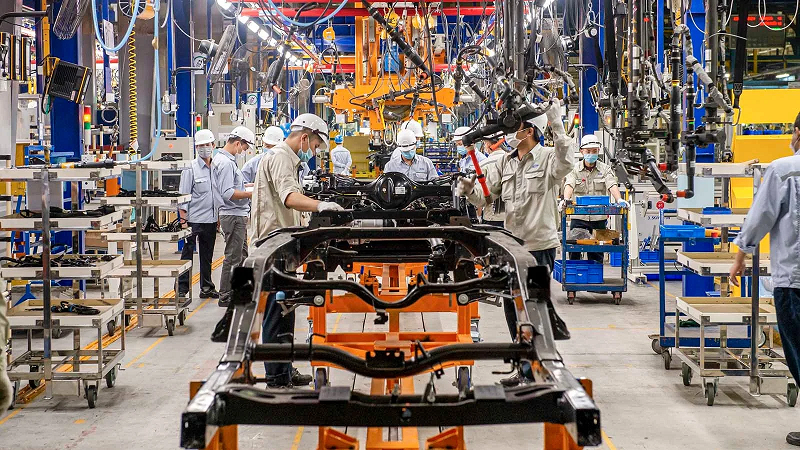
According to the latest policy announcement of the Ministry of Investment, Trade and Industry of Malaysia (MITI), Malaysia will fully update the access conditions for "Complete Vehicle Import (CBU) Electric Vehicles" to enter the Malaysian market from July 1, 2026. Malaysian media interpreted that once the new regulations are implemented, the most popular batch of "relatively affordable imported electric vehicles" in the past two years will likely be directly blocked out or forced to raise their prices into the range above 300,000 ringgit (RM 300,000).
The report quoted MITI regulations as stating that in the future, all pure electric vehicles imported in the form of CBU and sold in Malaysia must meet two hard indicators at the same time: First, the CIF value of the vehicle declared at the port (Cost, Insurance and Freight, that is, the CIF declaration price of cost + Insurance + freight, excluding local taxes and channel price increases) must not be less than 200,000 ringgit; second, the peak output power of the motor must not be less than 180kW (approximately 241 horsepower/245PS). The second one is regarded by the industry as the "second gate"-even if the price meets the standard, as long as the power parameter is less than 180kW, it cannot be imported and sold through CBU.
The procedures for this round of MITI adjustments are also relatively clear. The report mentioned that MITI issued a circular letter to holders of the Approved Permit on April 29, 2026, and explained it to relevant companies through a communication meeting on April 30; subsequently, Malaysia's National News Agency Bernama publicly confirmed the content of the new regulations on May 6. MITI also pointed the policy background to the previous time point: Malaysia's "special tax exemption period" for electric vehicles ended on December 31, 2025, and the policy began to shift to a new framework.
The key reason why the market generally judges that "terminal selling prices will be topped to more than 300,000 ringgit" is that the threshold has changed. The previous system emphasized a minimum "retail selling price" and a higher power threshold (the report recalled that the minimum retail price was 250,000 ringgit and the minimum power was 200kW); while the new regulations replaced the "minimum CIF" as the bottom line. Since CIF is a pre-tax base, after entering Malaysia, tariffs, relevant taxes and fees under the consumption tax system, and the profit margins of distributors and distributors will be superimposed. In the end, the prices that consumers see in the exhibition hall will often be amplified. Based on this, the report calculated that under the current tax structure, the "floor price" of CBU electric vehicles from China that meet the threshold of the new regulations will also be pushed to more than 300,000 ringgit; If the retail price of electric vehicles from Europe or South Korea is increased, after the import tax burden is raised, also taking the CIF of 200,000 ringgit as an example, the retail price may be pushed up to at least 360,000 ringgit (not yet included in the channel premium).
Which models will the new regulations have the greatest impact on? Malaysian media believes that the main force in the past two years has been B-class and C-class household SUVs and crossovers. They often have low power output and prices are closer to mainstream household budgets; and the 180kW threshold will exclude such "quantity" from CBU channels on a large scale, thus changing the market supply structure.
At the same time, the new regulations also clearly leave room for local assembly vehicles (CKD): electric vehicles assembled in Malaysia for CKD are not subject to this CBU entry threshold. The report listed models that are currently considered to have "less impact or have exemption arrangements," including Proton eMas 7 (CKD), Wuling Bingo (CKD), Volvo EX30 (CKD), MG S5EV (Malacca Factory CKD), Leapmotor C10 (Gurun Factory CKD), etc.; it said that more CKD models are expected to be launched in the coming months.
At the brand level, the market also has clear "winner-loser" expectations. The media believes that brands with local CKD production capacity or are about to be put into production will gain greater initiative in price and supply; on the contrary, brands that rely on CBU imports and the power or price of their main models do not meet the threshold will face product lines. Forced upward and sales are under pressure. The report specifically mentioned that BYD's CBU products will either be difficult to meet the standards or lose competitiveness in price under the new framework; some brands that have not yet established CKD production capacity and have low factory progress may also experience a "schedule gap" in the second half of 2026. For consumers, the most intuitive change is that there will be fewer optional electric vehicles in the range of 100,000 - 300,000 ringgit, and the price decline may slow down after competition weakens.
written in the end
This time, Malaysia is not simply "increasing taxes", but uses the two rulers of CIF and power to redraw the entry line for CBU electric vehicles: blocking the flow of low-cost imported EVs, and at the same time directing industrial opportunities to local assembly (CKD). For China's overseas companies and second-hand car exporters, the most important change is not "whether a certain car can still be sold", but the business path. If you want to continue to be in Malaysia, you must intervene earlier in access, certification, AP system and localized production capacity cooperation; otherwise, even if there is demand, it is likely to be directly filtered out of the market by the new threshold.
Source: Guangdong Good Car
[Disclaimer] The content of this website (including pictures and texts) originates from the Internet, and the copyright belongs to the original author. Respect the rights and interests of originality, and select content is only used for information sharing. If copyright disputes are involved, please contact us to handle them promptly

 Online Evaluation
 I am Buyer
 Export Services
 subsites


 023-62852688
  No. 1-1, No. 2899, Longzhou Avenue, Banan District, Chongqing City
 Headquarters


