
 Chinese
 Russian
 Arabic
Not only self-owned models, but also some domestically produced joint-venture models have been imported into Russia for sale.
As we all know, after dominating my country's largest automobile export market in 2023 and 2024, affected by policies such as the continuous sharp increase in Russian automobile recycling and scrapping fees and imported vehicle tariffs, as well as the tightening of OTTC vehicle certification, my country's automobile exports to the country (including new and used cars, CKD, etc.) were almost halved to 583,000 vehicles, losing to Mexico's 623,000 vehicles, and failed to win the championship again.
Fortunately, my country's automobile exports to Russia have actually stabilized and rebounded since the second half of last year through various channels such as vehicle exports and local factories (mainly referring to CKD assembly).
According to data recently released by Cui Dongshu, Secretary-General of the Travel Association, the number of cars my country exported to Russia in January, February and March this year was 49,000, 63,000 and 81,000 respectively.
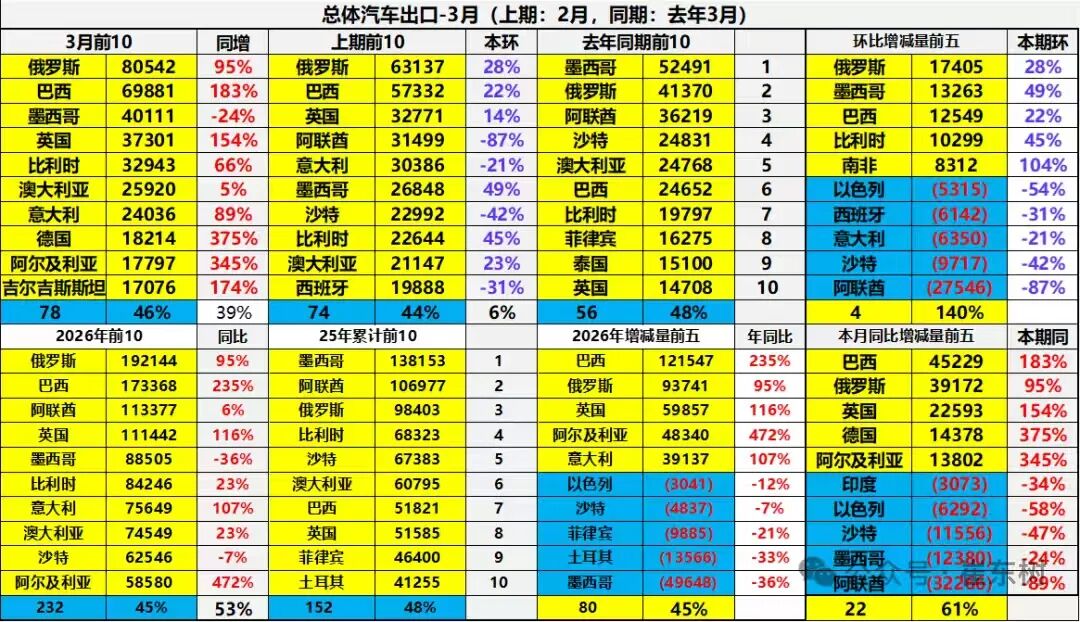
Therefore, in the first quarter of this year (data for April are not yet available), Russia surpassed Brazil's 174,000 vehicles with 193,000 vehicles, once again becoming the country with the largest automobile exporter in my country. Due to the low base in the same period last year, the year-on-year growth rate reached 95%.
1. Various ways to promote the recovery of export volume
As said at the beginning of the article, the gradual recovery of my country's automobile exports to Russia has benefited from the joint promotion of various forms such as vehicle exports and local factories (mainly referring to CKD assembly).
Data on imported vehicles (mainly complete vehicles) from the Russian statistical agency PPK JSC shows that from January to April this year, China vehicles were still the most important source of new imported vehicles to Russia, accounting for 78.0%, 67.2%, 60% and 71.6%.
Although this share is significantly reduced from 80% to 80% during the peak period of the previous two years, based on the monthly number of imported cars announced by the agency, the total number of new cars imported from China by Russia in the first four months of this year is approximately 77,000. During this period, Russia also imported nearly 30,000 used China cars, and the sum of the two exceeded 100,000.
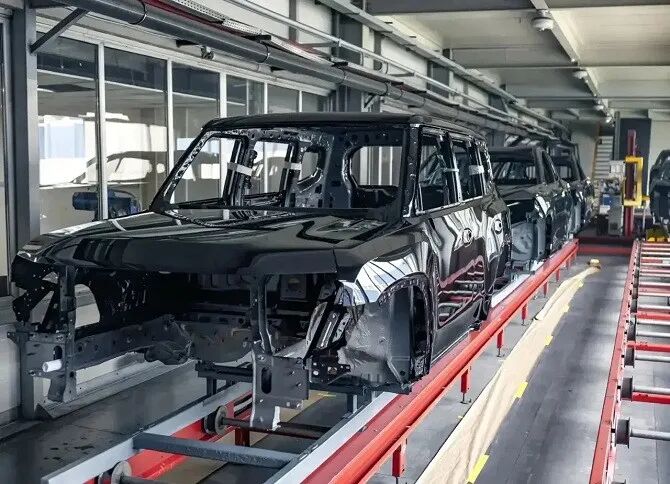
These complete vehicles are only part of the vehicles exported by China to Russia, and some are imported into Russia as CKD parts for assembly. Because the latter responds to Russia's localization policy, it can avoid high import tariffs on complete vehicles.
For example, the Avtotor factory in Kaliningrad produces Jetto Grand Sage, Jetto X70 Plus, Southeast S06 and Southeast S07 models through CKD assembly. Some models of independent brands such as Changan, BAIC, and Sway are also assembled here.
At the end of March this year, media reported that the Avtotor factory had produced 14,000 Changan models, including 1200 Deep Blue, which was also the first batch of Deep Blue models sold in Russia. At the end of April, the Avtotor factory also began preparations for the production of Jetto T1 and Jetto T2.
As for Great Wall Motors, a benchmark for the localization of China car companies in Russia, Great Wall officials stated in early March that the cumulative vehicle production of its Tula factory in Russia from June 2019 to March this year had exceeded 450,000.
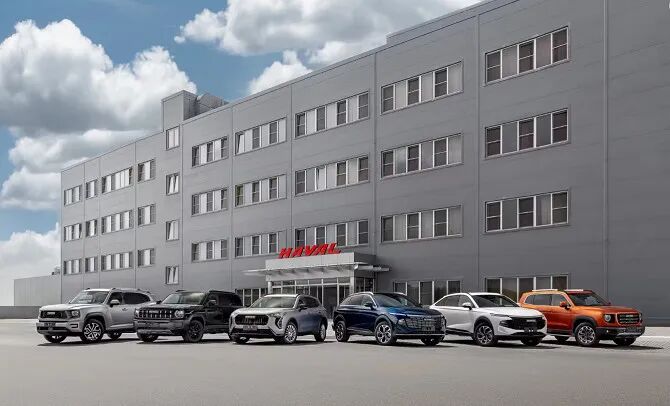
However, in order to avoid the impact of high import taxes and enjoy preferential policies for locally produced vehicles in terms of recycling scrapping taxes, the localization rate of parts and components at the Great Wall Tula factory must reach more than 65%. Therefore, in fact, the factory is mainly produced in the form of complete vehicles, and only a small number of models are produced for CKD. Therefore, the number of vehicles produced by the factory that can be included in my country's automobile exports is very limited.
However, in order to meet the stable demand for the Tank 300 in the Russian market, Great Wall has also reached a cooperation with the Avtotor factory and will put the model into production in the second quarter of this year under the premise of limited own production capacity.
In addition, although a large number of models of the Belgee brand jointly invested by Geely and Belarus are still mainly assembled with CKD, since China exports them to Belarus, even if most of the vehicles are assembled into complete vehicles and sold to Russia, it should not be counted as domestic cars exported to Russia.
2. Haval continues to lead the independent camp
So how is the current performance of China cars, especially China's own brands, in the Russian market?
The latest data from PPK JSC shows that among the top ten Russian passenger car brand sales in April, 5 self-owned brands were on the list, with sales from high to low being Haval, Geely, Changan, Jaecoo and Jetu.
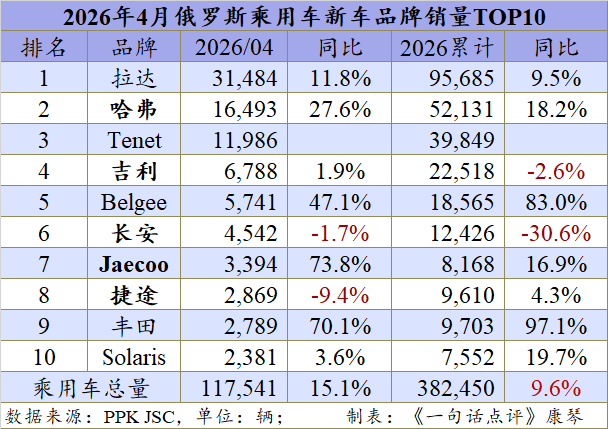
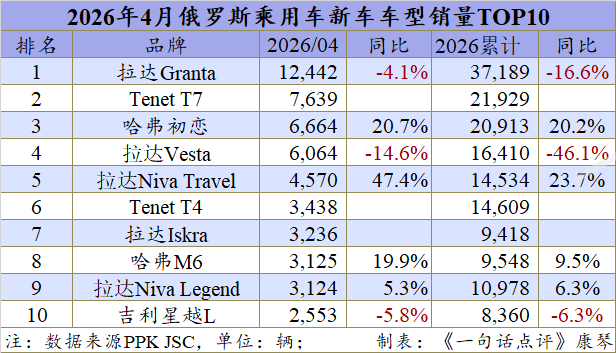
Specifically, Haval, which relies on the Tula factory of Great Wall, has huge advantages in price and tax, sold 16,000 vehicles in April, second only to the local Rada brand in Russia. It is the only brand in the independent camp with monthly sales of more than 10,000. In April, Haval's First Love and M6 both appeared in the top ten passenger car sales lists in Russia that month, with sales of 6,664 and 3,125 respectively.
Geely, which relies entirely on imports of complete vehicles, only increased 1.9% in April to 6,788 vehicles. Its best-selling model in Russia is the Geely Monjaro(the domestic Star L), which occupied the last seat in the top ten passenger car sales in Russia in April with 2,553 vehicles.
Although Changan continued to decline in April, its decline narrowed to 1.7%, and 4,542 vehicles was also its best monthly performance in Russia this year. This should be related to the assembly of some models mentioned above at the Avtotor factory. After all, it avoids high import tariffs, thereby obtaining more transaction volume at a lower terminal selling price.
Jaecoo and Jetu, owned by Chery Group, sold 3,394 and 2,869 respectively in April.
In February and before this year, Jaecoo has not been among the top ten brands in a single month for more than half a year. However, with the launch and hot sales of the new Jaecoo J6 (based on the Chery iCAR03 platform but equipped with a 1.5T turbine engine) in early March, the brand once again appeared in the top ten with 2,417 units in March, and further increased to more than 3,000 units in April, which may set a single-month high since it entered the Russian market.
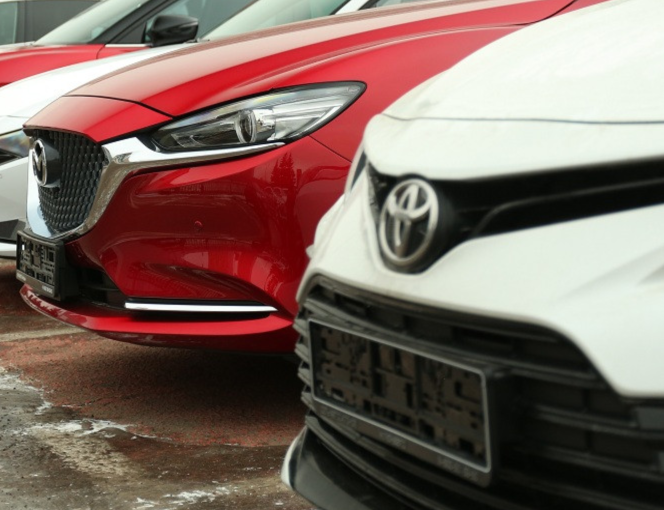
It is also worth mentioning that although Toyota, which ranked 9th in the brand list in April, is a Japanese car brand, it has not returned since announcing its withdrawal from the Russian market in 2022. Since August last year, it has been continuously listed in the Russian market. Hot sales list, mainly because dealers introduced their models to Russia through parallel imports.
In early April, Sergey Telikov, director of Russian analyst firm Autostat, revealed in an interview that 88% of the 6,914 vehicles Toyota sold in Russia in the first quarter of this year were produced by China companies. This means that in fact, the vast majority of Toyota sold in Russia recently are considered "China cars" for export.
Not only Toyota, Mazda appeared on the hot list of Russian brands again in January and February this year, but also because some dealers imported Changan Mazda models to Russia for sale, especially the CX-5 with an engine power of 155 horsepower.
Because the horsepower is less than 160, the CX-5 only needs to pay the minimum amount of vehicle recycling and scrapping tax when imported into Russia and the price is relatively cheap. As a result, it has entered the top ten Russian model sales list for two consecutive months, with a total of 4,444 vehicles sold. But unfortunately, Mazda failed to continue to make the list in March and April.
As for Chery's branded Tenet in Russia and Geely's joint venture Belgee in Belarus, although they do have some "China ancestry," the Russian automobile industry generally believes that the former is a local Russian brand and the latter is a Belarusian brand. Therefore, these two cannot be regarded as China brands, or even counted in China's automobile exports.
Considering that the combined share of the five independent brands on the list in April alone in the Russian market reached 29%, coupled with a large number of brands not on the list such as Tank, Hongqi, BAIC, Southeast, Lantu, Xingtu, Ideal, etc., the independent camp should still be the largest foreign-funded group in the Russian auto market.
Source: One sentence comment
[Disclaimer] The content of this website (including pictures and texts) originates from the Internet, and the copyright belongs to the original author. Respect the rights and interests of originality, and select content is only used for information sharing. If copyright disputes are involved, please contact us to handle them promptly

 Online Evaluation
 I am Buyer
 Export Services
 subsites


 023-62852688
  No. 1-1, No. 2899, Longzhou Avenue, Banan District, Chongqing City
 Headquarters


