
 Chinese
 Russian
 Arabic
Nigeria's National Automobile Design and Development Council (NADDC) said it is preparing to launch a national plan to cover "scrapped vehicles" starting in 2026 and implement stricter inspections on all imported used cars...
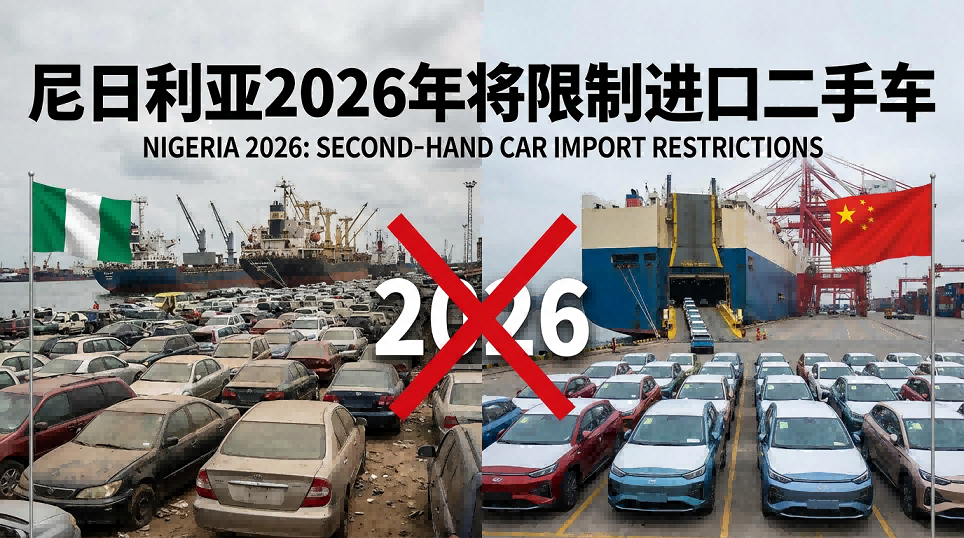
[Quoting reports] Nigeria's National Automobile Design and Development Council (NADDC) said it is preparing to launch a national plan covering "End‑of‑Life Vehicles" starting from 2026 and implement stricter inspections on all imported used cars. NADDC Director-General Oluweimo Osanipin disclosed at a media exchange meeting between Abuja and the Association of Business and Industry Journalists of Nigeria (CICAN) that the above reforms have been approved and will be based on the practices of developed countries: pay a fee when registering a new car to be used for environmentally friendly disposal after the "end of life" of future vehicles. Osanipin stressed that scrapped vehicles can no longer be allowed to be abandoned on the roadside for a long time."Someone must be responsible for the disposal."
He called the policy a "scrap-to-cash" opportunity for car owners. It is also the engine of employment and the circular economy, and estimated that the annual output value of the circular economy surrounding vehicle recycling could exceed 150 billion naira. The logic is: after the vehicle reaches the end of its life, the owner returns the vehicle, and the recycling company will disassemble and sort it, and the second-hand parts that can still be used will enter the domestic second-hand parts market; at the same time, a large number of parts can be recycled, and he called the vehicle parts "More than 85% are still useful", so they can drive employment and industrial chains.
In the import process, NADDC will also introduce a system that "all imported used cars must be mandatory pre-export certification"-a practice that is common in some African countries, but it is currently lacking in Nigeria. Osanipin said that the new regulations will directly crack down on the dumping of dangerous, severely rusty and near-scrapped vehicles into Nigeria from overseas. He mentioned that he had met with an exporter who admitted to shipping eight containers of end-of-life vehicles to Nigeria because "there are the most profits." The NADDC said it would hold importers accountable to ensure that buyers "know what they are buying" and emphasized that certification costs should be borne by exporters, not Nigeria consumers.
Focusing on electric vehicles, NADDC said it has begun preparations for technician training and certification and issued National Occupational Standards to build local maintenance capabilities. Osanipin also mentioned that the policy trend of China and other places to promote the gradual withdrawal of fuel vehicles has made it more urgent for Nigeria to make up for the maintenance capabilities of electric vehicles as soon as possible. In terms of local manufacturing, he said that the production of tires, brake pads, batteries and other parts has made progress, and the government will use policy support to enhance competitiveness in response to the impact of "cheaper but lower-quality" imports. NADDC also revealed a number of upcoming prototype projects, including tricycles and buses designed by Nigeria, and an electric campus bus project led by universities. On a more macro level, NADDC promotes the upgrading of the Nigeria Automobile Industry Development Plan (NAIDP) from policy to parliamentary legislation, and will submit a draft "Automobile Industry Bill" to the National Assembly in the coming months. Osanipin admitted that the policy would encounter public backlash in the early stages of implementation, called on the media to help explain the purpose of the reform, and said that 2026 will be a critical year for industry transformation.
brief comment
The core of this combination of punches is to move Nigeria from a "dumping ground for used cars" to a regulatory framework that is "traceable, assessable and recyclable." For exporters, the most direct change is that pre-export certification of used cars is likely to become a hard threshold, and the exporter will pay the bill, and low-quality car sources and "marginal car conditions" will greatly lose business space. It is recommended to make the vehicle condition classification and evidence chain solid from now on: preparation records, accident/corrosion assessments, photos of chassis and structural parts, mileage and maintenance certificates, and key system inspection reports must all be issued and verifiable; at the same time, establish cooperation with third parties. Cooperation with testing agencies to adapt in advance to the certification templates and fields that may be adopted by Nigeria. New car and new energy exports will benefit from the gradual formation of the "scrapping fund + recycling industry chain", but the prerequisite is that after-sales training, spare parts guarantee and local maintenance network can be provided simultaneously to avoid the reputation of "the car entering and cannot be repaired". risk. Overall, after 2026, the Nigeria market will be more inclined to "compliant vehicle sources + maintenances + recyclables", and the competitiveness of exporters will shift from price to compliance and service redemption.
Source: Guangdong Good Car
[Disclaimer] The content of this website (including pictures and texts) originated from Guangdong Haoche, and the copyright belongs to the original author. Respect the rights and interests of originality, and select content is only used for information sharing. If copyright disputes are involved, please contact us to handle the deletion in a timely manner.

 Online Evaluation
 I am Buyer
 Export Services
 subsites


 023-62852688
  No. 1-1, No. 2899, Longzhou Avenue, Banan District, Chongqing City
 Headquarters


