
 Chinese
 Russian
 Arabic
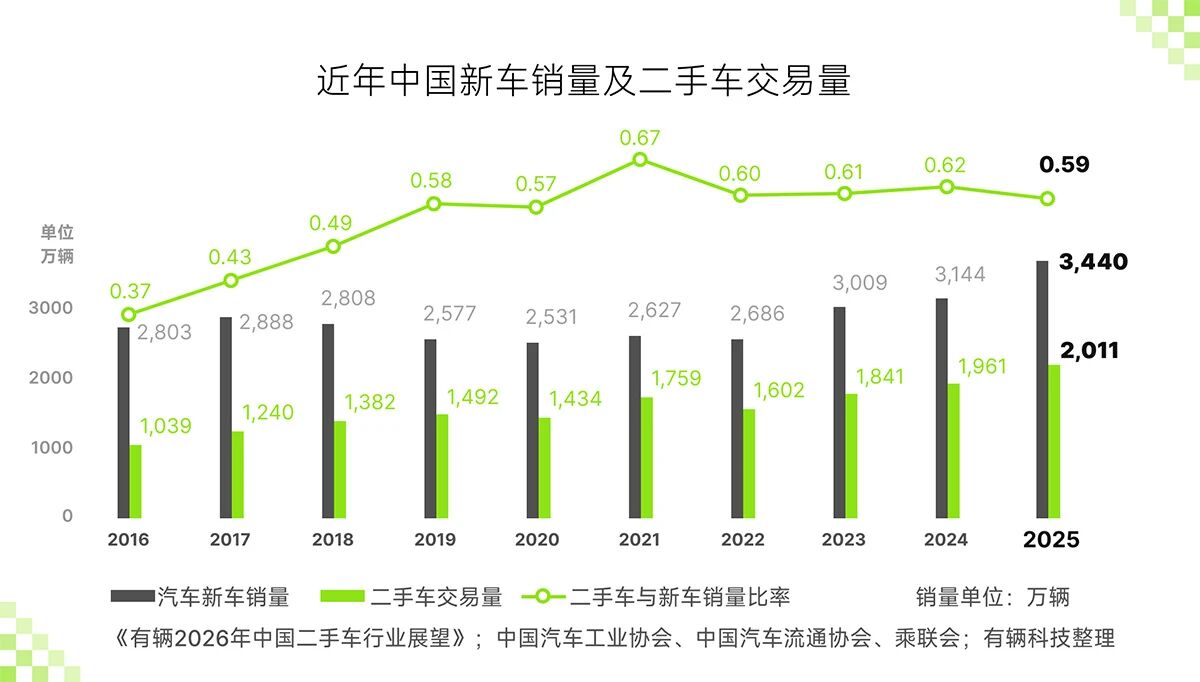
In 2025, China's used car industry achieved new breakthroughs in the continued loosening of policies, deep penetration of digitalization and accumulation of export potential. The transaction volume once again reached the highest level in history, reaching a new level of 20 million vehicles for the first time, reaching 20.108 million vehicles, a year-on-year increase of 2.52%, and the cumulative transaction amount is 1,289.790 billion yuan. The industry is also moving from "scale expansion" to "quality efficiency".
In 2026, the used car industry will usher in a new development cycle of "parallel regulation and growth, differentiation and symbiosis of opportunities." Based on the current industry status, the used car auction and circulation service platform "Youche Technology" and SG-Auto jointly released the "2026 China Used Car Industry Outlook." The outlook content is based on industry data from China Automobile Dealers Association, big data from auction platforms and development characteristics of the used car industry, including five major trends and business reference for practitioners.
1. Policy trends: compliance, quality improvement, and ecological optimization have become the main theme of the industry
The year 2025 that has just passed is a critical year for the used car industry to focus on improving circulation efficiency, transaction standardization, and export supervision to further accelerate circulation. From the two new policies at the beginning of the year to accelerate the circulation of used cars and stimulate new car sales, to the implementation of the business entity filing system in July, the used car market has become more active and operations have become more standardized.
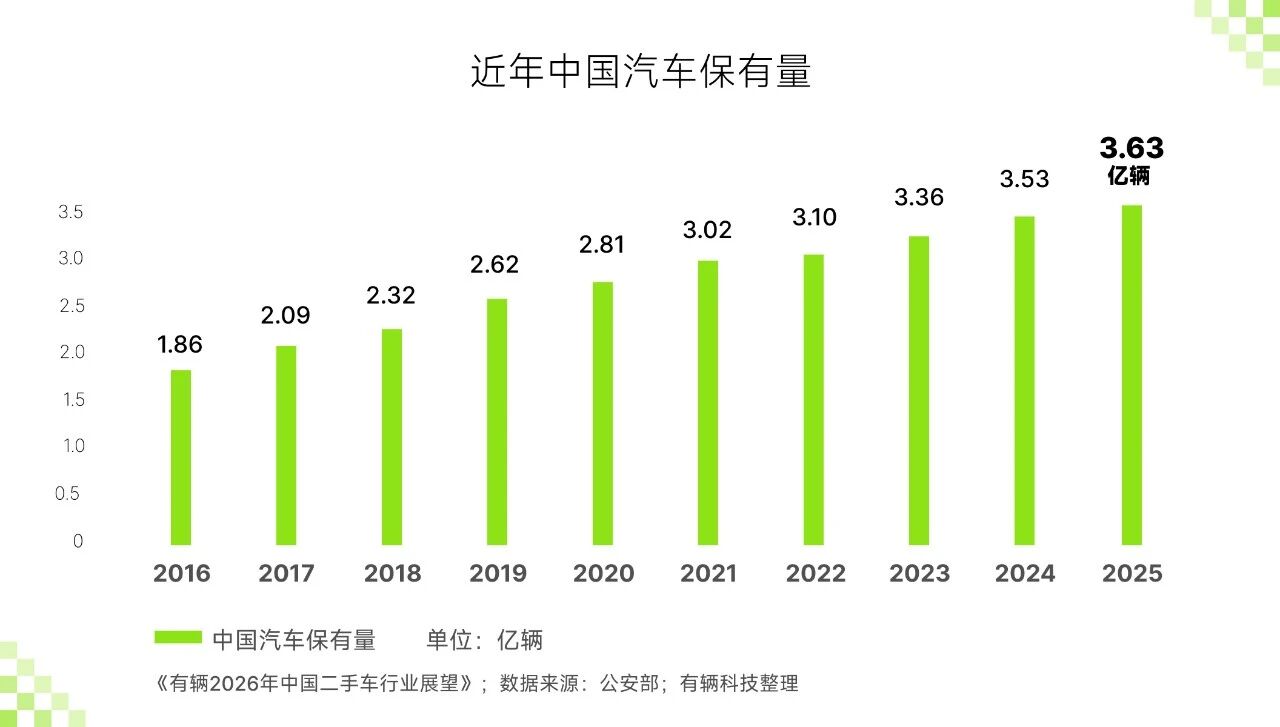
In terms of the domestic market, standardized policies continue to increase: First, the transaction side implements a unified standard used car sales contract, and concealing meter adjustments, soaking in water, major accidents and other behaviors will trigger "refund one and compensate three", which will greatly increase the cost of fraud; second, the information side realizes that vehicle condition data is fully accessible, and authoritative testing reports are linked with public security, transportation, and insurance data to achieve traceability of "one vehicle, one code"; Third, the popularization of mandatory warranty on the service side, and merchants need to provide at least three months or 5,000 kilometers of warranty, promoting the industry's transformation from "simply selling cars" to "diversified services".
In addition, the tightening of export policies is particularly significant. The Notice on Further Strengthening the Export Management of Second-hand Cars jointly issued by the Ministry of Commerce and other four departments has been fully implemented. Since January 1,2026, export vehicles registered for less than 180 days shall submit the Confirmation Letter of After-sales Maintenance Service issued by the manufacturer. Those who cannot provide export licenses shall not be issued, so as to curb the export chaos of "zero-kilometer second-hand cars" from the source. At the same time, the Negative List of Untrustworthy Behaviors in Second-hand Car Export clarifies seven violations, establishes dynamic management and exit mechanism of enterprises, and forces enterprises to standardize operation.
These policies promote the standardization, transparency and scale of the used car industry from multiple dimensions such as circulation-side efficiency, subject-side compliance, transaction-side regulation and export-side supervision.
In 2026, the policies of the used car industry will focus on the three major directions of "strong norms, quality, and excellent ecology", and the industry will transform from extensive development to high-quality.
2. Price trend: Used car prices will decline moderately
Judging from the national monthly average price list of used cars in 2025 released by China Automobile Dealers Association, the average price of used cars in 2025 has shown a downward trend, falling all the way from 66,700 yuan in March to 61,600 yuan in September. The price rebounded slightly in October, but the downward trend remains unchanged from the perspective of the whole year. At the same time, domestic used car prices will become increasingly in line with international standards.
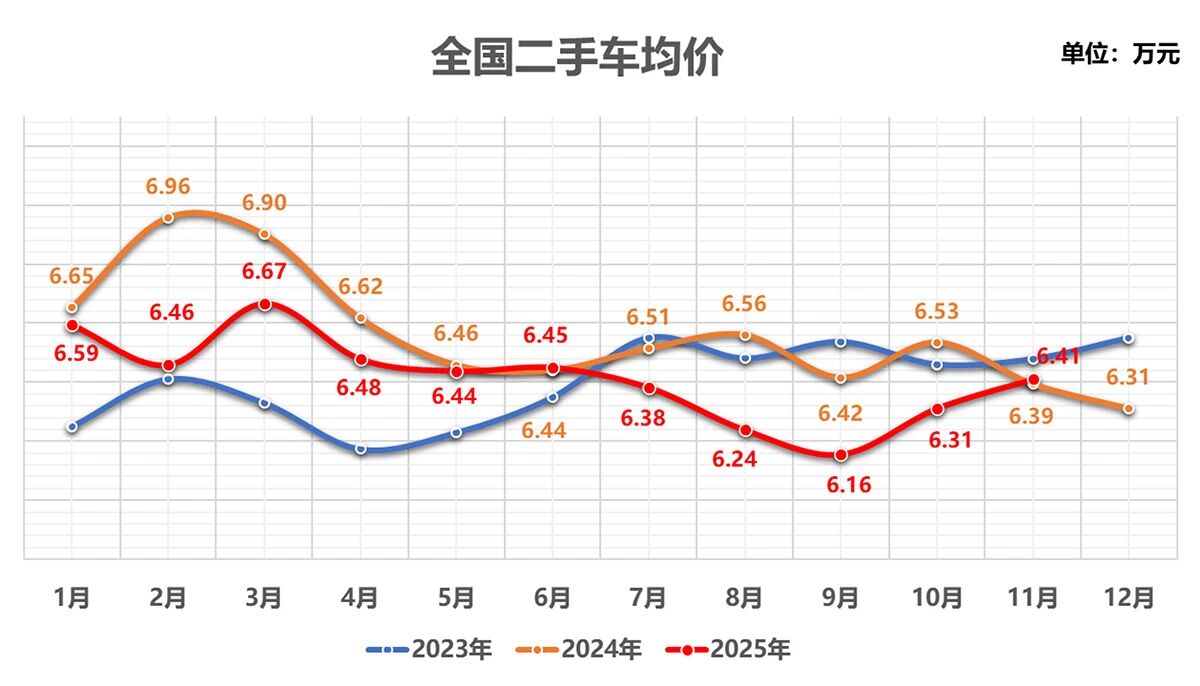
Average national used car price in the past three years (Source: China Automobile Dealers Association)
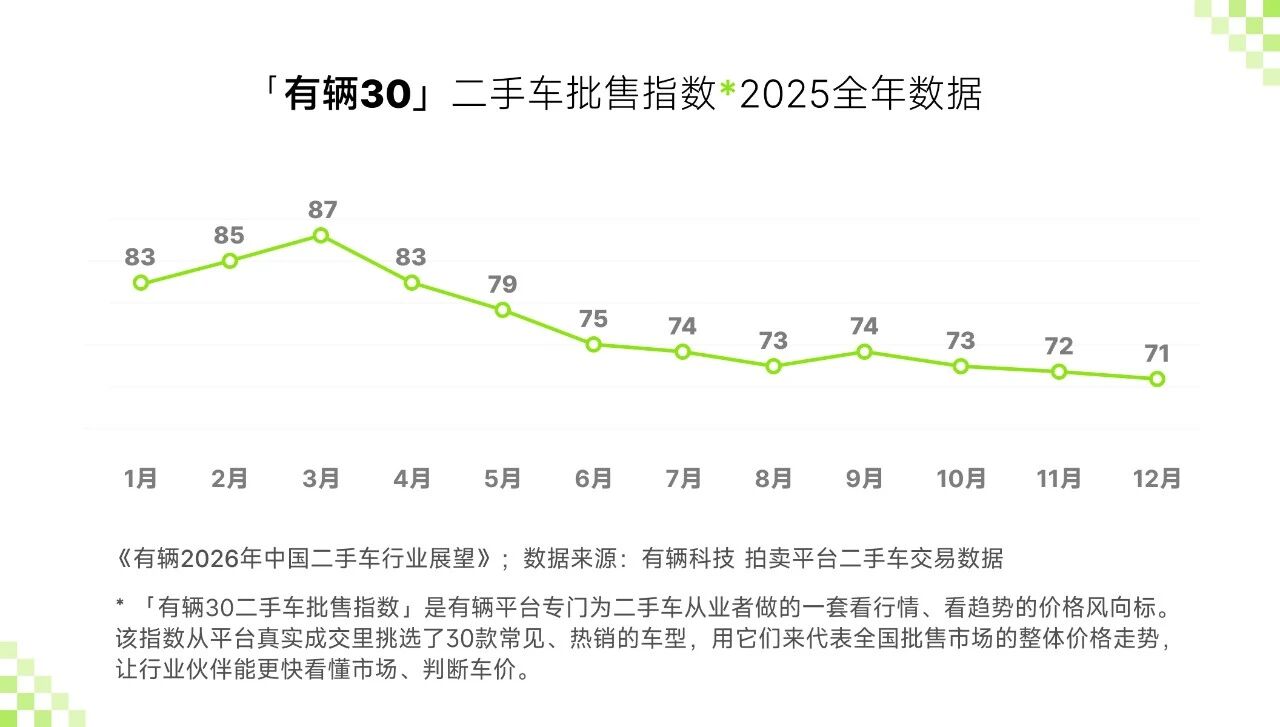
In 2025,"There are 30 second-hand car wholesale price index
"It mainly reflects the" car price changes "under the condition of fixed models
In 2026, affected by overcapacity of new energy vehicles, some new energy brands may continue to cut prices to directly suppress the residual value of used cars at the same level.
At the same time, the supply of vehicle sources continues to increase: the first batch of new energy vehicles entering the market on a large scale (licensed from 2021 to 2023) have entered the replacement cycle; at the same time, due to the continued explosion of new energy vehicle sales from 2024 to 2025 (penetration rate exceeds 50%), quasi-new vehicles will continue to increase within three years after entering the market, which will lead to a downward price.
Second-hand car prices will also undergo structural differentiation. Due to high market recognition, the prices of some new energy independent brands are relatively firm; due to their large ownership and low maintenance costs, mainstream fuel joint venture models have stable market demand in third-and fourth-tier cities, and prices will decline slowly with little fluctuations; Luxury fuel vehicles and unpopular new energy models (such as some early models of new forces) have depreciated sharply due to technological iteration problems and accelerated selling, and the price decline is expected to be more obvious.
Although the price trends in different market segments are slightly different, overall, the overall trend of moderate downward trend in domestic used car prices in 2026 remains unchanged.
3. Technology trends: AI is triggering an efficiency revolution
In 2025, people have already seen the changes AI technology has brought to the used car industry. When AI breaks down human experience into standardized data collection and relies on algorithms to complete consistency checks,"subjective judgment" is transitioning to "structured evidence", and an efficiency revolution triggered by AI is sweeping the entire industry.
Relying on AI technology, Kataichi has built intelligent interaction capabilities driven by the needs of car owners, providing users with customized, standardized and ecological scenario solutions. For the demand side and supply side, Kataichi relies on the intelligent interactive engine to build four major capabilities: AI car finding, intelligent vehicle recommendation, multi-dimensional vehicle comparison, and intelligent service promotion. By providing thousands of user service experiences, the service level has been qualitatively improved.
The "Used Car Intelligent Analysis" function of used car retailer Tao Che is based on the DeepSeek-R1 model, combined with data resources across the network, and deeply analyzes vehicle information through AI technology. It can generate evaluation reports covering vehicle history, market price fluctuations, residual value evaluation, and core dimensions such as hedging rate prediction.
Youcha Technology serves industry users such as used car dealers in three important scenarios: vehicle testing, valuation and trading. Using AI technology, it can quickly and accurately judge the condition of vehicles, returning to the core pain point of used car transactions: authenticity and transparency of vehicle conditions; valuation tools provide effective price reference for buyers and sellers 'batches and subsequent retail sales, support dealer acquisitions to reduce risks and increase sales speed; Youcha Technology's AI capabilities have successfully helped new power host manufacturers and used car dealers improve customer satisfaction through self-developed technical solutions such as PowerBid auction system and SmartCheck Youcha intelligent detection.
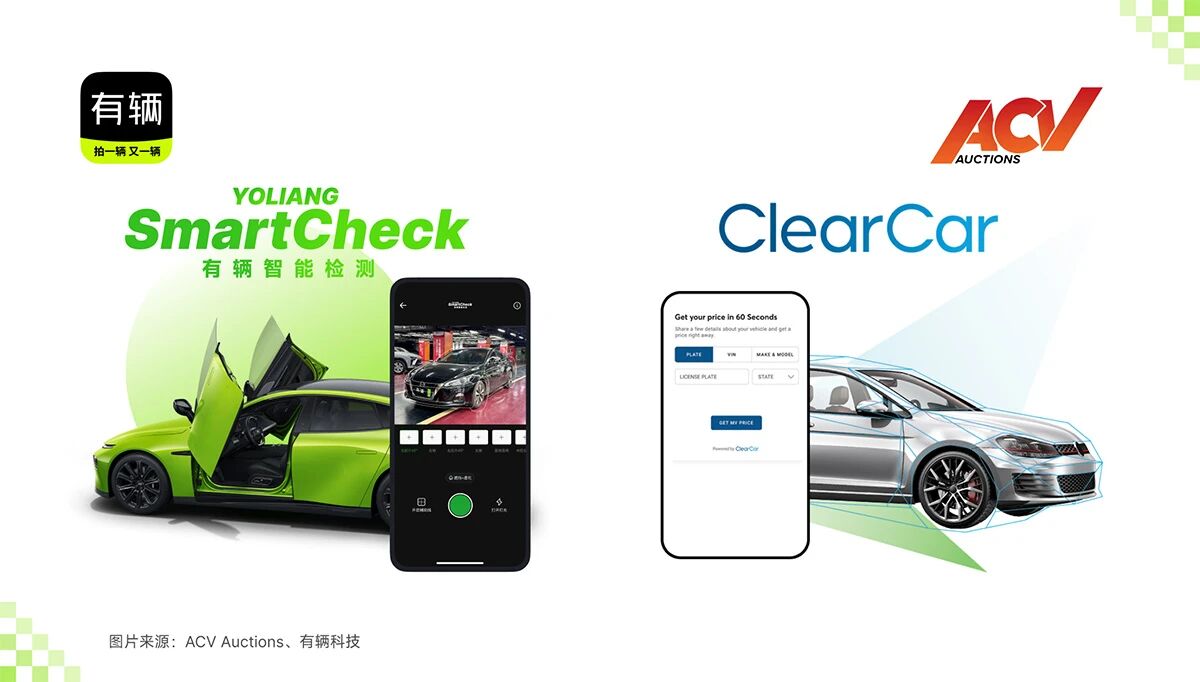
Today, AI technology is reshaping the industry landscape with disruptive power, making used car transactions more transparent and efficient. Using technological innovation to promote the digital and intelligent transformation of the used car industry has gradually become an industry consensus.
In 2026, technology will further solve pain points such as "information asymmetry" and "valuation difficulties" of used cars, and push the penetration rate of online transactions to continue to rise.
4. Circulation trend: two-wheel drive across regions and sinking markets
China has a vast territory, which naturally creates a regional price difference for used cars and promotes the cross-regional circulation of used cars. Data shows that in 2023, the cross-regional transfer rate of used cars will reach a maximum of 29.27%; in 2024, this figure will increase to 30.23%; in the first 11 months of 2025, the national cross-regional transfer rate of used cars has reached a historical high of 33.87%.
Thanks to the market effect brought about by the comprehensive implementation of "cross-provincial processing" and "commodity attribute establishment" of used cars a few years ago, in 2026, new breakthroughs will still occur in the transfer rate of used cars.
In 2026, the domestic used car circulation pattern will show two major characteristics:
First, the circulation of used new energy vehicles has accelerated: the penetration rate of used new energy vehicles nationwide has increased from 3.6% at the end of 2022 to 11.2% in October 2025. Due to the rapid iteration of technology, new energy vehicles depreciate relatively quickly. In terms of circulation, Jiangsu, Zhejiang, Shanghai and Guangdong and other regions have a strong willingness to consume green, further promoting the circulation frequency of new energy vehicles between regions.
Second, the sinking market will become the core of growth: car ownership in third-and fourth-tier cities and county markets continues to grow. Driven by the two new policies, the superposition of first purchase and swap demand will further promote the circulation of used cars.
As of December 28, 2025, more than 11.5 million cars have been exchanged for new ones in 2025, driving new car sales to exceed 1.6 trillion yuan. The dividends of the two new policies have extended into 2026. Among them, replacement demand will continue to run at a high level, and consumers will release a large number of high-quality car sources by "selling old and buying new", which will also speed up circulation in disguise.
5. Export trends: from scale expansion to compliance and quality improvement
Since China launched the pilot project of used car exports in 2019, used car exports have grown by leaps and bounds. Data from China Automobile Dealers Association shows that in 2024, China's total exports of used cars exceeded 436,000 units, a year-on-year increase of 46.5%. Exports cover more than 160 countries and regions in Southeast Asia, the Middle East, Europe, Latin America and other places. In 2025, the export volume of used cars is expected to reach 600,000.
In 2026, used car exports will enter a critical stage of "standardization and quality improvement, market diversification, and service upgrading":
First of all, the threshold for export access has been significantly increased, and compliance has become a prerequisite. The new export regulations of the four departments have been fully implemented, and "after-sales liability binding" and "dynamic credit management" have become the bottom line of the industry, and enterprises that violate regulations will be eliminated. With complete documents and standardized processes, compliant companies can obtain higher transaction premiums in overseas markets and make it easier to obtain long-term orders.
As compliance costs rise, small and medium-sized traders are accelerating their clearing due to difficulties in meeting after-sales and compliance requirements. Leading companies and main engine factory companies with vehicle source integration, testing and preparation, and overseas service capabilities will dominate.
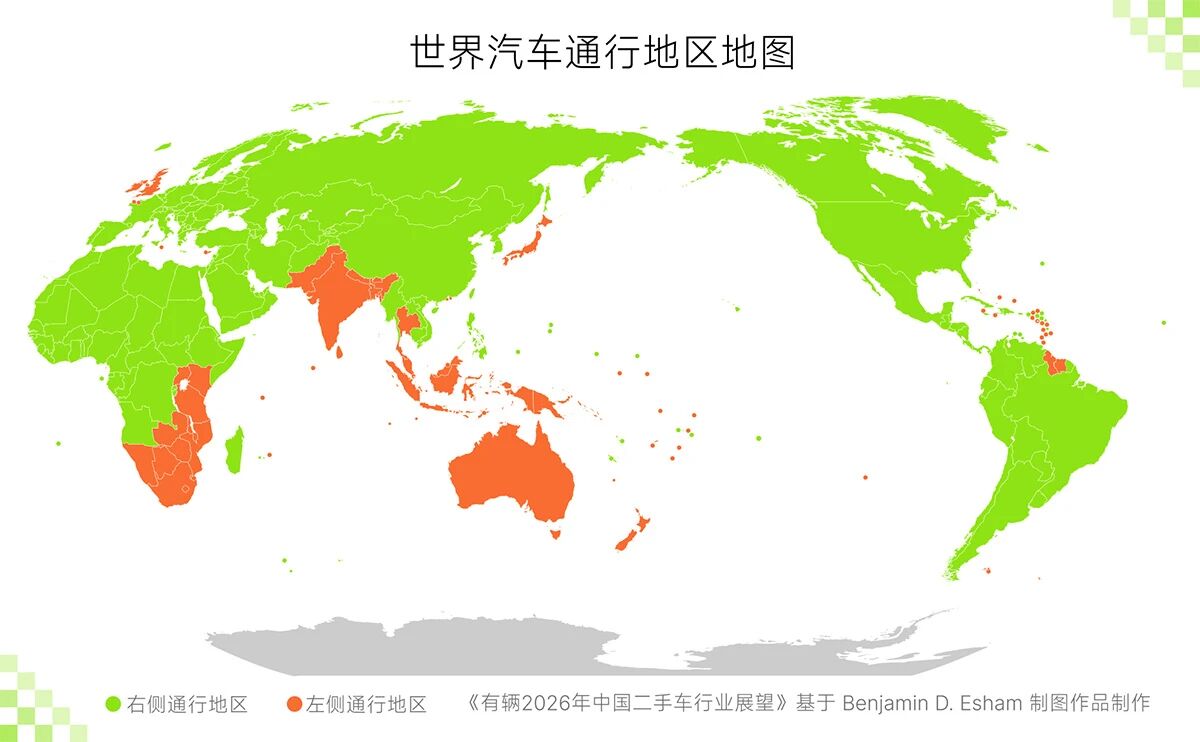
Second, the layout of the used car export market will expand from several major regions to multiple points around the world. Today's policies of export destination countries are changeable. On the one hand, used car exports must consolidate core markets such as Russia, the Middle East, Central Asia, and Southeast Asia, and on the other hand, expand to emerging countries in Europe, Latin America and Africa to reduce dependence on a single market. In terms of vehicle sources, the main fuel industry is exported in parallel with new energy increments. Export companies have built comprehensive service outlets in key markets to adapt to local emission, right-hand rudder and other standards to improve localized operation capabilities.
Third, used car exports will transform from "trade" to "service + ecology": exporting companies will shift from simple vehicle sales to a comprehensive service model of "vehicle source certification + local after-sales + parts supply". For example, we cooperate with overseas repair shops to establish authorized service points to provide vehicle quality assurance and provide reserve of commonly used parts; introduce third-party testing and certification to issue test reports suitable for local national languages to enhance the trust of overseas consumers. In 2026, the proportion of export companies with overseas after-sales networks will gradually increase. China's used cars have officially entered a new stage of value-based exports.
Business recommendations for 2026
In 2025, domestic new car price competition will continue to be fierce, seriously affecting the operation of used car companies. The overall operating situation of used car companies will be relatively severe. A survey on the business environment of used car companies conducted by the Used Car Division of China Automobile Dealers Association showed that the loss ratio of used car dealers in the first half of the year rose to 73.6%. In addition to the high proportion of corporate losses, car dealers are also facing challenges such as increased inventory pressure, high customer acquisition costs and meager profits, and fierce market competition.
Under the influence of policies and markets, the used car industry in 2026 will still be opportunities and challenges.
In the view of Zong Ming, founder and CEO of Youcha Technology, used cars are an industry that focuses on offline operations. Although there are many online models, returning to the essence, vehicle transactions cannot be separated from offline, so car dealers must first manage their own operations and management to control risks, whether external or internal risks.
In the used car industry in 2026, car dealers no longer need to complain about policies and markets. They need to arm themselves, improve their own capabilities, and solve their own management problems. Second-hand cars are an industry suitable for hard-working people, without much opportunism.
Whether it is large or small, medium-sized dealers have the opportunity to retain their ecological niche in the fierce competition, and clarifying their strategic positioning is the key to the success of car dealers. What businesses can be done, what cannot be done, and what cannot be done; Actively use the platform capabilities to find various professional resources to cooperate with vehicle source procurement, sales disposal, digital management, traffic customer collection, brand building, etc., and make full use of external resources is a must-complete lesson for a smart operator.
In 2026, whether it is for enterprises or car dealers, only by adhering to the bottom line of compliance, strengthening technological empowerment, deepening value-added services, and uniting available resources can we seize the lead in industry transformation. A transparent, efficient and standardized used car ecosystem will inject lasting momentum into the circular development of the automobile industry. (Written by Xu Cheng)
Source: SG Auto Automobile Management and Services
[Disclaimer] The content of this website (including pictures and texts) originates from the Internet, and the copyright belongs to the original author. Respect the rights and interests of originality, and select content is only used for information sharing. If copyright disputes are involved, please contact us to handle the deletion in a timely manner.

 Online Evaluation
 I am Buyer
 Export Services
 subsites


 023-62852688
  No. 1-1, No. 2899, Longzhou Avenue, Banan District, Chongqing City
 Headquarters


