
 Chinese
 Russian
 Arabic
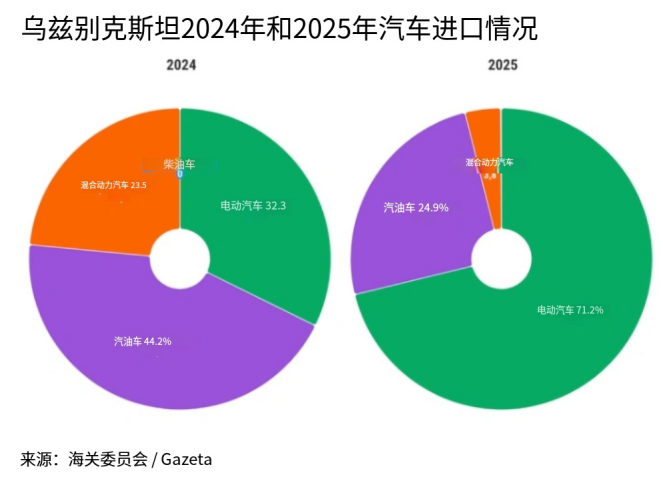
In 2025, Uzbekistan imported 56,832 electric vehicles, nearly 2.4 times that of the previous year. The proportion of electric vehicles in imported vehicles jumped from approximately 32.3% to 71.2%...
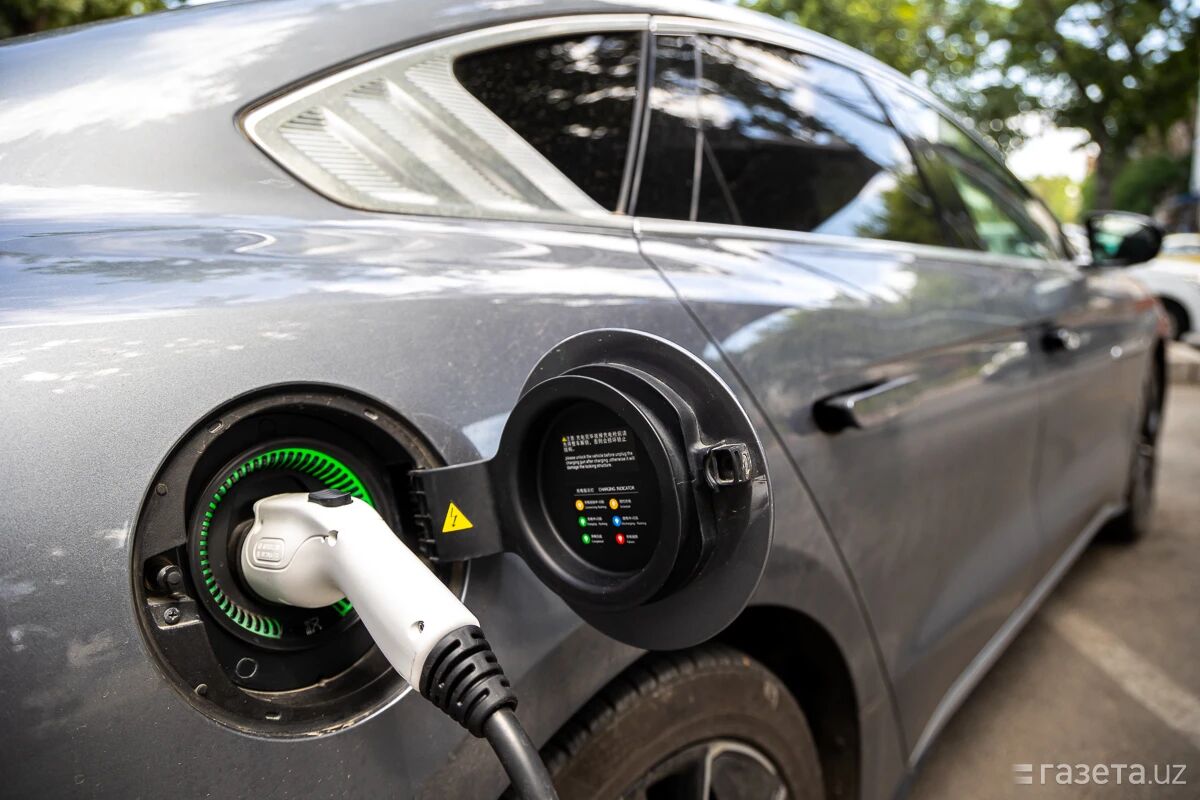
[Tashkent News] The automobile import structure of Uzbekistan will show a significant "electrification tilt" in 2025. According to the local newspaper 丨 азета quoted data from the Uzbekistan Customs Committee, Uzbekistan imported a total of 79,822 vehicles in 2025, a year-on-year increase of 7.1%; however, in terms of amount, the annual import volume dropped from US$1.28 billion in 2024 to US$1.17 billion, a decrease of about 8%.
What attracts more attention is the drastic changes in power types: Uzbekistan imported 56,832 electric vehicles in 2025, nearly 2.4 times that of the previous year, and the proportion of electric vehicles in imported vehicles jumped from approximately 32.3% to 71.2%. In contrast, the import volume of gasoline vehicles dropped to 19,871, a year-on-year decrease of nearly 40%, and the proportion fell from 44.2% to 24.9%. Hybrid cars fell even "off the cliff", with the import volume falling from 17,480 to 3,017 vehicles, a decrease of about 5.8 times, accounting for only 3.8%. Although diesel vehicles increased by 4.6 times year-on-year, the base was extremely small, with only 102 vehicles throughout the year.
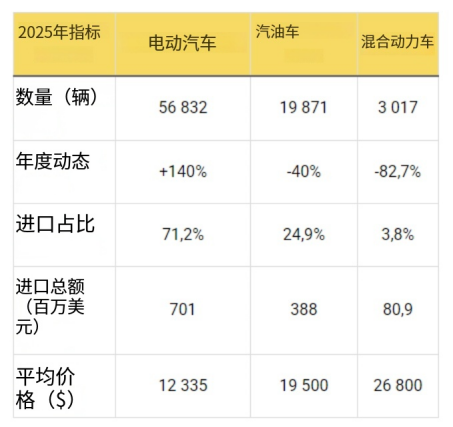
The price side is also changing. Data shows that in 2025, the import value of electric vehicles will increase from US$224.7 million to US$701 million, an increase of 3.1 times, accounting for about 60% of the total import value of automobiles; the average price of bicycles will increase by 32.2% year-on-year, from US$9,328 to US$12,335. Looking at December, the unit price of imported electric vehicles exceeded US$17,600, compared with approximately US$5,100 in the same period last year. The report directly related this change to the policy: Uzbekistan will increase the "recycling fee/scrapping fee"(similar to recycling fees and disposal fees) for electric vehicles by 2.3-4 times starting from May 1, and the increase in costs will be quickly transmitted to terminals and import structure.
In terms of gasoline vehicles, the import value dropped from US$706.8 million to US$388 million (-45%), while the average price of bicycles dropped slightly by about 9%, from US$21,500 to US$19,500. The import value of hybrid cars dropped from US$339.3 million to US$80.9 million (about-4.2 times), but the average price increased by 38% to US$26,800, indicating that low-priced products are more difficult to "bear" fees and taxes, and the market is concentrating towards higher prices.
There was also a wave of "import grabbing" at the end of the year. Data shows that in December 2025, Uzbekistan imported 2,887 cars with a total amount of US$51.7 million, almost double that of November. Financial analyst Otabek Bakirov speculated that this may be related to the market's expectation of an increase in tariffs on small-displacement (1.0L and 1.2L) models, so importers will speed up their arrival in Hong Kong ahead of schedule. He also reminded that under the current level of rebate fees, the economics of introducing low-cost electric vehicles for private importers and small businesses is declining, and the rebate fees for some models may even exceed 50% of the price of the car. As a result, both consumption and supply are pushed to "more expensive electric vehicles", which are mainly paid for by high-income people.
It is worth mentioning that while the electrification of imports is accelerating, Uzbek local production is still growing: official statistics show that in the first 11 months of 2025, a total of 419,300 vehicles were produced locally, a year-on-year increase of 8.9%.
[Brief Comment] For China's automobile exporters, the Uzbek market sends a clear signal: electric vehicles are still the main theme of imports, but policy costs are pushing the market from "low prices" to "medium and high prices, branding and compliance". If we continue to follow the past approach of low-cost electric vehicles, profits are likely to be swallowed up by recycling fees and channel costs. At the same time, expected changes in tariffs on small-displacement fuel vehicles also remind exporters that Uzbekistan's policy rhythm will affect port arrival and inventory strategies. Contract terms and price validity period must leave a sufficient margin of safety.
Source:https://www.gazeta.uz/ru/2026/01/19/auto-import/
Source: Guangdong Good Car
[Disclaimer] The content of this website (including pictures and texts) originates from the Internet, and the copyright belongs to the original author. Respect the rights and interests of originality, and select content is only used for information sharing. If copyright disputes are involved, please contact us to handle the deletion in a timely manner.

 Online Evaluation
 I am Buyer
 Export Services
 subsites


 023-62852688
  No. 1-1, No. 2899, Longzhou Avenue, Banan District, Chongqing City
 Headquarters


