
 Chinese
 Russian
 Arabic
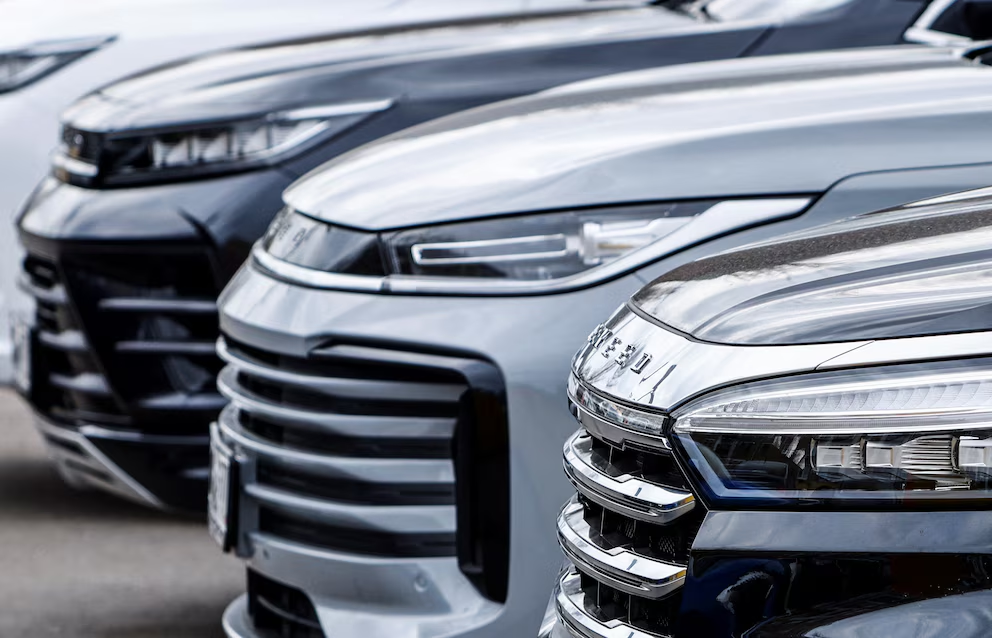
[Buenos Aires News] The Argentine government recently officially opened up a road route for "imported models that have not been sold in Argentina and have not yet completed regular certification." Several local media quoted the "Official Gazette" as revealing that Argentina issued Regulation No. 10/2026 on January 16 (Dispositión 10/2026), clarifying how to apply for the issuance of a "Road Safety Certificate"(Certificado de Seguridad Vial) for imported vehicles that lack a Vehicle Configuration Permit (LCM) and an Environmental Protection Configuration Permit (LCA) to complete vehicle registration, licensing and legal driving on the road.
The promulgation of this rule has been nearly ten months since the promulgation of Decree No. 196/2025. The report pointed out that the delay in implementing the detailed rules is related to the institutional adjustment of the National Road Safety Administration (ANSV), the replacement of the person in charge, and the simultaneous advancement of "deregulation and institutional simplification" promoted by the government. With the entry into force of Regulation No. 10/2026, since March 2025, it has been difficult to complete the actual operation of "import of all types of vehicles", and finally there is an enforceable process.
According to the new regulations, CSV applies to private cars (M1) and light commercial vehicles (N1), and also covers vehicles of certain special origin, such as vehicles that have been "nationalized/regularized" under Decree No. 110/99, judicial auctions or court disposal vehicles, as well as imported used cars under similar items. The core requirement is that the vehicle must first receive a technical report (Informe Técnico) issued by a qualified agency or person. The report can be issued by a repair shop, dealer or importer registered with the Transport Secretariat, or signed by a registered engineer in the form of a sworn statement. Before the establishment of a unified nationwide authorized maintenance network, the authorities also accept technical reports from national or local compulsory technical testing agencies (RTOs). ANSV will issue a one-time CSV after the technical report is approved.
At the process level, the media concluded that importers need to obtain valid import certification documents first. Vehicles are not allowed to drive by themselves because they have not yet been licensed. They must be transported to RTO or authorized testing/maintenance agencies for appearance and technical status inspection by transportation; then the agency's technical leader or registered engineer enters the data into the government remote service system (TAD), and ANSV issues a CSV. After receiving the CSV, the owner still needs to go to the National Motor Vehicle Property Registry (DNRPA) to register the vehicle before he can continue to apply for a license plate.
In terms of fees, ANSV has updated the CSV charging standard according to Regulation No. 11/2026 (Disposición 11/2026). Taking the import of a 0-kilometer new car as an example, if the same applicant applies for the first CSV within 12 months, the fee will be charged at 20,000 "modules"; for subsequent certificates within the same period, the fee will be increased to 100,000 modules. Since the unit price of the module is 5 pesos, the first CSV sheet is about 100,000 pesos, and each subsequent sheet is about 500,000 pesos-the official explanation is that in the short term, multi-vehicle applications are closer to commercial activities than personal use. The CSV fee for imported used cars (and imported used motorcycles) is 80,000 pesos, and for trailers and RVs is 50,000 pesos.
However, CSV is only a key part of "being able to sell", and there is still a long way to go from "making money". The report also gives a typical cost framework calculated by "extrazone": international transportation and freight costs are about US$2500, and after arrival at the port, they also have to face 35% import tariffs, 3% statistical fees, and about US$1000. Local logistics and transshipment costs; in addition, there are about 10% of various taxes and fees (such as local business tax, income tax or prepayment, financial transaction tax, provincial and municipal fees, etc.) and 21% value-added tax. A more realistic risk lies in after-sales: the media reminded that the "unofficial models on sale" introduced through this route often cannot obtain full warranty support in the brand's local distribution network. Even if individual brands are willing to coordinate the handling, the supply of repair tooling and original parts may not be in place.
[Brief Comment] For China's auto exporters, the significance of this rule is not that it brings large-scale orders immediately, but that Argentina has established a low-threshold and enforceable licensing mechanism for "non-catalog models": it may lead to compliance needs for small-batch imports, personalized models and gray channels. But at the same time, Argentina is still a typical high-tax import market. Coupled with after-sales and spare parts uncertainty, this road is more suitable for models with "high gross profit, strong product differentiation, and ability to provide spare parts and technical support."
Source: Guangdong Good Car
[Disclaimer] The content of this website (including pictures and texts) originates from the Internet, and the copyright belongs to the original author. Respect the rights and interests of originality, and select content is only used for information sharing. If copyright disputes are involved, please contact us to handle the deletion in a timely manner.

 Online Evaluation
 I am Buyer
 Export Services
 subsites


 023-62852688
  No. 1-1, No. 2899, Longzhou Avenue, Banan District, Chongqing City
 Headquarters


