
 Chinese
 Russian
 Arabic
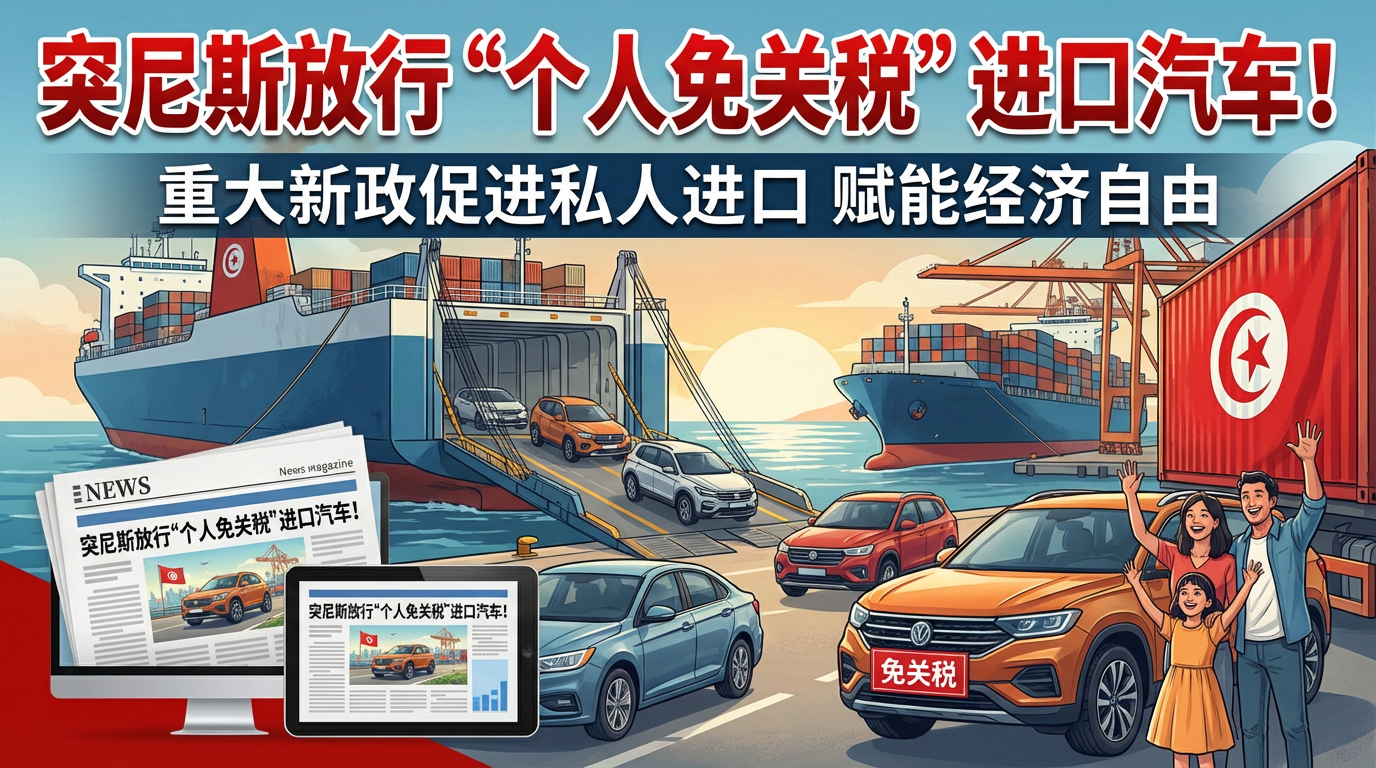
[Report quoted] On December 2, the Tunisian Parliament passed relevant provisions of the 2026 Budget Law, allowing "families (individual residents)" to import a car for their own use and exempt them from tariffs. The voting result was 131 votes in favor and 30 votes against. This move is regarded by many people as a "historic" step, against the background of high domestic prices of new and used cars. It should be emphasized that tariffs have always been an important source of Tunisia's finances, and the tariff burden on some vehicle models can reach up to about 400% of the vehicle's value.
Finance Minister Haledi called the decision "a ticking time bomb", warning of its possible negative impact on fiscal balances and prices, and pointed out that the country needs to prioritize limited foreign exchange and supporting resources for energy, food and necessary imports. She said,"The proposal is beautiful, but at what cost?"
The regulatory provisions set two gates: first, the annual scale of duty-free household imports must not exceed 10% of the country's total automobile imports; second, customs valuations of vehicles must refer to the "original approved price at the time of purchase at a locally authorized dealer"(intended to prevent understatement and arbitrage). This offer is clearly for personal use, does not apply to any company or institution, and cannot be sold and circulated outside the legal framework. Details are yet to be detailed on whether to limit old and new vehicles, power types and how other taxes and fees (such as value-added tax, registration fees, etc.) apply. Referring to the market size, Tunisia will sell a total of approximately 96,774 vehicles in 2024, of which commercial vehicles will increase by 12.8% and passenger cars will decline by 11.5%.
Enlightenment for China's automobile export practitioners
This is a tariff exemption window "for individual residents" rather than a liberalization of commercial imports. In the short term, household duty-free exemptions are expected to release purchasing power in price-sensitive ranges, but the 10% quota and the "valuation based on locally approved prices" rule will significantly reduce the arbitrage space, and the implementation methods (quota allocation, declaration path, resale restrictions) are still pending official details. In the medium term, if the introduction of duty-free services forms a price anchor, it will force distributors and traditional channels to adjust pricing and supply structures. China brands can occupy the entry and mainstream price bands based on cost performance and reliable services; however, we must be wary of the financial department's concerns about foreign exchange and fiscal revenue, and policies may be tightened or optimized.
Brief comment: Public opinion and fiscal tension are playing the same game. Policies open windows for individuals, but lock in large-scale "arbitrage".
This article is reproduced from Guangdong Haoche and is only used for information sharing. If infringement is involved, please contact and delete it. This site does not bear relevant legal responsibilities.

 Online Evaluation
 I am Buyer
 Export Services
 subsites


 023-62852688
  No. 1-1, No. 2899, Longzhou Avenue, Banan District, Chongqing City
 Headquarters


