
 Chinese
 Russian
 Arabic
Under the new regulations, eligible EREV vehicles will no longer pay customs duties when entering Kazakhstan, but they will still be required to pay 16% value-added tax (based on vehicle price), scrapping (recycling) fees, and first registration fees...
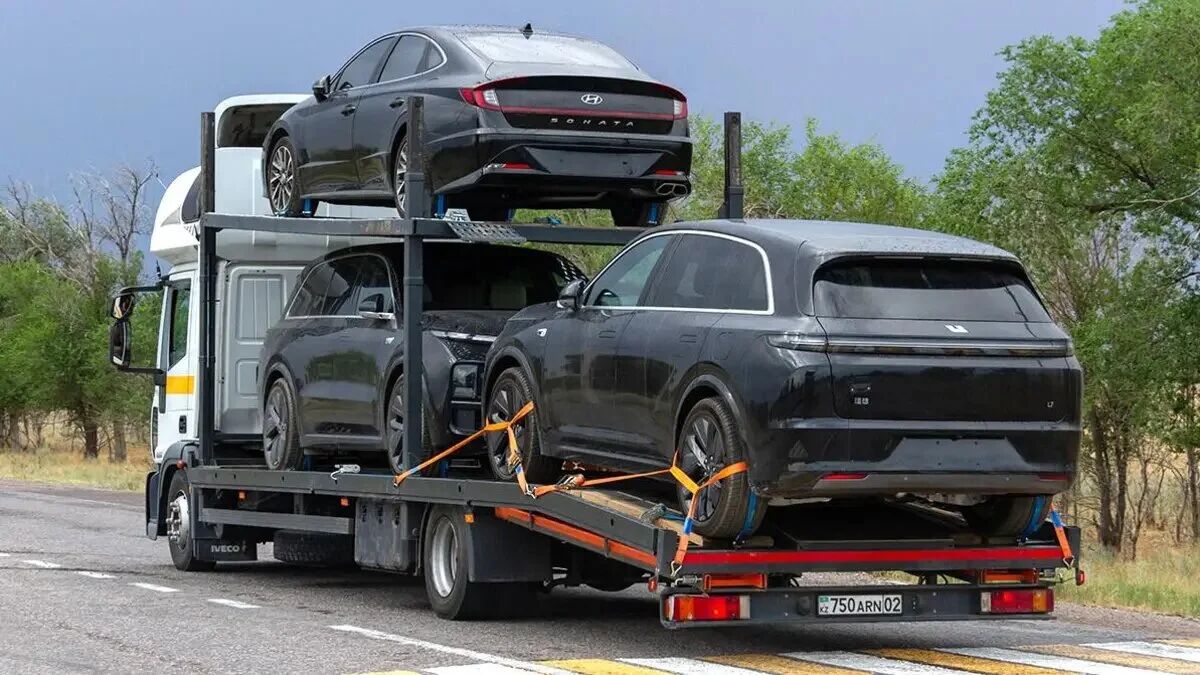
According to Kazakhstan media Lada.kz quoted the car website kolesa.kz as reporting that starting from January 22, 2026, Kazakhstan will implement an import tariff exemption policy for "Extended Range Electric Vehicles/Series Hybrid Vehicles"(EREV). Under the new regulations, eligible EREV vehicles will no longer pay customs duties when entering Kazakhstan, but they will still be required to pay 16% value-added tax (based on vehicle price), scrapping (recycling) fees, first registration fees, and customs clearance and laboratory testing.
The report pointed out that this adjustment is not a unilateral decision by Kazakhstan, but stems from the resolution made by the Council of the Eurasian Economic Commission (EEC) on December 23, 2025, and will officially take effect on January 22, 2026. After the document was implemented, Kazakhstan was able to implement "zero-tariff customs clearance" for vehicles under specific tariff codes in accordance with the framework of the "New World Trade Organization (WTO) Rules".
What deserves the attention of China's export companies is that the models included in the tax exemption scope are defined by Customs Tariff (TN VED) codes, involving 8703 80 0003, 8703 80 0004, 8703 80 0005, 8703 80 0008 and other sub-items. Kolesa.kz explained that the Eurasian Economic Union had technically updated the "Unified Commodity Naming" in September 2025, replacing the old codes with new subheadings (such as 8703 80 0002 and 8703 80 0009), which also paved the way for EREV to enter the zero-tariff channel "according to the electric-driven logic" at the institutional level. Previously, similar discounts only covered pure tram models, but now the policy extension has been clearly extended to EREV.
In terms of definition, the report emphasized that EREV adopts a working method of "motor-driven and the engine only generates electricity": vehicle driving is mainly completed by the motor, and the internal combustion engine does not directly drive the wheels, but is used to charge the battery. The practical significance of this technical route in the Central Asian market is that it can not only be close to the driving experience of electric vehicles, but also alleviate mileage anxiety caused by insufficient charging network coverage.
As for which brands may benefit first, the report mentioned that under the new rules, brands with EREV/tandem hybrid products, including Lixiang, Aito, Voyah, Leapmotor, Zeekr, ** Shenlan Deepal **, theoretically have room to enter the Kazakhstan market through this channel with a lower tax burden. Manufacturers of other similar technical routes are also within the scope of application.
Brief comment:For China's automobile export practitioners,"tariff exemption" is certainly a good thing, but don't overestimate its direct pull on the landing price-value-added tax, recovery fees and registration fees are still the bulk, coupled with testing and compliance costs, the final price decline depends on model declaration, tax base identification, and channel fee control. The real opportunity lies in that Kazakhstan has expanded its policy anchor from "pure electricity" to EREV, which is tantamount to publicly admitting that this route is more in line with the current situation of local infrastructure.
Source: Guangdong Good Car
[Disclaimer] The content of this website (including pictures and texts) originates from the Internet, and the copyright belongs to the original author. Respect the rights and interests of originality, and select content is only used for information sharing. If copyright disputes are involved, please contact us to handle the deletion in a timely manner.

 Online Evaluation
 I am Buyer
 Export Services
 subsites


 023-62852688
  No. 1-1, No. 2899, Longzhou Avenue, Banan District, Chongqing City
 Headquarters


