
 Chinese
 Russian
 Arabic
As of now, none of the quota models that have completed customs clearance is less than 30 million pesos, which has led industry and commercial authorities to discuss whether adjustments are needed to the quota structure and threshold in 2026...
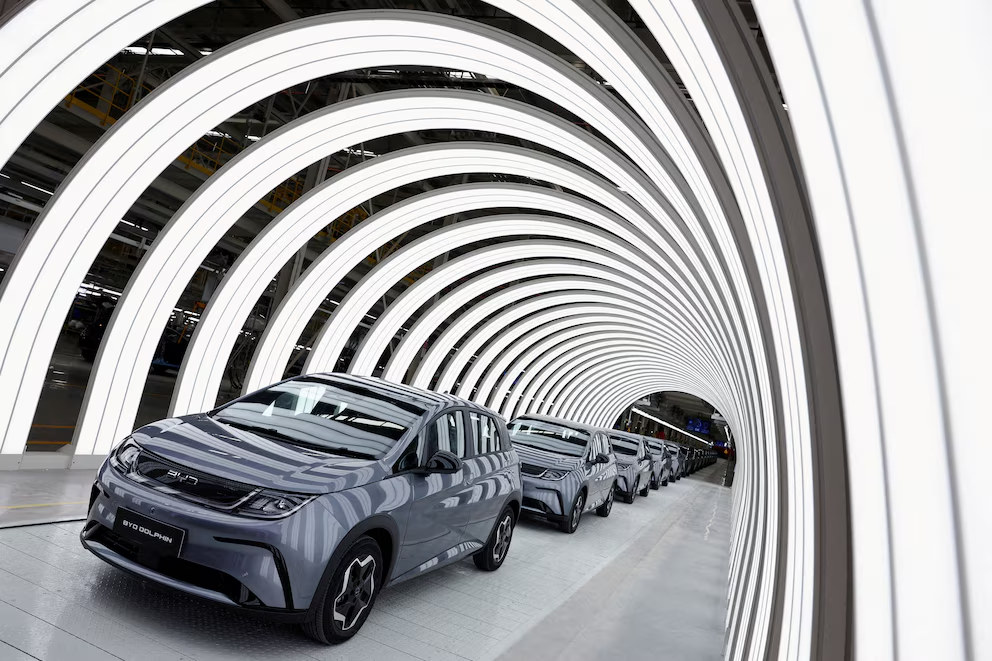
[Buenos Aires News] The "additional tariff free quota for new energy vehicles" policy introduced by the Argentine government this year has not lowered the price of entry-level new cars in the short term as the official expected. Several local media quoted the automobile industry and official sources as saying that Argentina allows the import of 50,000 hybrid and pure tram models every year, and exempts these vehicles from the 35% complete vehicle import tariff from foreign markets. It originally hoped to use a cheaper "0-kilometer new car" drives market competition and drives down selling prices. However, as of now, among the quota models that have completed customs clearance and "nationalization", the recommended retail price of none is less than 30 million pesos, which has led industrial and commercial authorities to discuss whether it is necessary to adjust the quota structure and threshold in 2026. Make adjustments.
The report pointed out that although most of the quota models have not yet arrived in Hong Kong, including BYD's all-electric models that are still waiting to enter the Argentine market, the current price performance has caused concerns: policy tools do not seem to bring the "cheapest new car price" down, but more like adding a batch of supply in the mid-market. This deviation was also publicly pointed out by some importers participating in the bidding. Ernesto Cavicchioli, president of Hyundai Motor Argentina, was awarded a quota of 600 vehicles in the first round of bidding, but later opted out. He bluntly stated that the US$16,000 FOB threshold required by the bidding documents was "almost impossible to achieve." In his view, the government's original intention was to make "economical cars cheaper," but in actual allocation, larger quotas were used to introduce non-cheap models,"many of which were C-class SUVs." He added that judging from the results,"most of the quotas were allocated to China cars" because they were more competitive and could even achieve a FOB close to US$16,000 in larger body classes.
Some Argentine local car companies told the media that if the government tries to force terminal price reduction by further lowering the FOB threshold, it may theoretically be closer to the policy goal, but the side effect is also obvious_"equivalent to setting the threshold so that only China brands can participate," which will trigger new debates at the political and industrial levels.
The industry is also cautious about "incremental effects". According to the report, this quota was initially expected to use "50,000 cheaper new cars" to drive overall sales growth. However, due to the higher-than-expected landing price, it may only enrich the mid-end supply and make it difficult to significantly expand the market. Total plate. Some industry insiders estimate that the main thing that may really bring new demand is pure trams, because many families in Argentina regard electric vehicles as the "second and third urban commuter buses"; but pure trams account for about 8000 vehicles in the quota, accounting for only about 16%. If the industry is expected to sell approximately 650,000 new cars in 2025, this policy's pull on the total may push the scale to approximately 660,000 vehicles.
Regarding how to change in 2026, discussions focus on two directions: first, further reduce the FOB threshold from US$16,000 to approximately US$12,000; second, continue to expand the annual quota from 50,000 vehicles to form sufficient "quantitative pressure" in price-sensitive areas. The media quoted industry insiders as saying that about 30% of new cars in Argentina are currently sold at less than 30 million pesos. If there is to be a significant impact on this price band, the quota size needs to account for a higher proportion in the "competition range", otherwise the effect will be limited. At the same time, whether "Mild-Hybrid" should continue to be included in the quota is also under debate: about 9600 light hybrid vehicles (about 19%) are expected to be imported this year, because such vehicles are more likely to meet the US$16,000 FOB requirement, but their electric-drive properties are weak and there are differences on whether they are in line with policy guidance.
[Brief Comment] From the perspective of China's automobile exports, this policy is both an opportunity and a variable for Chinese brands: the opportunity is that the Argentine market is using tariff tools to "introduce competitors", and Chinese brands do have more advantages in terms of cost and product coverage; The variable is that once the 2026 rules are adjusted around the "price reduction effect", the threshold may be stricter and the quota may be expanded, but at the same time it will be easier to trigger public opinion pressure on whether the policy is excessively beneficial to Chinese cars.
Sources of information:https://www.infobae.com/economy/2025/08/12/la-importacion-sin-arancel-de-autos-no-consiguio-bajar-hasta-ahora-el-precio-de-los-0-km/
Source: Guangdong Good Car
[Disclaimer] The content of this website (including pictures and texts) originates from the Internet, and the copyright belongs to the original author. Respect the rights and interests of originality, and select content is only used for information sharing. If copyright disputes are involved, please contact us to handle the deletion in a timely manner.

 Online Evaluation
 I am Buyer
 Export Services
 subsites


 023-62852688
  No. 1-1, No. 2899, Longzhou Avenue, Banan District, Chongqing City
 Headquarters


