
 Chinese
 Russian
 Arabic
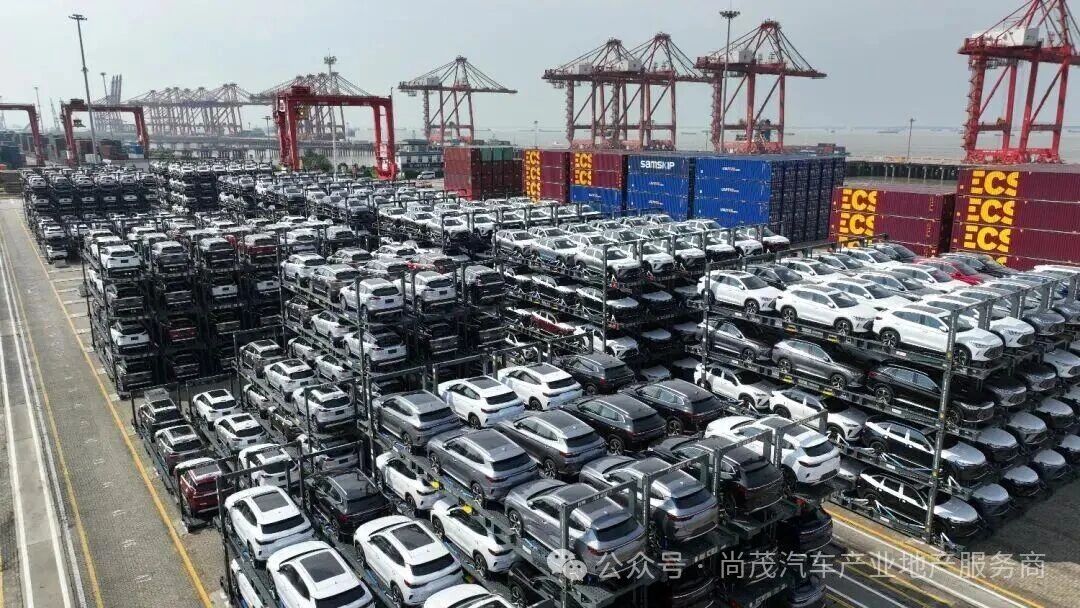
As China's automobile industry moves towards a new stage of high-quality development, used car exports have become an important engine to activate the circulation of the domestic automobile market and expand overseas incremental space. In order to help relevant companies and practitioners accurately grasp policy requirements and standardize business processes, this article combines the latest announcements of the Ministry of Commerce and other five departments and the trends of new regulations in 2026 to sort out and form an operating guide covering the entire chain of qualification applications, vehicle screening, customs clearance and performance. Provide practical reference for used cars to "go out to sea".
1. Core business prerequisites: policy boundaries and qualification requirements
(1) Core policy basis and definition The second-hand car export business must strictly abide by the "Announcement of the Ministry of Commerce and Other Five Departments on Matters Related to the Export of Second-hand Vehicles", which clarifies that second-hand cars refer to transfer ownership through transactions after completing registration and before mandatory scrapping standards. Cars (excluding three-wheeled vehicles and low-speed trucks) and trailers. The new regulations that will be implemented on January 1, 2026 further clarify that for vehicles that have been registered for less than 180 days, the after-sales maintenance service confirmation issued by the production enterprise must be supplemented (including the export country, vehicle information and after-sales outlet information and stamped with an official seal), and it is strictly prohibited to pass off "zero-kilometer used cars" as new cars for export.
(2) Enterprise qualification application conditions
1. production enterprises
·Independent legal persons registered in China shall be included in the Announcement of Road Motor Vehicle Manufacturing Enterprises and Products of the Ministry of Industry and Information Technology;
·Only the products produced by the company can be exported;
·There are no records of unrectified violations of laws and regulations or serious breach of trust, and compliance with safety, environmental protection, taxation and other regulatory requirements.
2. circulation enterprises
·An independent legal person registered in China, with fixed office and vehicle display and sales venues, and experience in automobile sales or trading;
·Be equipped with at least 3 certified second-hand car identification and evaluation professionals (social security payment certificates are required);
·Provide financial audit reports for the previous year (newly registered enterprises provide current statements and investor audit reports), and have no records of violations of laws and regulations or serious breach of trust.
3. Enterprises that export used cars through project contracting under special circumstances do not need to declare qualifications in advance, and can directly apply for export licenses based on the bid winning documents, foreign contracted project filing form and contract contract.
(3) Qualification application process
1. Enterprises log in to the "Ministry of Commerce Business System Unified Platform" enterprise terminal to fill in the application materials and submit them to the local provincial commercial authority;
2. The provincial competent department will complete the review within 15 working days. After passing the review, the enterprise can start business within 1 year and need to re-declare the following year;
3. The application materials must include: business application form (including enterprise situation, development plan, implementation plan, etc.), a copy of business license and customs code, and a letter of commitment. The circulation enterprise must also supplement the certificate of the business site, the qualifications of the appraisal and evaluation personnel and other materials.
2. The entire business operation process: from vehicle procurement to overseas delivery
(1) Vehicle screening and procurement: compliance comes first, quality comes first. Vehicle access standards strictly prohibit the export of vehicles under the following circumstances:
·Vehicles that have reached the mandatory scrapping standard or are within 1 year (inclusive) from the scrapping deadline;
·Vehicles under mortgage, pledge, customs supervision or judicial seizure;
·Smuggling and assembling vehicles, with incomplete licenses, inconsistent with registration information, or failing testing;
·Vehicles for which road traffic safety violations and traffic accidents have not been dealt with.
2. Procurement and registration specifications
·Priority should be given to vehicles in good condition and reasonable kilometers. If the export target market is Russia and other regions, focus on local preference requirements such as "original original paint";
·After the enterprise purchases a vehicle, it needs to go through the transfer registration procedures and return the original license plate and driving license. The public security traffic control department will sign "Transfer pending export" on the registration certificate and issue a temporary driving license plate with a maximum validity period of 60 days;
·Vehicles that have been signed as "Transfer for Export" cannot be re-traded in China to change their owners. If the export contract cannot be executed, the export contract needs to be re-signed.
(2) Export license application: key processes and materials 1. Application principles and timeliness
·Implement the "whoever exports applies" system. Enterprises need to apply through the "Unified Platform for Business System of the Ministry of Commerce" after vehicle transfer registration, and cannot entrust a third party to handle it;
·The provincial commercial authorities complete the review and issuance within 3 working days. The license is subject to "one batch, one license". A maximum of 20 vehicles can be applied under the same commodity code. The customs declaration quantity must be consistent with the application quantity, and it must be re-applied if it is not used up.
2. List of necessary materials
·Export license application form (VIN code, brand, displacement, vehicle model, etc. must be consistent with the registration certificate, and the "commodity status" is marked with "old");
·A valid export contract with after-sales service terms (a Chinese translation is required for foreign contracts);
·Original or scanned copy of the Motor Vehicle Registration Certificate (the vehicle owner must be consistent with the exporting enterprise);
·Test reports issued by third-party testing agencies (must comply with standards such as "Export Quality Requirements for Used Passenger Vehicles" WM/T8-2022) and agency compliance statements;
·A written statement that the vehicle meets the target market access standards (stamped with the company's official seal).
(3) Customs clearance and deregistration
1. Core requirements for customs declaration
·Export licenses, contracts, invoices, boxes, bills of lading and other certificates must be submitted when applying. The specification for filling in the product name is "old + vehicle brand + displacement + model"(such as "old Toyota 2.5L sedan");
·You can choose the paperless operation method. Customs handles customs clearance through online verification of electronic licenses, and there is no need to submit paper certificates (except in special circumstances);
·Second-hand cars that have been cleared for customs clearance are not allowed to be returned for shipment. Vehicle deregistration must be completed within 2 months after customs clearance on the basis of customs declaration forms and other certificates.
2. Customs clearance risk prevention and control
·Ensure that the declaration information is consistent with the actual status of the vehicle, and focus on checking the consistency of the VIN code, vehicle registration information and the export contract;
·Confirm the customs clearance requirements of the target market with overseas customers in advance, and prepare translation documents and other auxiliary materials to avoid warehousing costs or return risks due to missing documents.
(4) Overseas performance and after-sales: long-term cooperation guarantee
·Establish overseas sales networks or cooperation channels, clarify trade terms (common EXW, FOB, CIF), and standardize payment methods and delivery timeliness;
·Strictly fulfill after-sales service commitments, especially for the after-sales outlet configuration required by the new regulations in 2026, to ensure that overseas customers receive compliance service support;
·For key markets such as Russia, it is necessary to pay attention to local tariff policies (tariffs on used cars with a 3-5 year old are more advantageous), adhere to the principle of honest management, and safeguard the overseas reputation of China automobiles.
3. Individual participation paths and compliance reminders Individuals cannot directly carry out used car export business and need to participate through the following compliance paths:
1. Connect with enterprises with export qualifications and can collect foreign exchange, and purchase vehicles after collecting a deposit or full payment;
2. Assist in completing the transfer of vehicles to the name of the trading company, and cooperate with the registration of "transfer pending export";
3. Work with the cooperative enterprise to confirm the needs of overseas customers and the list of customs clearance materials to ensure smooth process connection.
4. Suggestions for responding to the new regulations in 2026
1. Sort out the registration time for vehicles in stock in advance, and coordinate with production companies to issue after-sales confirmations as soon as possible for export vehicles that are less than 180 days old;
2. Establish full life cycle files of vehicles, strengthen cooperation with third-party testing agencies, and ensure that vehicle condition testing meets domestic and foreign standards;
3. Focus on deploying compliant and mature overseas markets, and optimize the vehicle source structure based on access standards and consumption preferences of different regions. For example, the Russian market focuses on low-kilometer, original original painted models;
4. Continue to pay attention to policy developments and promptly obtain updated information such as annual qualification reviews and license applications through the "Unified Platform for Business Systems of the Ministry of Commerce".
conclusion
The standardized development of used car export business not only requires companies to adhere to the bottom line of compliance and control risks throughout the process, but also needs to accurately adapt policy guidance and overseas market needs. With the continuous improvement of the regulatory system and the upgrading of international market demand, only based on qualifications, quality as the core, and service as the wing can we achieve sustainable development on the used car export track. In the future, it is recommended that relevant practitioners strengthen policy study and industry collaboration to jointly promote China's used car export industry in the direction of large-scale, high-quality and standardization.
Source: Shangmao Automobile Industry Real Estate Service Provider
[Disclaimer] The content of this website (including pictures and texts) originates from the Internet, and the copyright belongs to the original author. Respect the rights and interests of originality, and select content is only used for information sharing. If copyright disputes are involved, please contact us to handle the deletion in a timely manner.

 Online Evaluation
 I am Buyer
 Export Services
 subsites


 023-62852688
  No. 1-1, No. 2899, Longzhou Avenue, Banan District, Chongqing City
 Headquarters


