
 Chinese
 Russian
 Arabic
1. Central Asia and Russia: Traditional fundamentals, new energy becomes new variables
As the "old base" for China's used car exports, the status of the Central Asian and Russian markets is still difficult to shake. In 2023, the four countries of Kyrgyzstan, Russia, Uzbekistan, and Kazakhstan jointly contributed more than 60% of exports. This data is sufficient to illustrate the stability of their "fundamentals."
Why does this market continue to lead?& nbsp; The core lies in "demand matching"-the local per capita GDP level determines that consumers are more inclined to be cost-effective models. However, Japanese and Korean fuel vehicles (such as Corolla) circulating in the China market are not only large in number and convenient to maintain, but also have a price that is 15%-20% lower than the same models in Europe and the United States, making it a much-needed choice.
What deserves more attention is the explosion potential of new energy used cars. In order to achieve the goal of "30% of new energy vehicles by 2030", Russia continues to lower the threshold for the construction of charging facilities; Kazakhstan exempts imported new energy vehicles from value-added tax. With the support of policies, the proportion of China's new energy used car exports to the region has exceeded 50% in 2023, and the appearance rate of BYD Yuan, Wuling Hongguang MINI and other models on local streets is increasing.
The advantages here are also reflected in the "low threshold": import tariffs in Central Asian countries are generally between 0% and 15%. After the China-Kyrgyzstan-Uzbekistan railway opens to traffic in 2023, the transportation cost from Xi'an to Dushanbe will be 30% lower than that of shipping, but the timeliness is increased by 50%.
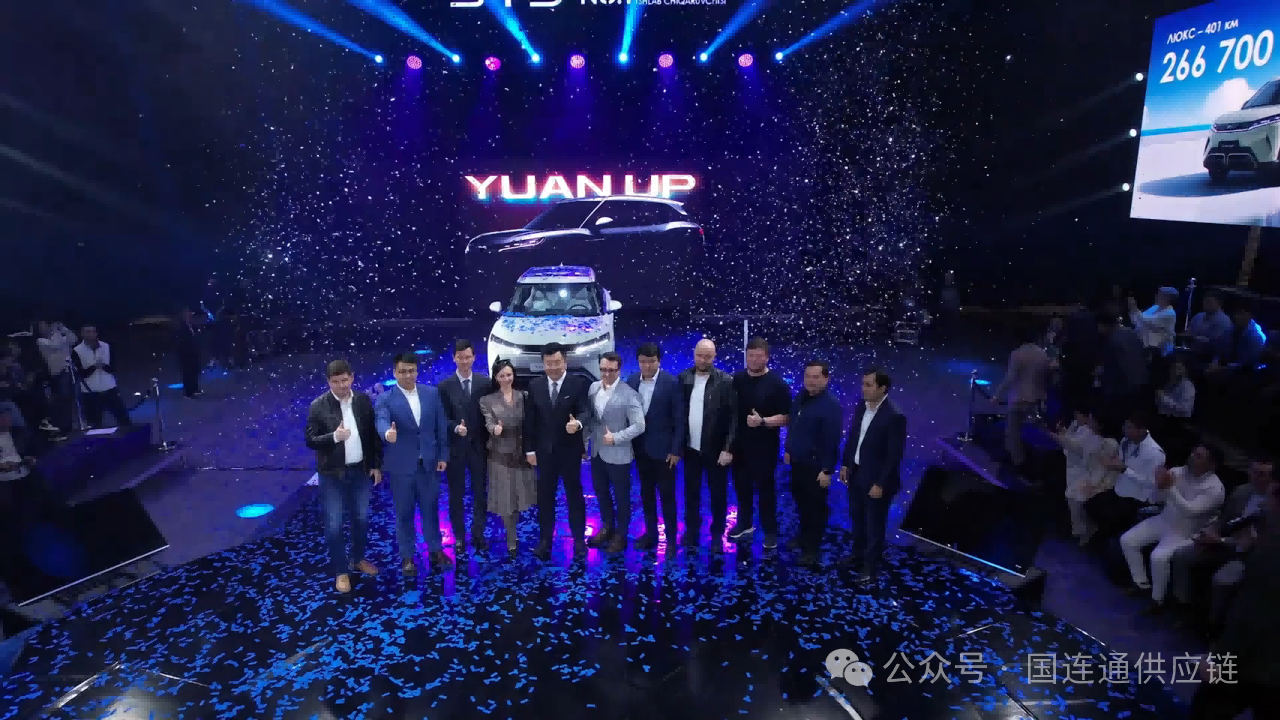
BYD Yuan UP held a press conference in Kazakhstan
2. The Middle East: From a "single market" to a "global entrepot hub"
In 2024, the United Arab Emirates will overtake Kyrgyzstan to become China's largest export destination for used cars. Behind this lies a key logic-the leverage effect of entrepot trade. As a global automobile re-export center, as long as China used cars pass GCC certification (a common automotive safety standard in the Middle East), they can not only cover local markets such as Saudi Arabia and Kuwait, but also radiate to countries such as Pakistan and the east coast of Africa and South Asia, equivalent to "one export, multi-regional sales."
Specific to market segments:
Mid-to-high-end fuel vehicles: Consumers in Saudi Arabia and Kuwait prefer Mercedes-Benz and BMW that are 3-5 years old. Through the "Dubai Overseas Warehouse + Local 4S Store Cooperation" model, the turnover cycle can be compressed to less than one month;
New energy vehicles: The United Arab Emirates will launch the "National Electric Vehicle Strategy" in 2024 and plans to account for 50% of new energy vehicles in 2030. Currently, used vehicles such as BYD Han and NIO ET5 have begun to enter local dealer channels.
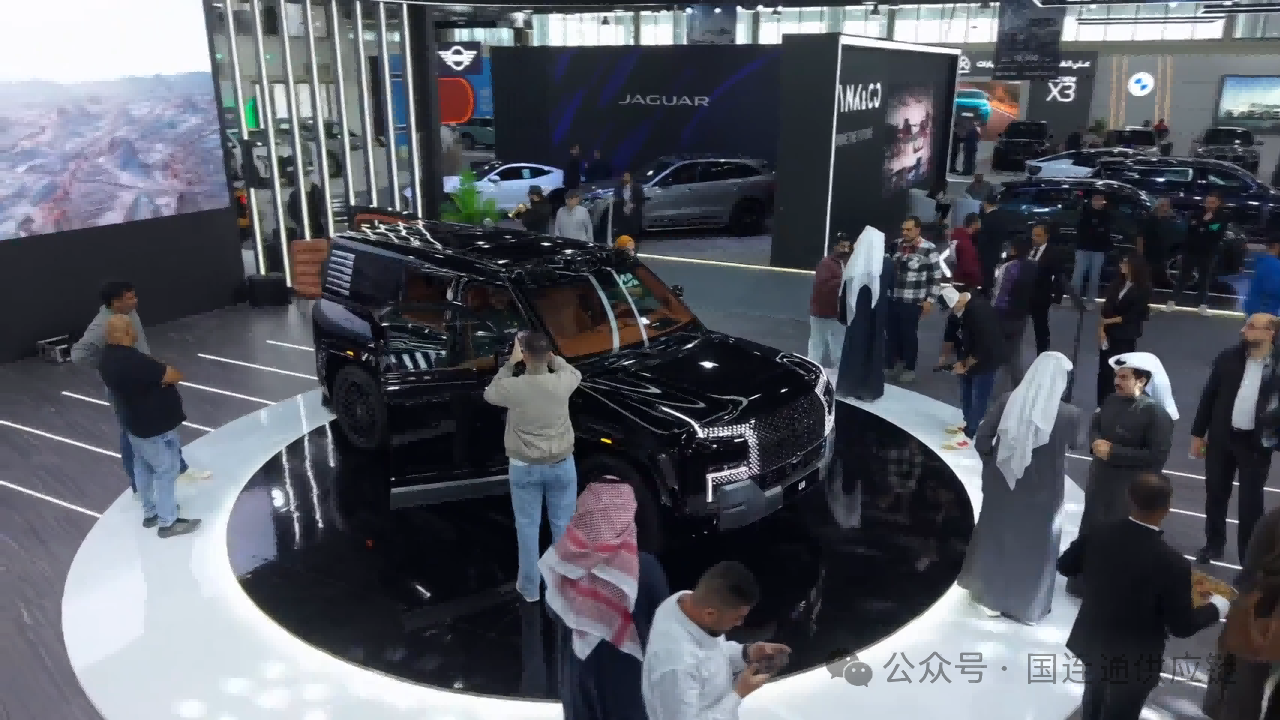
Looking up to U8 released in Kuwait
3. Africa: "Blue Ocean of New Energy" Created by Policy Dividends
If Central Asia is the "fundamentals" and the Middle East is the "transit hub", then Africa is the fastest-growing incremental market. In 2024, Ethiopia will directly "one size fits all": it will completely ban the import of fuel vehicles, and only allow used new energy vehicles to enter the country; although Nigeria imposes restrictions on fuel vehicles over 12 years old, it will exempt new energy vehicles from import duties and value-added tax. This "targeted policy dividend" is simply "tailor-made" for China's new energy used cars.
In addition to policies, the market itself also has great potential: local automobile production capacity in Africa is insufficient (annual production is less than 1% of global production), and consumers value "practicality" more-China's SUVs (such as Haval H6 second-hand), pickup trucks (such as Great Wall Cannon second-hand) are in short supply in Kenya, Tanzania and other places because of their high chassis and adaptation to complex road conditions.

Great Wall Cannon launched in South Africa
4. South America: A "new window" opened by tariff adjustments
The South American market has always been a "niche option" due to high tariffs, import quotas and other issues, but Argentina's new policies in 2025 have given this market a breakthrough:
Electric vehicles: Models with a FOB price of ≤ 16,000 US dollars (approximately RMB 115,000) are exempt from tariffs, and there is still a quota of 50,000 vehicles per year;
Fuel vehicles: 20% consumption tax (approximately RMB 280,000 - 520,000) will be cancelled for models priced at US$40,000 to US$73,000, making it suitable for exporting used SUVs such as Toyota Prado and Volkswagen Tiguan.
However, the South American market has a characteristic: there are large differences in demand among countries. For example, Argentina prefers economy cars, Chile has strong demand for pickup trucks, and Brazil prefers Japanese used cars.
Source: Country-connected supply chain
[Disclaimer] The content of this website (including pictures and texts) originates from the Internet, and the copyright belongs to the original author. Respect the rights and interests of originality, and select content is only used for information sharing. If copyright disputes are involved, please contact us to handle the deletion in a timely manner.

 Online Evaluation
 I am Buyer
 Export Services
 subsites


 023-62852688
  No. 1-1, No. 2899, Longzhou Avenue, Banan District, Chongqing City
 Headquarters


