
 Chinese
 Russian
 Arabic
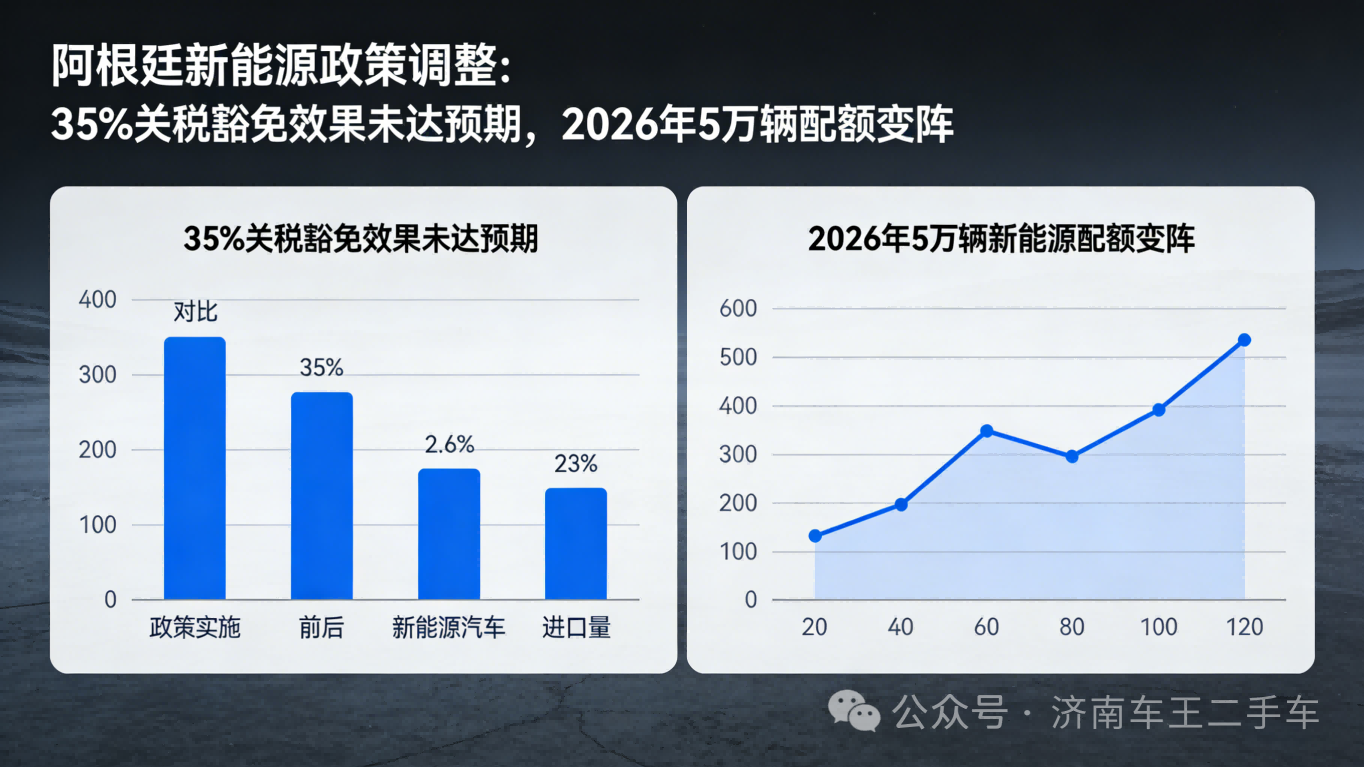
South American new energy markets welcome policy adjustments again! As the second largest automobile market in South America, Argentina previously introduced a 35% import tariff exemption policy for new energy vehicles. After nearly a year of implementation testing, the official has made it clear that the annual duty-free quota of 50,000 new energy vehicles will be comprehensively optimized and adjusted because the terminal price reduction effect is far from meeting market expectations. This change is not only related to the popularization of new energy vehicles in Argentina, but also directly affects the South American layout strategies of China car companies and foreign traders, and has become the core focus of industry attention in the near future.
To understand this quota "change", we must first review the original intention and implementation gap of previous policies. Since 2025, the Millay government of Argentina has introduced a new tax exemption policy for new energy vehicles by promulgating relevant laws. The core goal is very clear: to use tariff exemptions Break the deadlock of artificially high local car prices, activate the new energy consumption market, and at the same time link up with the rich local lithium resources to promote the green transformation of the automobile industry.
1. Re-offer: Why did the 35% tax exemption policy fail to "reduce the price" as expected?
The core terms of the new energy tax exemption policy launched in 2025 are clear and powerful. Specifically, they include: exemption from the 35% import tariff on new energy vehicles imported from MERCOSUR, and setting the total annual tax exemption quota to 50,000 vehicles, covering pure electric vehicles., hybrid, mild hybrid, and plug-in hybrid models, some policy versions also include hydrogen fuel cell vehicles; The upper limit on FOB (FOB) of bicycles is strictly controlled at US$16,000, taking into account cost performance and market inclusiveness; the initial stage of quota allocation adopts a "50 - 50" model, with local car companies and importers each receiving a quota of 25,000 vehicles, which need to submit an application through Argentina's Remote Processing Platform (TAD).
According to policy expectations, the 35% tariff exemption should significantly lower the terminal selling price of imported new energy vehicles, making new energy vehicles whose previous selling price exceeded US$30,000 (equivalent to more than three times the local per capita annual income) accessible to ordinary consumers. However, after the actual implementation, the market feedback fell short of expectations. The core pain point was concentrated on "the tax-free dividend was not really transmitted to the terminal":
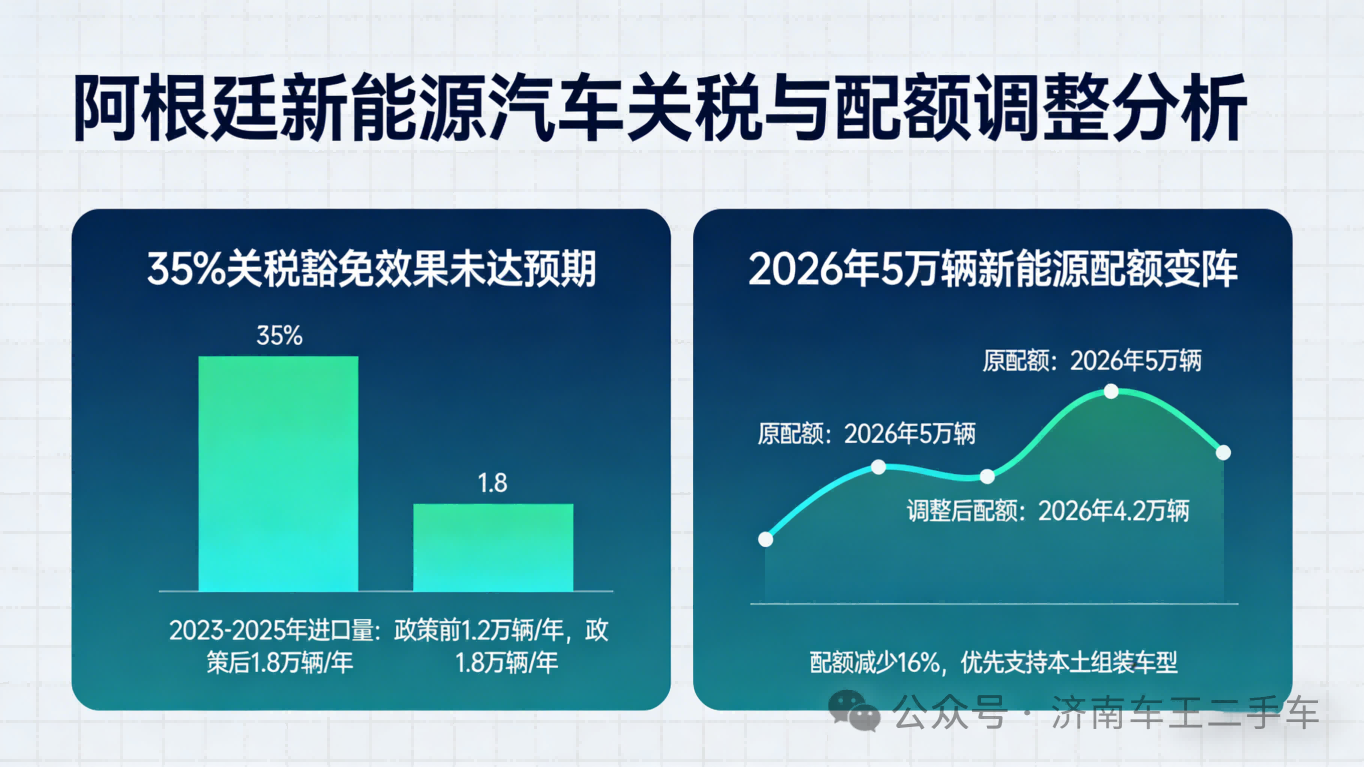
On the one hand, Argentina's long-standing exchange rate fluctuations, high logistics costs, and layer-by-layer price increases in local channels have greatly offset the preferential space brought by tariff exemptions. In the end, the price reduction for terminal models is much lower than the 35% tariff reduction. With the amount of exemption, consumers feel that "tax exemption is not really cheap", and the policy reputation is not as good as expected.
On the other hand, quota applications have shown a hot situation of "too many people to go hungry"-after quota applications were launched in 2026, the number of applications received exceeded 160,000, far exceeding the expected total amount of 50,000. However, problems such as insufficient supply of compliant models and low customs clearance efficiency have become prominent, and some companies even hoard and speculate on quotas, resulting in sub-optimal quota utilization.
Based on the superposition of multiple factors, Argentina's official judgment that relying solely on tariff exemptions cannot achieve the core goal of "stabilizing prices, ensuring supply, and promoting popularization". Therefore, it decided to carry out targeted "changes" to the quota mechanism in 2026, from "simply giving preferential treatment" to "precise management implementation".
2."Change" of quotas in 2026: Four major core adjustments to accurately solve pain points
Combined with a number of decrees and official notices issued by the Argentine government from the end of 2025 to the beginning of 2026, the adjustment direction of the duty-free quota of 50,000 new energy vehicles in 2026 has gradually become clear. The core focuses on the three dimensions of quota allocation, entry threshold, and timeliness management. Four key measures, each of which directly affects the layout strategies of global automobile companies:
1. The allocation of quotas is tilted, and importers gain more say: breaking the previous equal allocation model of "local car companies and importers each dividing 25,000 vehicles", the quota is adjusted to 19280 vehicles allocated to terminal companies and 30720 vehicles allocated to importers., the proportion of imports received has been significantly increased, giving priority to ensuring the rapid arrival of overseas cost-effective models in Hong Kong and solving the problem of insufficient supply of compliant models. At the same time, the remaining part of the quota in 2025 will also be carried forward to 2026 and allocated to qualified importers to further improve quota utilization.
2. The threshold is strictly enforced to eliminate the proportion of low-end models: The red line of FOB price for a single bicycle of US$16,000 remains unchanged, and strict technical thresholds have been added-clearly requiring imported vehicles to have an empty weight (excluding batteries) of ≥400 kilograms, a maximum power of ≥15 kilowatts (about 20 horsepower), and a cruising range of ≥80 kilometers, excluding "old man music" models such as low-speed four-wheeled vehicles and low-tech micro-cars from the discount, ensuring that the quota is tilted towards mainstream and cost-effective models. Take into account policy inclusiveness and industrial upgrading needs.
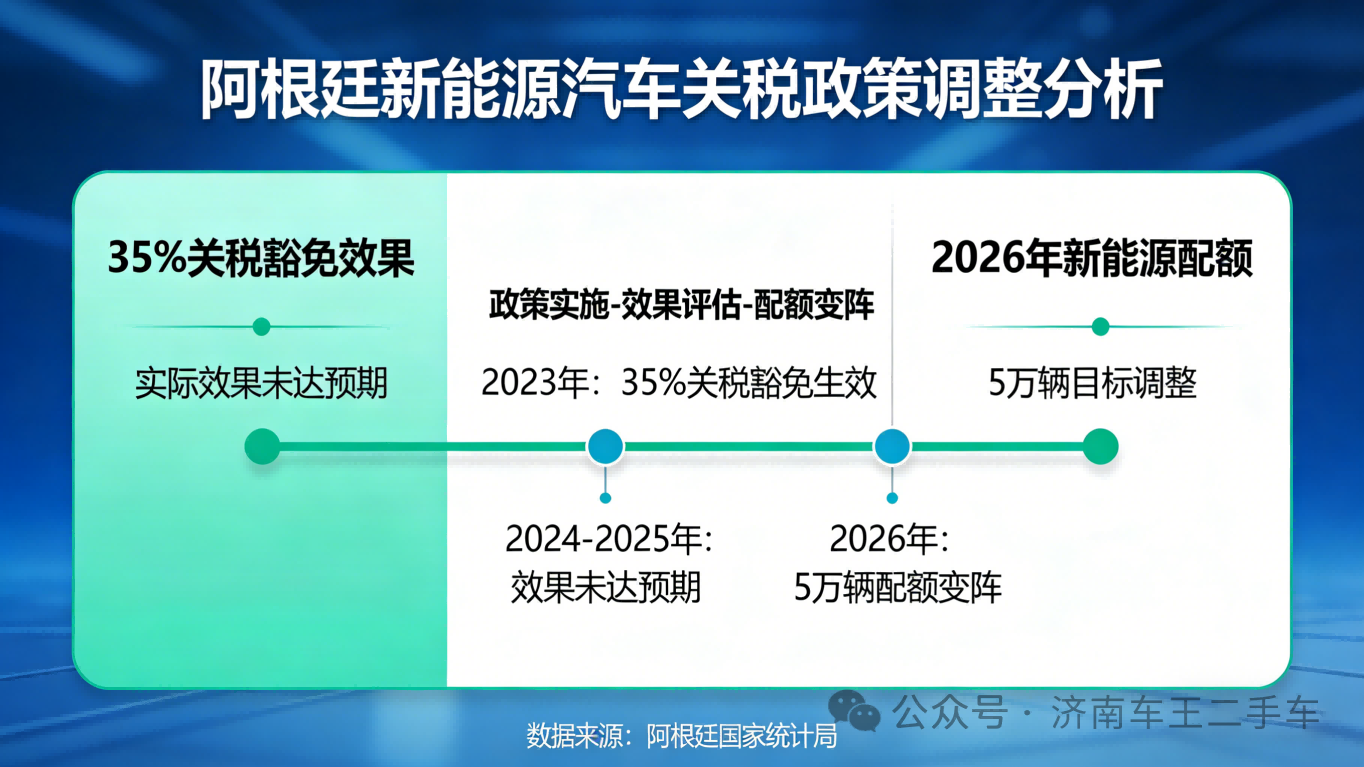
3. Tighten timeliness management and crack down on hoarding and speculation: clarify the time limit for quota vehicles to arrive in Hong Kong, quotas that fail to arrive in Hong Kong within the time limit will be withdrawn and reallocated, institutionally curb the chaos of enterprises hoarding and speculation, and ensure tariff exemptions. Dividends really flow to the end market, not the intermediate link. At the same time, simplify the customs clearance process, improve customs clearance efficiency, and ensure that quota vehicles enter the market quickly.
4. The policy focus has shifted and strengthened the combination of stabilizing prices and ensuring supply: The New Deal no longer solely emphasizes tariff exemptions, but combines Argentina's economic goal of stabilizing inflation and launches a combination of policies-by stabilizing exchange rate expectations, standardizing terminal prices, optimizing logistics supporting facilities, etc., promoting the real transformation of tax-free dividends into price cuts that can be perceived by consumers, and at the same time linking up with the local lithium mining industry to promote the formation of an industrial closed-loop of "resource-complete vehicle-infrastructure".
3. Impact Focus: Opportunities and challenges coexist for China automobile companies
Argentina is an important fulcrum for China car companies to explore the South American market. This quota change is not only a rare opportunity but also facing new challenges for China new energy vehicle companies and exporters. In particular, it is necessary to focus on two core changes:
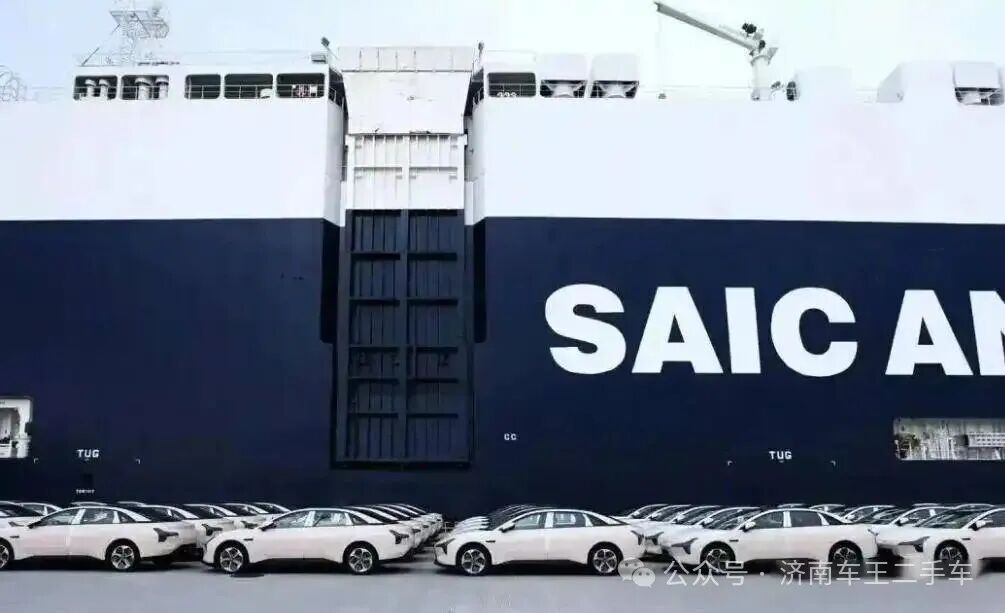
Opportunity level: The quota is tilted sharply towards importers, which directly benefits China car companies-China brands have long been keenly deployed in the Argentine market. BYD, Geely, Zero Run and other companies have launched models that meet the price red line of US$16,000. Among them, BYD, with its Yuan Pro, Dolphin Mini and other models, has won the top spot in Argentina's electric vehicle market sales in 2025, and a single import of 5841 new energy vehicles has set a local record. After the importer quota is increased in 2026, it will be easier for China car companies to lock in quotas, quickly increase volume, and further expand their share in the Argentine market. In addition, the in-depth deployment of China companies in Argentina's lithium mining sector (accounting for more than 47% of local foreign lithium mining investment) can also form synergistic advantages with vehicle exports and reduce the cost of the industrial chain.
Challenge level: On the one hand, while the technical threshold is tightened, compliance costs will also rise, putting forward higher requirements for the model adaptation capabilities of China car companies. Vehicle suspension and battery high-temperature performance need to be optimized in a targeted manner to adapt Argentina's road conditions and climate; on the other hand, the price red line of US$16,000 combined with fierce competition in quotas will intensify market price incursion and reduce corporate profit margins. In addition, problems such as Argentina's lagging charging infrastructure and imperfect dealer networks are still long-term challenges that China car companies need to deal with.
Here's a reminder: Quota application for 2026 has been launched in advance, and the current application volume has far exceeded the quota of 50,000 vehicles. China car companies and exporters in the Argentine market need to sort out compliance models as soon as possible and lock in quota shares to avoid missing policy dividends.
4. Industry summary: Argentina's new energy market has entered the stage of "refined development"
The effect of Argentina's 35% tariff exemption did not meet expectations. It was essentially the result of its high domestic inflation, exchange rate fluctuations, high channel costs, and imperfect policy implementation details. The "change" of quotas in 2026 is not a policy tightening, but a precise optimization and adjustment-from "extensive preferential treatment" to "refined management implementation", which not only reflects Argentina's determination to promote the transformation of the new energy industry, but also reflects its emphasis on "policy effectiveness."
For global car companies, the potential of Argentina's new energy market is still considerable: although the current penetration rate of local electric vehicles is only 0.12%, sales in 2025 have increased by 130% year-on-year, with huge growth potential. For China players deployed in South America, the core strategy for the next year will focus on the four major aspects of "compliance priority, quota locking, rapid delivery, and strict control of terminal prices"-both Seize the opportunity of quota tilt, but also deal with price incursions and compliance challenges, in order to seize the lead in the "transformation" of Argentina's new energy market.
In the future, we will continue to pay attention to the specific implementation rules of quota adjustments in Argentina and the local layout dynamics of China car companies to provide the latest reference for industry practitioners.
(Note: The data in this article comes from official announcements from the Argentine government, industry public data and media reports)
Source: Leading the way to the sea by Gaoshen's car
[Disclaimer] The content of this website (including pictures and texts) originates from the Internet, and the copyright belongs to the original author. Respect the rights and interests of originality, and select content is only used for information sharing. If copyright disputes are involved, please contact us to handle the deletion in a timely manner.

 Online Evaluation
 I am Buyer
 Export Services
 subsites


 023-62852688
  No. 1-1, No. 2899, Longzhou Avenue, Banan District, Chongqing City
 Headquarters


