
 Chinese
 Russian
 Arabic
Against the background of increases in scrapping/recycling fees (utylsbor) and value-added tax (VAT), Russia's parallel imports have not "collapsed off a cliff" as the outside world claims, but the model structure and price system have been significantly rearranged...
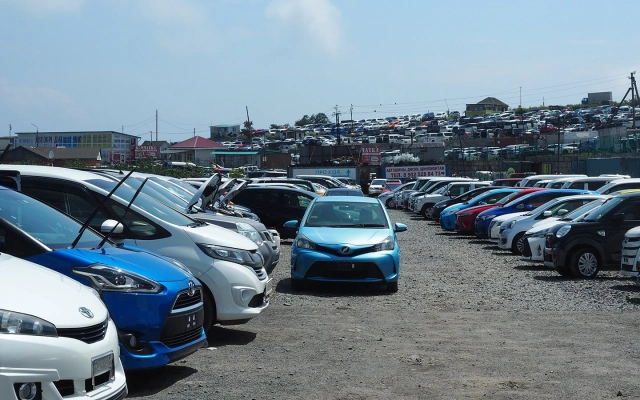
[Moscow News] According to Autonews.ru recently interviewed a number of suppliers and industry insiders engaged in parallel imports, against the background of the increase in scrapping/recycling fees (utylsbor) and value-added tax (VAT), Russia's parallel imports have not been "cliff-like collapse" as the outside world claims. However, the model structure and price system have been significantly rearranged: demand is rapidly concentrated towards vehicles "within 160 horsepower," while mid-end models that are 3-5 years old are being directly squeezed out of the transaction range.
According to the report, Russia passed an arrangement to increase the recovery fee tax rate by 10%-20% annually as early as 2024; the more critical change occurred on December 1, 2025-the recovery fee calculation rules incorporated "motivation" into the core indicators. According to the new regulations, when individuals import passenger cars from overseas, preferential recovery fees can only apply if the engine power does not exceed 160 horsepower; if this threshold is exceeded, they will be charged at the commercial tax rate, and the cost gap will be "doubled". Entering 2026, the relevant tax rate will be increased again according to the established mechanism. At the same time, the Russian Ministry of Industry and Trade also proposed on February 13 to further adjust the refund charging method for vehicles entering Russia from Eurasian Economic Union (EAEU) countries starting from April 1, with the goal of "establishing transparent import conditions and reducing detours."
Parallel import company Carbat told Autonews.ru that changes in recovery fees and VAT have indeed significantly changed the demand structure, but "they are not a fatal blow to supply." The company said that customer inquiries were clearly directed to models with less than 160 horsepower because such vehicles did not trigger commercial rebates, and "such supply in the market is still sufficient."
However, the impact on "individuals importing used cars with a car age of more than 3 years" is particularly great. Pavel Kovalev, head of the importer "Emcar", pointed out that in the past, individuals might only have to pay a preferential recycling fee of "a few thousand rubles" to import used cars, but now it has doubled, and some popular models The refund fee even exceeds 1 million rubles. He bluntly said that this change would directly hit Russia's mid-range price band of 2 million to 5 million rubles."Except for luxury cars, many models are no longer economical."
LFA Trade added to Autonews.ru that the parallel import plan of "3-5 years old and 5-6 million rubles on the ground" common to Russian consumers in the past may now be close to 10 million rubles. However, in the luxury car range of 15 million to 20 million rubles,"there has been little change". For example, models such as the G-class are still bought-an increase of one to two million rubles does not constitute a decisive threshold for this type of customers.
Model preferences also shuffle. Carbat said that the popularity of popular Korean diesel SUVs (such as Kia Sorento and Hyundai Santa Fe 2.2 diesel) in the past has dropped; current parallel import orders are more concentrated on Volkswagen, Skoda, Audi and other models equipped with 1.4T and about 150 horsepower, and some quotations can still be about 30% cheaper than the local Russian market. Carbat also reminded that there are still customers who do not understand that the recovery fee has been increased and are still expected to complete the transaction according to the "old price system"; others are surprised that the recovery fee also covers the accident car-in the past, many businesses of "buying an accident car back to the country for repair", but now the cost has also been raised.
In terms of price impact, Autonews.ru quoted Carbat's calculations as saying that for common models with a 3-5 year old, a 1-2 liter displacement, and a 160-280 horsepower, the recovery fee may reach 1.5 million-1.8 million rubles; vehicles within three years are about 900,000 - 1.15 million rubles. Emcar's feeling is that mid-range cars have the most obvious increase; the final transaction price of luxury cars has increased by less than 10% on average; and commercial vehicles have been relatively little affected, which has stimulated some demand.
Regarding the trend in 2026, Carbat judges that there is still upward pressure on domestic car prices in Russia, and it may still be more cost-effective to place orders from overseas in most cases;Emcar believes that parallel imports have passed a "barbaric growth period" and are entering a "structured and professional" stage. In the end, the main players who will stay on the field are players with stronger logistics, capital and compliance capabilities. LFA Trade sources also mentioned to Autonews.ru that the range of 5 million to 8 million rubles supported by parallel imports in the past may shrink significantly; some popular models imported from China (the report named Li Auto) may gradually fade out due to high customs clearance costs, and demand may shift to "high-end hybrid produced/assembled locally in Russia."
[Brief Comment] From the perspective of China's automobile exports, the core of this report is not that "parallel imports are dead," but that Russia has rewritten the profit model of parallel imports with the "160 horsepower threshold + refund fee": mid-range, higher-horsepower, and 3-5-year-old products are the first to be squeezed; while low-power versions are relatively more resistant to pressure at both ends of high-end cars. Attention needs to be paid to the proposed EAEU direction charging adjustment on April 1. Once it is implemented, the available space on the transit route will be further narrowed.
Source: Guangdong Good Car
[Disclaimer] The content of this website (including pictures and texts) originates from the Internet, and the copyright belongs to the original author. Respect the rights and interests of originality, and select content is only used for information sharing. If copyright disputes are involved, please contact us to handle the deletion in a timely manner.

 Online Evaluation
 I am Buyer
 Export Services
 subsites


 023-62852688
  No. 1-1, No. 2899, Longzhou Avenue, Banan District, Chongqing City
 Headquarters


