
 Chinese
 Russian
 Arabic
Against the backdrop of intensified military strikes between the United States, Israel and Iran, the uncertainty facing global auto trade is no longer limited to tariffs or exchange rates, but is pushed up simultaneously by shipping channels, war insurance and energy costs, which may ultimately be directly reflected in terminal car prices...
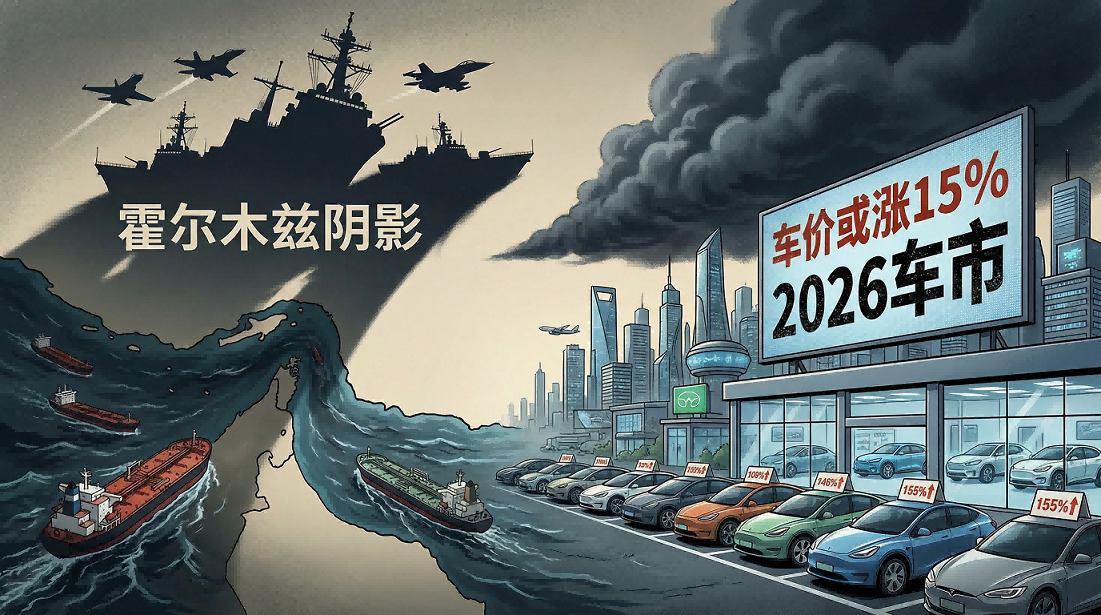
[Cairo/Riyadh Comprehensive] As geopolitical conflicts in the Middle East heat up, concerns about "getting more expensive in 2026" are spreading in regional auto markets. Local media reported that in the context of intensified military strikes between the United States, Israel and Iran, the uncertainty facing global auto trade is no longer limited to tariffs or exchange rates, but is driven simultaneously by shipping channels, war insurance and energy costs. Pushing up may ultimately be directly reflected in terminal car prices.
The industry generally points risks to the Strait of Hormuz. The report quoted experts as saying that the strait carries about 25% of the world's oil trade and about 11% of maritime trade. Once the waterway is expected to be disrupted or even blocked, the shipping costs of complete vehicles and parts will rise rapidly, and the ship's "War Risk Insurance" premiums will also jump. For goods such as automobiles that rely heavily on cross-border logistics, changes in freight and insurance are often not "slowly transmitted", but are written into CIF prices and dealer quotations at a faster rate.
The Egyptian market is more sensitive. The report pointed out that Egypt relies more than 50% on complete vehicle imports, and local factories are also highly dependent on overseas parts and components supply. The Egyptian Automobile Dealers Association has issued a warning: If the conflict lasts for more than a month, Egyptian car prices may increase by up to about 15%, thereby offsetting the wave of price cuts that have occurred in the market in 2025. The industry believes that Egypt's price increase pressure not only comes from freight rates, but also is closely related to the stability of the exchange rate under regional turmoil and the supply of US dollar liquidity needed for imports-"the more expensive the ship, the tighter the US dollar", the more difficult it will be for dealers to maintain.
Although Saudi Arabia has stronger economic resilience and has alternative sea outlets such as the Red Sea direction, it is not "immune". The report pointed out that the main source of Saudi cars is still East Asia (China, Japan, and South Korea). Route adjustments and global logistics price increases brought about by the Iranian conflict will increase the cost of arrival to Hong Kong. At the same time, stronger energy prices will also push up the cost of petrochemicals related automotive materials and parts such as tires and plastic parts. When Saudi authorized dealers release the price of model year 2026, they may have to raise prices to cover the new costs.
Regarding the price path consumers will face, the report gives a common background for three judgments: it depends on the duration of the war. If the conflict ends in the short term, price fluctuations may be controlled within about 2%, mainly due to shipping disturbances; if it evolves into a long-term war of attrition, the "15% increase" mentioned by industry insiders will be more likely to become a reality due to supply chain interruptions and supply contraction will add to rising costs, creating price increases that are more difficult to reverse. Reports believe that this will put Egyptian and Saudi consumers in a dilemma: buy now and lock in current prices or wait for a highly uncertain future.
[Brief Comment] The key to this type of risk is not "whether there will be a price increase", but "in what form will the price increase occur": freight, war insurance, delivery cycles, exchange rates and letter of credit costs may change at the same time, and any link is out of control. It may eat up profits. It is recommended to review the quotation terms and liability boundaries as soon as possible for Middle East orders (whether freight/insurance is adjustable, whether delivery time is postponed, and whether destination port can be replaced), and reserve a longer transportation buffer period. For markets such as Egypt, which are more dependent on the US dollar and imports, the channel's capital turnover and spare parts guarantee also need to be strengthened in advance-the more volatile the situation, the more the stability of supply will be tested rather than the price of a single transaction.
Source: Guangdong Good Car
[Disclaimer] The content of this website (including pictures and texts) originates from the Internet, and the copyright belongs to the original author. Respect the rights and interests of originality, and select content is only used for information sharing. If copyright disputes are involved, please contact us to handle the deletion in a timely manner.

 Online Evaluation
 I am Buyer
 Export Services
 subsites


 023-62852688
  No. 1-1, No. 2899, Longzhou Avenue, Banan District, Chongqing City
 Headquarters


