
 Chinese
 Russian
 Arabic
The chaos in the Middle East, where will cars go to sea?| Doubling freight rates and shrinking market: the road to failure for China car companies
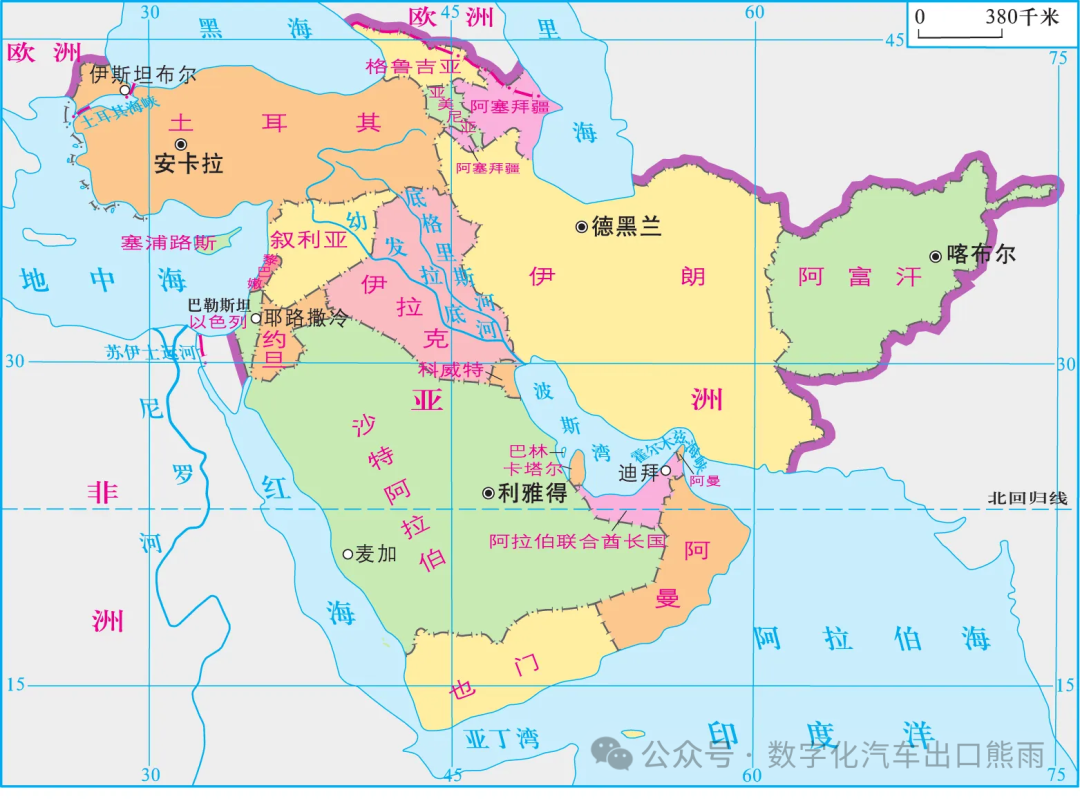
Recently, the situation in the Middle East has heated up rapidly. Traffic in the Strait of Hormuz has been restricted and shipping risks in the Red Sea have been increasing. This has directly impacted the most critical shipping routes for China cars to go to sea and the main sales markets in the Middle East. On the one hand, freight rates have risen sharply. Delivery cycles have been lengthened and consumption in some regions has slowed down significantly. On the other hand, high oil prices have accelerated the pace of electrification transformation and industrial restructuring have created new opportunities. China cars are at a critical moment in deciding the direction when going out to sea.
1. Facing the impact directly: triple pressures directly hit the lifeline of the sea
1.& nbsp; Logistics paralysis, cost and timeliness are under dual pressure
As a key channel for global energy and shipping, any turmoil in the Middle East waterway will severely affect the entire shipping of vehicles.
Mainstream routes had to be forced to detour to the Cape of Good Hope, the freight rate for a single ship suddenly doubled, and the cycle was extended by 10 to 14 days
War insurance rates have increased significantly, and some routes are not covered, making compliance shipments more difficult
Port operations are restricted, vehicles on the road are stranded, and the risks of default and credibility increase together
2.& nbsp; Market differentiation, partial shutdown and overall wait-and-see parallel
Consumption in the core areas of the conflict has almost stalled, the currency has devalued, passenger traffic has dropped significantly, and dealers have suspended replenishment.
Countries such as Saudi Arabia and United Arab Emirates, with stable political conditions, have weakened their investment confidence, the pace of expansion has slowly slowed down, and order decisions have become more cautious
For merchants that rely heavily on the single market, the pressure on cash flow and inventory is particularly obvious (don't put eggs in one basket)
3.& nbsp; Supply chain fluctuates, and entire chain costs rise
The rise in international oil prices has made production and transportation costs higher, and the supply of key parts and components is still unstable. The originally considerable profits from sailing are constantly being eaten up by logistics and risk control costs.
2. Looking for opportunities in crisis: the long-term pattern is quietly rewriting
Under the short-term pain, structural opportunities have emerged
High oil prices are good for new energy: The cost of using fuel vehicles is rising, and the cost-effective advantage of China's electric vehicles is further amplified
The supply chains of European and American brands have been more affected. At a time when the market structure is reshuffled, the delivery of China cars is quite stable, and the advantage of high cost performance is even more prominent
Speed up localization: KD spare parts export and local assembly have become a trend, reducing dependence on shipping and getting close to the end market
3. Pragmatically breaking the situation: current implementation strategies
Everyone in the market is paying attention to shrinking high-risk areas and focusing on developing relatively stable markets such as Saudi Arabia, United Arab Emirates, and Egypt. Don't rush forward blindly
For logistics optimization, do not first determine long-term freight rates, give priority to reliable shipping companies and ro-ro resources, and whether to set aside sufficient shipping schedule buffer
The adjustments on the product side are mainly to promote new energy and high-margin models, and use premiums to offset the increase in freight rates.
Strictly control risks, shorten the account period, and add credit insurance protection to operate steadily in an asset-light model.
Diversified layout, while at the same time exploring alternative markets such as Southeast Asia and Latin America to disperse geographical risks
conclusion
The chaos in the Middle East is not the end, but a watershed for China's cars to expand from scale to high-quality globalization. Only by surviving the logistics winter, maintaining the bottom line of risks, and seizing the dividends of electrification can we seize a larger market share after the situation settles down.
In the wind and waves, only by staying stable can you go far
Source: Xiong Yu, digital automobile export
[Disclaimer] The content of this website (including pictures and texts) originates from the Internet, and the copyright belongs to the original author. Respect the rights and interests of originality, and select content is only used for information sharing. If copyright disputes are involved, please contact us to handle the deletion in a timely manner.

 Online Evaluation
 I am Buyer
 Export Services
 subsites


 023-62852688
  No. 1-1, No. 2899, Longzhou Avenue, Banan District, Chongqing City
 Headquarters


