
 Chinese
 Russian
 Arabic
In 2026, Kazakhstan's automobile market is undergoing structural changes: while the localization rate exceeds 87%, China brands have accounted for nearly 40% of the market share. For China exporters, the shift in policy dividends and the upgrade of compliance thresholds are reshaping the competitive landscape. The following is based on four dimensions: market status, policy changes, opportunity analysis and practical suggestions.
1. Market status: Structural changes in high growth
At the beginning of 2026, the Kazakhstan auto market continued last year's growth momentum. According to Harbin News Agency, national new car sales increased by 25.2% year-on-year in January 2026, with approximately 14,100 vehicles sold. This data continues the popularity of 2025-last year, national new car sales reached 234,852 units, a year-on-year increase of 14.4%, breaking through the 200,000 mark for the second consecutive year.
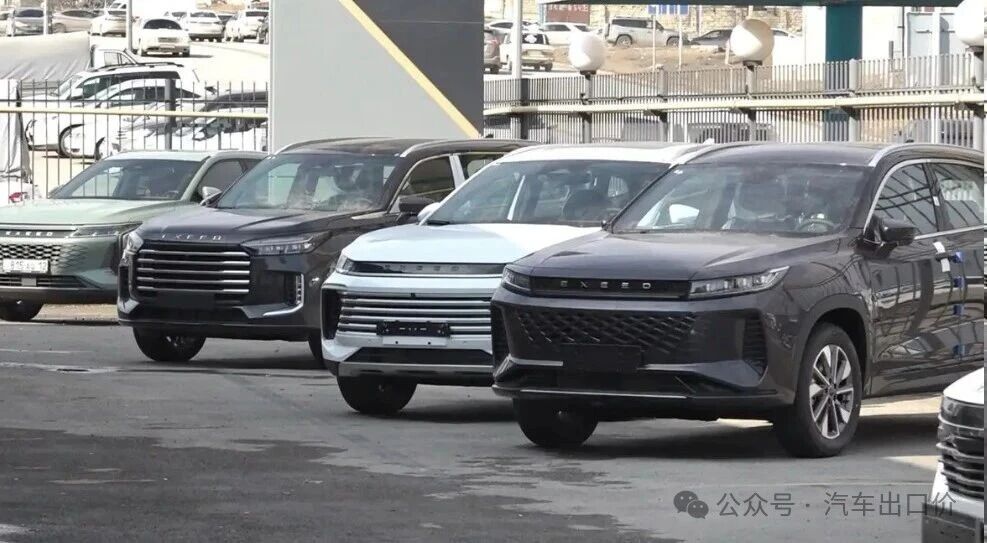
In terms of brand structure, China brands have occupied a pivotal position. For the whole of 2025, China brands together accounted for 39% of the new car market in Kazakhstan. Although Korean brands Hyundai (50,868 vehicles) and Kia (23,402 vehicles) are still at the forefront, Chery, Chang 'an, Jetu, Haval, etc. have steadily entered the top ten sales camps. Entering January 2026, Chery ranks fourth with sales of 1000 vehicles, and Chang 'an ranks fifth with 717 vehicles.& nbsp;
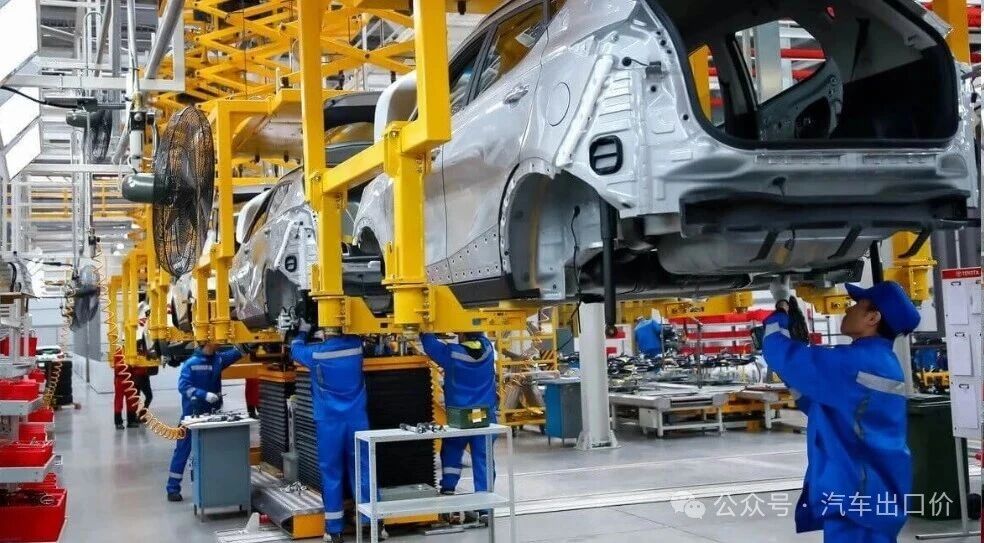
A key structural change is the deepening of localized production. Up to 87.4% of new cars sold in January 2026 were locally assembled products in Kazakhstan. The Kazakhstan Automobile Industry Association predicts that national automobile production will exceed 209,000 units in 2026, a year-on-year increase of 22%. As local production capacity expands, Kazakhstan's Minister of Industry and Construction has made it clear that car prices are expected to fall, especially for China brands.
2. Policy environment: dividend ebb and compliance tightening
For China exporters, 2026 is a year when the policy environment has undergone a major turning point. The space for "barbaric growth" of the past is being replaced by institutionalized compliance requirements.
1. New energy vehicle policy dividends fade
Imports of pure electric vehicles no longer enjoy exemption from value-added tax. Starting from January 1, 2026, Kazakhstan has begun to impose a 16% value-added tax on imported electric vehicles. The previously implemented Eurasian Economic Union preferential period has ended. Although tariffs can still enjoy zero rates (for personal use and not resale) and domestic incentives such as exemptions from transportation taxes and recycling fees are retained, comprehensive import costs are expected to rise by 10-20%. This means that the extensive model of relying on low-cost electric vehicles to distribute goods is unsustainable.
2. Certification and compliance thresholds have been significantly increased
Mandatory EAC certification: Starting from March 13, 2026, Kazakhstan will implement a key restriction: vehicles will be prohibited from circulating within the country if only a copy of the Vehicle Type Approval (OTTC) is provided at the time of customs declaration. This means that export vehicles must hold complete and effective EAC certification, and the crackdown on "gray customs clearance" has increased unprecedentedly. Restrictions on e-commerce imports: Kazakhstan, together with Russia, is subject to restrictions on wheeled vehicles imported through cross-border e-commerce warehouses and are only allowed to be used for freight, passenger transportation or for personal use registered in other Union countries. This plugs the loophole in circumventing certification in the name of "zero-kilometer used cars".
3. Fuel vehicle policy remains stable
In contrast, the fuel vehicle import policy is relatively clear and stable. Most passenger cars implement a unified tariff of about 15%, mainly levied a value-added tax of 16%, fixed customs handling fees and scrapping recycling fees. For exporters, as long as the vehicle is no more than 10 years old, meets Euro 4 emission standards, and is a left-hand drive vehicle, the compliance path is clear. Vehicles with a displacement of less than 3.0 liters are not subject to consumption tax.
3. Core opportunities in 2026: Not all doors are closed
Despite the tightening of policies, there are still structural opportunities in the Kazakhstan market in 2026 for professional China automobile exporters.
1. The "golden window" for fuel vehicles
Since the Eurasian Economic Union has not allocated a new duty-free quota for electric vehicles to Kazakhstan in 2026, and value-added tax on electric vehicles has been levied, the price advantage of electric vehicles has been greatly weakened. At the same time, the supply of local fuel vehicles in Kazakhstan is insufficient, and as many as 41.5% of the country's vehicles are more than 20 years old, and the need for replacement is extremely urgent. This leaves huge market space for cost-effective China fuel vehicles (especially SUVs).
2. Continued sales of "new mainstream" SUVs
Market data points the direction of the product. In January 2026, the top three models in sales were the Chevrolet Cobalt (sedan) and the Kia Sportage and Hyundai Tucson (two SUVs). China brands have complete product lines and price competitiveness in the field of compact and mid-sized SUVs. Haval, Chery, and Chang 'an SUV models have established market awareness and are the best entry point for incremental growth.
3. Opportunities for KD parts export and localized assembly
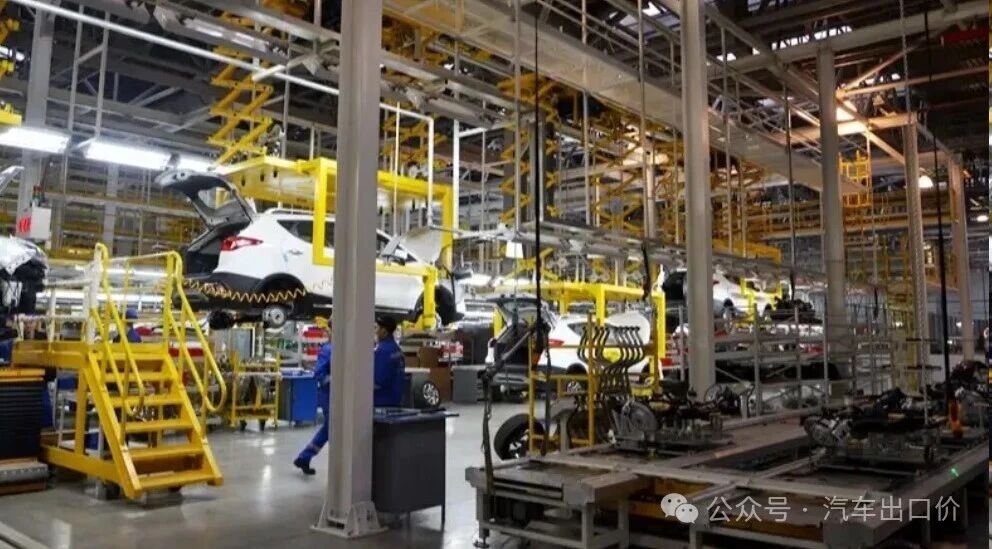
Faced with a localization rate of 87.4% and official support for local assembly, the marginal benefits of simply exporting complete vehicles (CBU) are diminishing. The Kazakhstan government is actively building an automobile industry cluster by introducing international technology and attracting investment. China car companies should consider cooperating with local factories (such as Allur Group) to export spare parts (CKD/SKD) for localized assembly. This not only avoids some taxes and fees on vehicle imports, but is also a long-term strategy to respond to policies and deepen the market. Companies such as Chongqing Meilian Logistics have begun to export large quantities of KD parts of automobiles through the Chongqing-Xinjiang-Central Asia Railway Dedicated Line, which shows that mature conditions are available at the supply chain.
4. Improved efficiency of logistics channels
Optimization of logistics costs brings profit margins. Relying on the TIR system under the framework of the SCO, road transportation from China to Kazakhstan can reduce comprehensive logistics costs by about 20%. At the same time, the Central Asian freight trains and special railway lines opened in Chongqing, Huaihua and other places have 20% shorter efficiency and 10% lower costs compared with traditional transportation. Convenient measures such as the "rapid customs clearance of self-driving export commodity vehicles" launched by Horgos Port have further improved delivery efficiency.
4. Practical suggestions for China exporters
Based on the new situation in 2026, we recommend that exporters adopt the following strategies:
Strategy 1: Focus on mainstream fuel-fueled SUVs and avoid the pitfalls of electric vehicle policies. In view of the new 16% value-added tax on electric vehicles and the stricter certification, fuel-fueled SUVs with moderate displacement (1.5L-2.5L) and Euro 5/Euro 6 emissions will be promoted in the short term, taking advantage of the stable tariff environment to quickly move the volume. Focus on Chery, Changan, Haval and other models that already have brand recognition.
Strategy 2: Strictly adhere to the bottom line of compliance and eliminate "gray customs" operations. It is important to ensure that each batch of exported vehicles (especially through new channels) holds complete and valid OTTC/EAC certification documents to cope with strict inspections after March 13. Strictly check the age of the vehicle (≤10 years), steering wheel position (left rudder) and safety configuration (ABS, airbag, ERA-GLONASS emergency call system) to avoid losing the big because of small things.
Strategy 3: Explore the KD assembly model and enter the local supply chain. For exporters with strength, they should actively contact local assembly plants in Kazakhstan to discuss export cooperation of CKD parts. This is not only the direction of policy encouragement, but also helps to enjoy tax incentives through local production and avoid the risk of fluctuations in vehicle imports.
Strategy 4: Use efficient logistics to optimise cost structure. Actively adopt TIR transportation or special railway trains to take advantage of their customs clearance convenience and time advantages. Especially for the transportation of KD pieces, the stability and cost advantages of special railway trains are more obvious.
Strategy 5: Be wary of the end of the "zero-kilometer used car" model. Starting from 2026, pure electricity exports require licenses and are subject to strict supervision. The road to relying on domestic registration to disguise the export of used cars has been blocked by policies. We must transform into regular new car exports, obtain manufacturer authorization, and follow a standardized trade process.
Source: Automobile export price
[Disclaimer] The content of this website (including pictures and texts) originates from the Internet, and the copyright belongs to the original author. Respect the rights and interests of originality, and select content is only used for information sharing. If copyright disputes are involved, please contact us to handle the deletion in a timely manner.

 Online Evaluation
 I am Buyer
 Export Services
 subsites


 023-62852688
  No. 1-1, No. 2899, Longzhou Avenue, Banan District, Chongqing City
 Headquarters


