
 Chinese
 Russian
 Arabic
Tunisia will import more than 90,000 cars in 2025, of which about one-third will enter through the so-called "off-market/parallel market" channel. The vehicles brought by this channel are mainly used cars that are about 4 to 5 years old, and most of them are traditional fuel-powered...
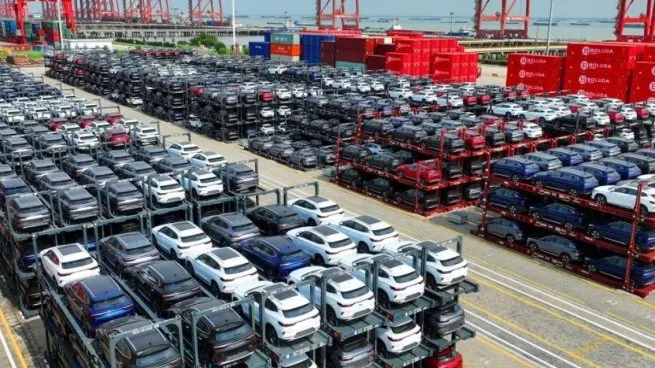
[Tunis City News] Tunisia's automobile industry warns against the expansion of "parallel markets". Local media quoted Ibrahim Al-Dabbash, chairman of the Tunisian Chamber of Automobile Agents and Manufacturers, as saying on March 11 that Tunisia has imported more than 90,000 cars in 2025, about third of which enter through so-called "off-market/parallel market" channels.
Dabash said that the vehicles brought by this channel are mainly second-hand cars that are about 4 to 5 years old, and most of them are traditional fuel-powered, which will have a negative impact on the national economy, energy transformation and consumer protection. Dabash revealed that Tunisia's formal agency system (authorized dealer channels) will import about 63,000 vehicles in 2025, but the scale of the parallel market is still expanding during the same period: the parallel market will grow by about 23% year-on-year, while the formal channel will see a decline of about 14%. He summarized the current structure in one sentence-"For every 4 vehicles imported legally, an old 4 to 5-year-old car will come in through parallel channels," and said that most of these vehicles are internal combustion engine models.
Entering 2026, this trend is still continuing. Dabash said that in January 2026, Tunisia imported about 2500 vehicles through parallel markets, a year-on-year increase of about 23%; while formal agency channels only imported about 3300 new vehicles, a year-on-year decrease of about 14%. He called for an emergency meeting organized by automobile dealers and the Tunisian Ministry of Commerce and Export Development as soon as possible to find feasible solutions to deal with parallel market shocks and avoid further pressure on formal channels.
In the direction of new energy, Dabash mentioned that the Tunisian government is adopting tariff preferences in the 2026 Finance Law to encourage residents to purchase electric vehicles and hybrid vehicles. However, he also judged that due to the insufficient number of charging stations, imports of pure electric vehicles may decline in 2026; relatively speaking, rechargeable hybrid/hybrid vehicles that can be replenished with electricity or gasoline are more in line with realistic conditions, and demand may continue to strengthen. He also mentioned that the number of authorized dealers for new brands currently introduced in Tunisia has increased to 45, and Tunisian people's inquiries for hybrid models are "very intensive."
[Brief Comment] The key signals for the Tunisian market are: policies are promoting new energy, but infrastructure determines the pace; formal channels are shrinking and parallel channels are expanding. If China brands want to increase in Tunisia, it will be easier to start from "hybrid/plug-in" in the short term and cooperate with dealers to build a solid part supply and after-sales network to cope with the price wars and word-of-mouth risks brought by parallel markets.
Source of information:https://tunisie-telegraph.com/a-la-une-Ø Ø ±-Ø § ○○/
Source: Guangdong Good Car
[Disclaimer] The content of this website (including pictures and texts) originates from the Internet, and the copyright belongs to the original author. Respect the rights and interests of originality, and select content is only used for information sharing. If copyright disputes are involved, please contact us to handle the deletion in a timely manner.

 Online Evaluation
 I am Buyer
 Export Services
 subsites


 023-62852688
  No. 1-1, No. 2899, Longzhou Avenue, Banan District, Chongqing City
 Headquarters


