
 Chinese
 Russian
 Arabic
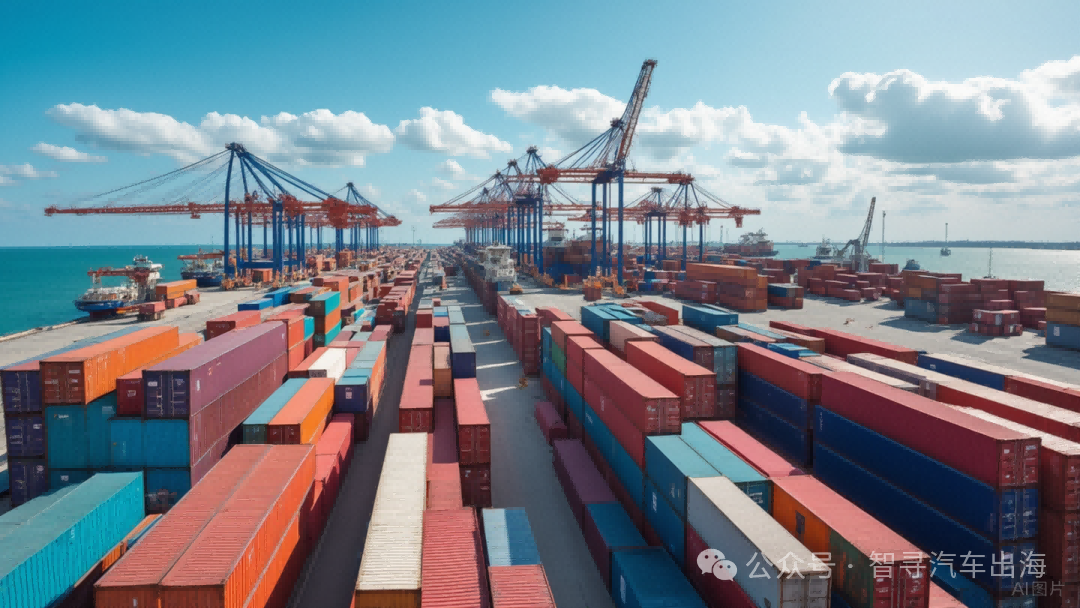
According to data from China Association of Automobile Manufacturers, China's automobile exports will reach 7.098 million units in 2025, a year-on-year increase of 21.1%, ranking first in the world for three consecutive years. Among them, new energy vehicles were exported 2.615 million units, a year-on-year surge of 103.7%, and traditional fuel vehicles were exported 4.483 million units, a year-on-year decrease of 2%.
As China's new energy vehicle industry continues to mature, the export track has gradually transformed from "new car dominated" to "new car + used car" two-wheel drive, becoming a new highlight in the high-quality development of China's automobile foreign trade. While the export of new energy vehicles is booming, used new energy vehicles are rapidly emerging as new growth points for foreign trade with their sufficient supply of vehicle sources, outstanding product advantages and strong global demand. In particular, the major changes in domestic policies in 2026 have completely broken the previous pattern of "barbaric growth" in the industry, promoted the export of new energy used vehicles into a period of high-quality development, showing three clear trends: policy regulation, industrial empowerment, and market explosion.
Policy side/From "loosening" to "strict management" to build a solid foundation for compliance development
The standardized development of new energy used car exports is inseparable from precise policy guidance and strict control. Starting from January 1, 2026, the pure electric passenger vehicle export license management system will be officially implemented, and the export management of used cars will be tightened simultaneously. Core policy adjustments will directly hit the industry's pain points and delineate compliance red lines, which will not only curb chaos, but also release dividends., to protect the high-quality development of the industry.
Tighter licensing applications has become the core highlight of policy adjustments. The new policy clarifies that only automobile manufacturing enterprises and their authorized business entities can apply for export licenses, and can only export their own brand products. This regulation completely ends the previous "parallel export" model and directly compresses export responsibilities to production enterprises. This move forces companies to pay attention to the construction of overseas after-sales systems and the maintenance of brand reputation, protect the overseas image of China automobiles from the source, and promote the industry to get rid of the low-end competition model of "price-fighting".
In response to the "zero-kilometer used car" chaos that has prevailed in recent years, the New Deal has established a "180-day red line" control mechanism. It is clearly required that for vehicles exported less than 180 days from the registration date, the "After-Sales Maintenance Service Confirmation Form"(including export country, vehicle information, after-sales outlets, etc.) issued by the production enterprise must be submitted and stamped with an official seal. If it cannot be provided, no export license will be issued. This measure has effectively blocked the behavior of "quasi-new cars" to disrupt the overseas price system, curbed the "internalization" of industry prices, and created a level playing field for compliant companies.
It is worth noting that policy control goes hand in hand with dividend release. While tightening compliance requirements, the national level continues to optimize the export environment, cancel the approval of used car export qualifications, simplify customs clearance procedures, and significantly reduce corporate operating costs. Coupled with the continuous improvement of the cross-border logistics network under the "Belt and Road" initiative, as well as supporting policies such as special financial support and export base support, it has broadened the sea channels for enterprises operating in compliance and further stimulated the development vitality of the industry.

Industrial end/sufficient stock + technological leadership, building core product advantages
The rise of new energy used vehicle exports is inseparable from the long-term accumulation of the domestic new energy vehicle industry. Adequate vehicle supply and leading technological advantages together constitute the core competitiveness of China's new energy used vehicles and provides solid support for going out to sea.
After nearly ten years of rapid development, the domestic new energy vehicle market has officially entered a large-scale replacement cycle, providing sufficient high-quality vehicle sources for the export of used cars. As of 2025, the number of domestic new energy vehicles has exceeded 120 million units, and the second-hand transaction volume has soared by 47% year-on-year. A large number of vehicles with 3-5 years old, low mileage and good condition have poured into the market. These vehicles not only retain good performance status, but also have extremely high cost performance, which just meets the demand for new energy vehicles in most markets around the world and become the core force of export vehicles.
More importantly, the technological leadership of China's new energy vehicles has given second-hand vehicle models an advantage of "dimensionality reduction and strike" in the global market. Compared with second-hand new energy models in Japan and Europe, China's second-hand new energy vehicles are not only cheap-the price of models of the same class is about 40% lower than that of Japanese models, but also have obvious advantages in core areas such as endurance, intelligent configuration, and battery technology. For example, a BYD Yuan PLUS that has been in operation for three years sells for about 80,000 yuan in the African market and has a battery life of more than 400 kilometers. It is also equipped with a smart cockpit. The product power far exceeds that of Japanese second-hand fuel vehicles at the same price, making it a local consumer's preference. This combination of "high cost performance + high technology" makes China's new energy used cars extremely competitive in the global market.
Market/global demand explodes, emerging markets become the main growth force
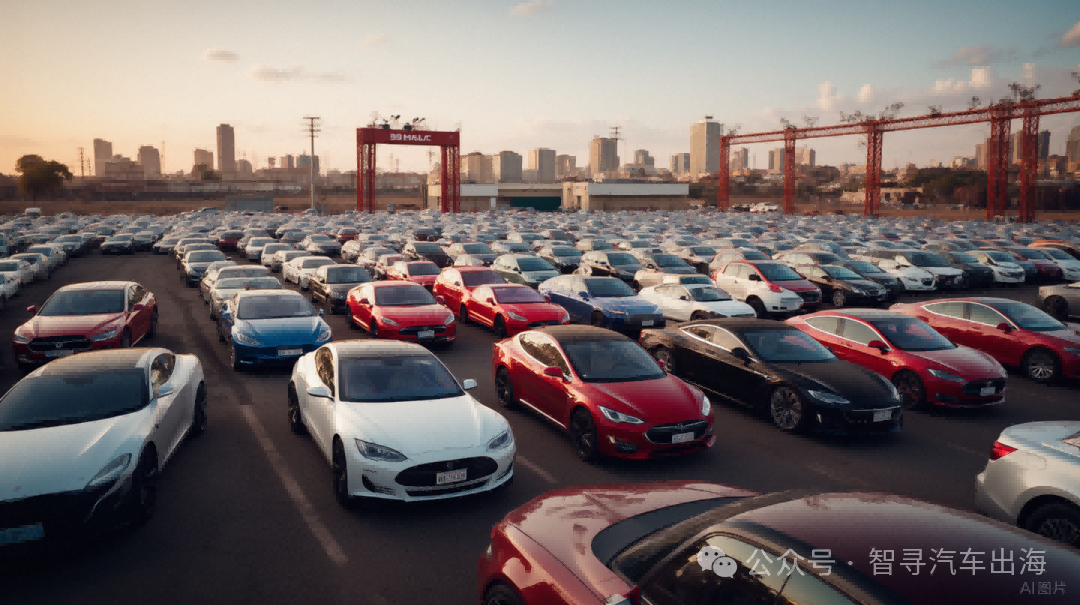
The global automobile market is accelerating its transformation to electrification, creating a broad market space for the export of new energy used vehicles. At present, due to factors such as high prices of new energy vehicles, imperfect charging infrastructure, and limited purchasing power of consumers, demand for new energy used vehicles with higher cost performance continues to rise in some countries, pushing China's new energy used vehicle exports into explosive growth channels.
In terms of market size, China's second-hand car exports have shown a steady upward trend: exports will reach 410,000 units in 2023, exceed 436,000 units in 2024, and are expected to exceed 1 million units in 2026. Among them, the proportion of new energy used vehicles will gradually increase, and the compound annual growth rate far exceeds the global average, becoming the core engine driving the growth of second-hand car exports.
From the perspective of market structure, the traditional European and American high-end markets complement each other with the emerging Asian, African and Latin American markets, jointly promoting the growth of China's new energy used car exports. Although European and American markets have high barriers to entry, they have significant premium space, which is suitable for enterprise layout with technical strength and compliance capabilities; while emerging markets such as Southeast Asia, the Middle East, Central Asia, Africa, and Latin America, rely on their huge population base and low entry thresholds and strong demand, have become the core growth pole for the export of new energy used vehicles. Car ownership in these emerging markets is low, car consumption demand continues to be released, and is price sensitive. The high cost performance advantage of China's new energy used cars just fits the local market demand, providing China companies with broad layout space.
Overall, the industry trend of new energy used car exports has clearly emerged: standardized control on the policy side has delineated a clear path for industry development, existing advantages and technological advantages on the industrial side have built core competitiveness, and the explosion of global demand on the market side has provided broad space. 2026 is a critical year for the high-quality development of the industry. The implementation of policies and industrial upgrading will further promote the qualitative improvement and quantitative growth of new energy used car exports, injecting new impetus into the globalization of China's automobile industry.
Source: Zhixun Car Going to Sea
[Disclaimer] The content of this website (including pictures and texts) originates from the Internet, and the copyright belongs to the original author. Respect the rights and interests of originality, and select content is only used for information sharing. If copyright disputes are involved, please contact us to handle the deletion in time

 Online Evaluation
 I am Buyer
 Export Services
 subsites


 023-62852688
  No. 1-1, No. 2899, Longzhou Avenue, Banan District, Chongqing City
 Headquarters


