
 Chinese
 Russian
 Arabic
After Russia significantly increased the scrap recycling fee, the number of vehicles imported has not shrunk significantly. Instead, it has continued to grow stimulated by various "tax-saving paths"...
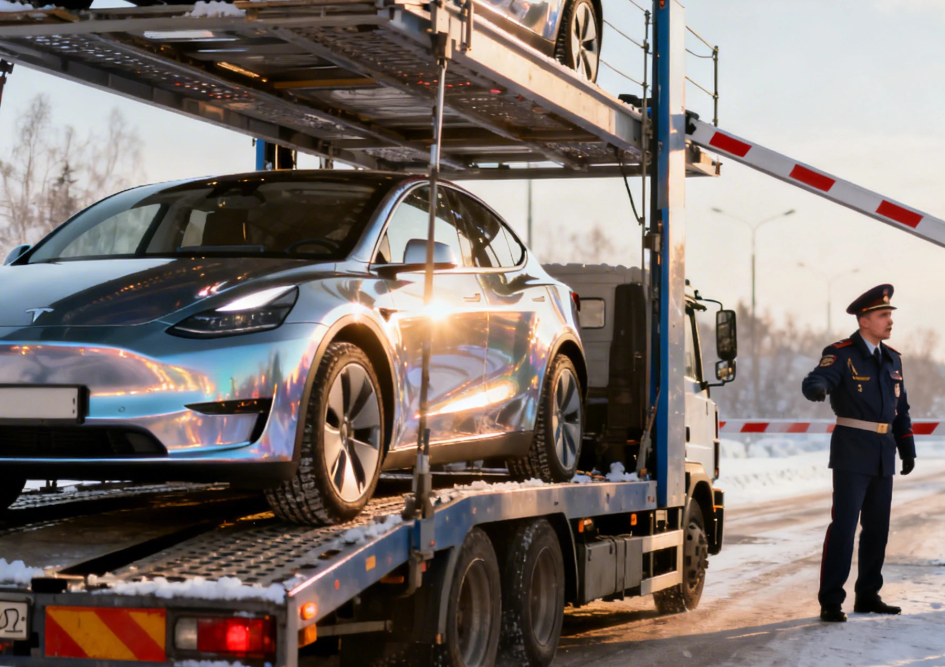
After Russia significantly increased the scrap recycling fee (утильсбор), a new round of "adaptive deformation" has occurred in the automobile import chain. When sorting out market changes, many Russian media pointed out that the original intention of the policy was to raise import costs and compress gray space, but the reality is that the number of imported vehicles has not shrunk significantly, but has continued to grow under the stimulation of various "tax-saving paths". What spreads are legal and financial risks that are more difficult to control for end buyers and compliance participants.
The report quoted industry statistics as saying that in February 2026 alone, Russia imported nearly 47,000 passenger cars, an increase of about one-third year-on-year. The article bluntly stated that the market's response to the new rules is not to "ebb tide", but to quickly find alternative paths, and the number of import participants is also increasing-including both formal traders and more intermediaries and "shells" who are exploiting loopholes.
One of the most common routines is still "low customs declaration prices". The operation is not complicated: reduce the car price to an outrageous level in the customs declaration document, thereby reducing taxes and related levies. However, the report reminds that such methods are not new in the face of Russian customs 'risk management system. Once checked and verified, the consequences are often fines and late fees in addition to paying taxes and fees, and the retroactive period may be long."It is not uncommon to have old accounts turned over after a few years." For the cross-border chain of used cars, this uncertainty will directly affect the subsequent transfer, insurance and resale of vehicles-the completion of the transaction does not mean the end of the risk.
What is even more disruptive is the use of third-party "heads" to handle import procedures, and even the use of forged or stolen passport information. The report described the scene: the buyer received the car and also received a seemingly complete set of "customs entry certificates", but in essence either the scrapping and recycling fee was not paid at all or the nominal minimum. The article mentioned a case that attracted widespread attention in Vladivostok (Vladivostok): a fraud gang registered a number of high-priced imported cars under the names of military school graduates. These young people had never seen a vehicle, but suddenly received a huge amount of debt collection litigation. Such incidents have a strong spillover effect and will directly damage the market's trust in "parallel imported vehicle source documents."
The report also named a gameplay known as the "Canada-Dubai" path: vehicles are first acquired by lease or loan, then shipped out of the country,"legalized" in the United Arab Emirates, and then transferred to Russia. Once the original lease/loan stops repaying, financial institutions may intervene through international recourse channels, and the vehicle will become a "problem asset" in the hands of the new owner. For buyers, on the surface, they are seeking a bargain, but in fact they may buy defective products whose rights can be pursued at any time.
In terms of path selection, Eurasian Economic Union (EAEU) countries have become an important springboard for gray imports. Reports believe that Kyrgyzstan is the most prominent among them: vehicles first enter the country with relatively favorable taxes and fees, and then flow into Russia as "intra-union goods." The tax and fee difference can reach hundreds of thousands of rubles. The new regulations of Russia's industry and trade department are intended to "block" such arbitrage channels as much as possible without undermining the principle of free circulation within the alliance. At the regulatory level, The Russian Federation's Customs Administration (④ ④ С) is described as strengthening joint law enforcement: the risk management system will depict each shipment, and abnormal low prices will trigger verification; at the same time, it cooperates with the traffic police department (丨 丨 丨 п п п п в) and the tax department to trace the history of "head buyers" and connected vehicles, and focuses on verifying the authenticity of payment documents for scrapping recycling fees. The report emphasized that once it is found that the scrapping recovery fee has not been paid or underpaid, the obligation to make up the payment may eventually fall on the current car owner-even if he did not know when purchasing it. Especially for those vehicles imported after August 2023, buyers should carefully check the documents, otherwise the risk is not only "spending more", but also "both money and vehicles are empty".
[Brief Comment] The signal brought by this round of changes is very clear. The Russian market is not short of demand, but of sustainable compliance supply and a credible chain of documents. In the short term, the gray channel may "run fast", but once supervision is implemented retroactively, the distribution network, terminal reputation and financial security will ultimately be under pressure.
Information source:https://110km.ru/art/kak-serye-shemy-izmenili-rynok-avto-v-rossii-posle-rosta-utilsbora-172037.html
Source: Guangdong Good Car
[Disclaimer] The content of this website (including pictures and texts) originates from the Internet, and the copyright belongs to the original author. Respect the rights and interests of originality, and select content is only used for information sharing. If copyright disputes are involved, please contact us to handle the deletion in time

 Online Evaluation
 I am Buyer
 Export Services
 subsites


 023-62852688
  No. 1-1, No. 2899, Longzhou Avenue, Banan District, Chongqing City
 Headquarters


