
 Chinese
 Russian
 Arabic
The Middle East has long preferred used cars from Japan and South Korea. However, if the sources of Japanese and South Korean cars continue to be affected in transportation, and China's used car exports are more flexible in shipping schedule organization, regional warehousing or model adaptation, then some market shares may not have room for transfer...
The impact of the situation in the Middle East is being transmitted all the way from energy prices to automobile trade.
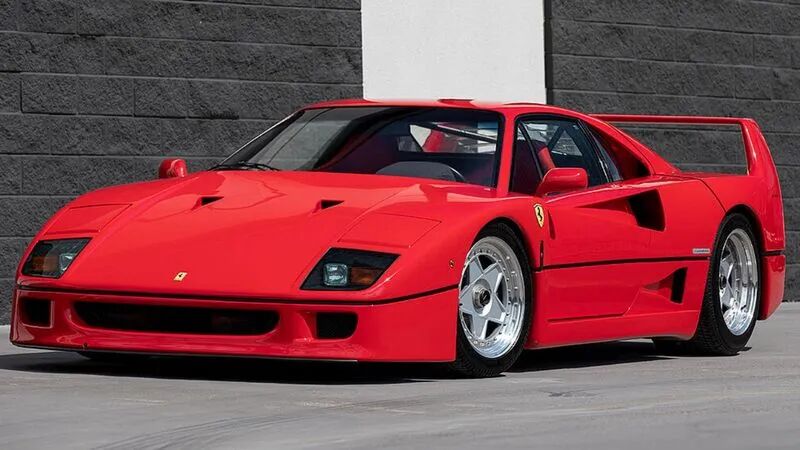
According to foreign media reports, affected by Iranian-related wars and the deterioration of regional shipping safety, a large number of used cars originally destined for the Middle East, Africa and South Asia were forced to be diverted, stranded in Hong Kong and even accumulated for a long time. As a result, many used car import businesses fell into a passive position. Among them, not only ordinary family cars, but also dozens of high-end models such as Ferraris, Lamborghini and Rolls-Royce are trapped in the transportation chain and have been unable to reach buyers.
The used car business was "stuck" by Hormuz
The report mentioned that the impact of the war in Iran is not only the fluctuations in oil prices, diesel and natural gas prices, but also directly affects the global circulation of goods. Especially the used car business, which has close trade ties with the Gulf region, is already feeling the pressure.
In the past, markets in the Middle East, Africa and South Asia have long receivedlarge numbers of used cars from Japan and South Korea. The reason is very simple. Japan has stable vehicle sources, generally good vehicle conditions, and Japan's local regulations require high vehicle maintenance. Therefore, Japan's used cars have always had a strong reputation overseas. South Korea's exports of used cars have also grown rapidly in recent years, especially in the Middle East market.
But now, with the Strait of Hormuz partially closed or nearly blocked, vehicle transportation that originally relied on this route has been greatly affected. According to reports, a related company had a batch of goods withmore than 500 vehicles and wasforced to be stranded at sea because it was unable to dock in Sri Lanka as planned. The reason was that a large number of cargo flows that should have flowed to Dubai were diverted, which put pressure on the port of Sri Lanka. The trucks were finally unloaded to the port of Hambantota a week and a half later.
This may seem to happen to others, but it is not far away for China exporters. Because as long as the main shipping channel in the Middle East is blocked, the pace of ro-ro ships, container spaces, transit port arrangements, and customs clearance in the entire region will change accordingly. The cars you sell to United Arab Emirates, Iraq, Saudi Arabia, and Oman may not necessarily pass directly through conflict points, but as long as a node in the entire chain is blocked, the cost and timeliness will be increased.
It's not just ordinary used cars that are trapped, but luxury cars are also difficult to move
What is even more eye-catching is that among the stuck vehicles are about 50 luxury cars, involving brands such as Ferrari, Lamborghini and Rolls-Royce. These high-end orders, which were originally more profitable and customers more able to pay, are now also losing liquidity due to the interruption of the transportation chain.
The report pointed out that the total size of used car exports from Japan and South Korea is approximately 16.5 billion euros. South Korea alone will export883,000used cars in 2025, about one-third of which willgo to the Middle East. For Japan, the United Arab Emirates is its most important market for used cars, accounting for about 15% of Japan's total used car exports, with approximately224,000 vehiclesper year.
This set of data shows that the Middle East is not only a distribution center for high-end luxury cars, but also an important terminal market in the global used car trading system. Once the Strait of Hormuz changes, it will not only affect energy trade, but also the circulation of used cars will be simultaneously amplified and impacted.
This is also why recently, in the used car circle in the Middle East, the most discussed topic is not "which car is easy to sell", but "Can these cars arrive on time?"
March to September should be the peak season, but now it has become the most difficult time to do
The report also mentioned that March to September every year is usually the busiest season for the construction industry in the Middle East. A large number of migrant workers have entered the Gulf countries to work. During this period, the demand for moderately priced, durable and worry-free used cars will increase significantly. Korean compact sedans such as Hyundai Avante MD and Kia K3 are typical practical models in the local area, and demand is relatively stable.
In other words, now should have been an important sales window for the used car trade.
But the reality is that many merchants not only cannot sell goods, but also bear increasingly high detention and storage costs. The report quoted cases as saying that some companies pay about 23,000 euros a month just to maintain vehicle warehousing. This does not include the knock-on effects of exchange rate fluctuations, transportation delays, tight buyer funds and declining consumer confidence in a war environment.
Air freight is still there, but it only belongs to a very small number of customers
In the event that sea transportation is blocked, there is theoretically an option for air transportation. Especially for high-value models such as Ferraris, Lamborghini, and Rolls-Royce, air transportation is not completely impossible.
But the problem is also obvious: it is expensive, and it will be even more expensive.
The report mentioned that the cost of chartering a charter flight from Madrid to Japan before the war was about 25,000 euros; if it was long-distance transportation of more than 10,500 kilometers, such as Madrid to Chile, the price could reach 30,000 euros. And this was still the level before the war broke out and before fuel prices rose further. Now, against the background of route detours and rising aviation fuel costs, air freight prices will only be higher.
In other words, air transportation is not available, but it is only suitable for a very small number of "particularly wealthy buyers." For most used car trade, especially models for engineering workers, ordinary home users, and regional dealers, air transportation has little practical operability.
What does it mean for China's used car exporters?
There are several signals that deserve special attention.
First, logistics security in the Middle East market has changed from a "background factor" to a "core variable."
In the past, many companies placed orders from the Middle East, paying more attention to vehicle sources, prices, customer relationships and payment methods. However, now route safety, port transit, port detention risks and premium changes must be placed equally important. Especially for goods sent to markets such as United Arab Emirates, Iraq, Saudi Arabia, and Jordan, the transportation route must be evaluated more carefully in the future.
Second, peak seasons do not necessarily mean high profits.
According to the pace of previous years, March to September is the time when car demand in the Middle East is strong, but this year is different. Demand may still be there, but once logistics and cost are out of control, peak seasons may turn into high-risk cycles. Having too many orders does not mean that money is easy to make.
Third, the supply of Japanese and Korean cars is blocked, which may also bring opportunities to China cars to some extent.
The Middle East has long preferred used cars from Japan and South Korea because of its mature reputation and complete maintenance systems. However, if the sources of Japanese and Korean vehicles continue to be affected in transportation, and China's second-hand car exports are more flexible in terms of shipping schedule organization, regional warehousing or model adaptation, then some market shares may not have room for transfer.
Of course, there is no way to be blindly optimistic here. Opportunities and risks arise together. Because if the entire Middle East logistics system is under pressure, China exporters will also be unable to escape the problems of rising freight rates, delayed delivery and customer hesitation.
Fourth, in the future, the question is not "who has a cheaper car", but "who has strong ability to resist risks."
The more during this period, the more we can see whether a company has stable overseas agents, alternative ports, flexible settlement plans, and contractual arrangements for port detention and delayed delivery. In the past, the approach of relying on low prices and quick transactions will become increasingly fragile in turbulent markets.
The Middle East is still a market that cannot be ignored. The demand base is still there, and the demand for vehicles brought about by population movements and engineering construction has not disappeared. But now entering this market can no longer be judged based on experience during a stable period.
In the past, we focused on getting goods and quoting prices, but now we need to focus on risk control, logistics and adaptability.
Source: Guangdong Good Car
[Disclaimer] The content of this website (including pictures and texts) originates from the Internet, and the copyright belongs to the original author. Respect the rights and interests of originality, and select content is only used for information sharing. If copyright disputes are involved, please contact us to handle the deletion in a timely manner.

 Online Evaluation
 I am Buyer
 Export Services
 subsites


 023-62852688
  No. 1-1, No. 2899, Longzhou Avenue, Banan District, Chongqing City
 Headquarters


