
 Chinese
 Russian
 Arabic
Two days ago, a friend who makes auto parts planned to go to Africa to explore the market. He said,"China's auto market is already a red sea, but Africa is still a blue sea." When you see the gap between Africa's car ownership per 1,000 people and countries such as China and the United States, you will find that he is right. Africa's automobile market with a population of 1.4 billion has just begun. Today we will discuss how Africa's demographic dividend can be transformed into a growth driving force for the automobile market.
1. Young population dividend
Against the background of global aging, Africa is showing a trend of "getting younger". The median age in China is 38, with 14% of the population over 65 years old; the median age in Japan is 48, with 29% of the population over 65 years old; the median age in Europe is 43, and the aging problem is serious. The median age in Africa is only 19 years old, and young people account for the absolute majority. More than 60% of the 1.4 billion people are under the age of 25. This is not only a simple population figure, but also a triple dividend for consumption power, labor force, and market potential.
Young people in Africa have a strong desire to consume. Unlike the conservative older generation, they are willing to try new things and are willing to pay for quality. In cities, more and more young people are beginning to pursue a better lifestyle, and buying a car is one of the important signs. Moreover, Africa's urbanization process is accelerating. Sub-Saharan Africa's economic growth rate will reach 4.0% in 2024, and the middle class will continue to grow. For these people, travel is the first need. Without cars, the living radius will be limited to a few kilometers; with cars, the world opens up, which provides a strong impetus for the development of the automobile market.

2. Market status and gaps
According to the data, the average car ownership per 1,000 people on the African continent is only 42, which is only 1/4 of the global average. Nigeria, as Africa's most populous country, has 15 vehicles per 1,000 people; Ethiopia, as Africa's second most populous country, has 3 vehicles per 1,000 people. In Ethiopia, an average of 333 people own 1 car. This is not that Africans don't want to buy cars, but that there are many limitations.
On the one hand, the income level of most people in Africa is still climbing. Although the middle class is growing, the overall purchasing power is still limited; on the other hand, Africa's infrastructure is imperfect, many places have poor road conditions, few gas stations, and car prices are relatively high, and import tariffs, transportation costs, etc. have all pushed up car prices. However, these current situations just mean opportunities. As the economy grows, urbanization accelerates and infrastructure improves, it is only a matter of time before the African automobile market explodes.
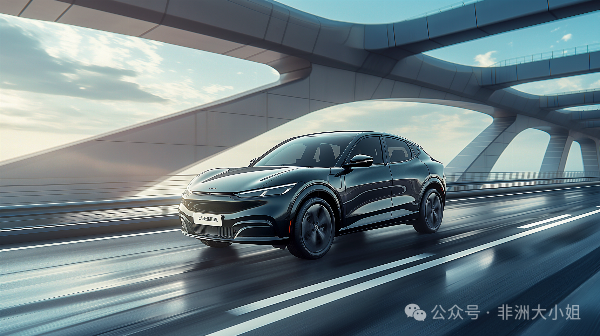
3. Dual-track market pattern
An interesting phenomenon can be seen on the streets of Africa. 80% of the cars running on the streets are used cars, and most of them are Japanese cars. The reason why used cars are popular is first because they are cheap. A second-hand Toyota Corolla imported from Japan may cost only US$3000 - 5000; secondly, they are solid and durable. Japanese cars are fuel-efficient and easy to maintain, and are suitable for African road conditions; moreover, from import, preparation, sales to maintenance, a complete ecosystem has been formed.
The used car market has also driven a huge auto parts market. The size of Africa's auto parts market is expected to reach US$18.5 billion in 2025, with an annual growth rate of 11%. Seemingly inconspicuous items such as filters, damping springs, and engine parts are in great demand. A friend who makes auto parts specializes in the African market and can do tens of millions of business a year. He said,"Cars in Africa are old, but the need to repair cars is always there." At the same time, although second-hand fuel vehicles are the mainstream, new energy vehicles are also growing rapidly driven by policies. In 2023, sales of electric vehicles in Africa will double year-on-year. South Africa will introduce a tariff reduction policy to encourage the import of electric vehicles. Rwanda will set an electric vehicle sales target to vigorously promote electric buses. Egypt will provide tax incentives to new energy vehicles. Moreover, the electric vehicle market in Africa started with public transportation, with electric buses, electric taxis, electric motorcycles, etc. being the main battlefields.

4. Opportunities for China companies
In 2023, China will export approximately 460,000 complete vehicles to Africa, a year-on-year increase of 21%, of which pickup trucks and SUVs are the most popular. Because Africa's road conditions are poor, vehicles with high chassis and strong throughput are needed. However, China's pickup trucks and SUVs are cost-effective and reliable, which just meets the needs of the African market. More and more China car companies are beginning to adopt the KD spare parts assembly model to ship parts to Africa and assemble them locally.
This model has two advantages. First, it avoids trade barriers. Many African countries impose high tariffs on complete vehicle imports, but low tariffs on parts and components; second, it is close to the market, and local assembly can respond more quickly to market demand and create jobs. In addition, the penetration rate of China's auto parts in the African market continues to increase due to its high cost performance and full categories. For the same product, China's auto parts are 30 - 50% cheaper than those of Europe, America and Japan. They have everything from engine parts to car lights, navigators, etc. Although the quality is not top-notch, it is enough for the African market. In 2023, China's exports of car lights, navigators and other categories to Africa will increase by more than 50%. In addition, the export of used cars is also a new value depression. China's used car market is large but cannot be digested domestically. Africa has strong demand for used cars. Exporting China's used cars to Africa is a win-win business.

5. Admission suggestions
Although there are many opportunities in the African automobile market, not everyone can do it. There are huge differences among the 54 countries in Africa. For example, South Africa, Kenya, and Nigeria have relatively developed economies and mature markets, but competition is also fierce; Ethiopia and Rwanda are growing rapidly and have good policies, but infrastructure is still under construction; some small countries have small markets and high risks, so newcomers are not recommended to enter. Therefore, it is recommended to start with countries with relatively developed economies and stable policies.
Consumption stratification in Africa is obvious. The high-end market is occupied by European, American and Japanese brands, and it is difficult for China brands to enter; the mid-end market is the main battlefield for China brands, and cost performance is the key; the low-end market is mainly used cars, and there is a large demand for auto parts. Companies need to think clearly about who their products are for. Moreover, localized operations are the most important point. Africa is not one market, but 54 markets. Each country's language, culture, and policies are different. We must find local partners who understand the market, policies, and culture; establish a local service network because selling cars is easy and after-sales service is the key; we must also respect local culture and cannot use China's thinking to set up the African market.

6. Risk warning
There are great opportunities in the African market, but there are also many pits. The first is that the infrastructure is imperfect, many places have poor road conditions and high logistics costs, which will increase the operating costs of enterprises. Secondly, policies are unstable. Policies in some countries change rapidly. Tax exemptions today may lead to tax increases tomorrow, which brings great uncertainty to the operations of enterprises.
Cultural differences are also an important issue. Africans 'time concepts and business habits are very different from those of China, and companies need to spend time and energy to adapt. There is also payment risk. Some customers default on payment and have a long collection cycle, which will affect the company's capital flow. Therefore, if you want to enter the African market, you must be fully prepared and not be blindly optimistic. In short, Africa's demographic dividend is turning into a growth driving force for the automobile market, but opportunities always belong to those who are prepared. Companies must have a deep understanding of the market, find the right positioning, and localize it.
Source: Leading the way to the sea by Gaoshen's car
[Disclaimer] The content of this website (including pictures and texts) originates from the Internet, and the copyright belongs to the original author. Respect the rights and interests of originality, and select content is only used for information sharing. If copyright disputes are involved, please contact us to handle them in a timely manner

 Online Evaluation
 I am Buyer
 Export Services
 subsites


 023-62852688
  No. 1-1, No. 2899, Longzhou Avenue, Banan District, Chongqing City
 Headquarters


