
 Chinese
 Russian
 Arabic
Angola is located in southwest Africa, bordering the Atlantic Ocean in the west, with a coastline of 1650 kilometers. It is bounded by Congo (Brazzaville) and Congo (DRC) in the north, Zambia in the east, and Namibia in the south. It covers an area of 1.2467 million square kilometers and is one of the important sea routes in central and southern Africa.
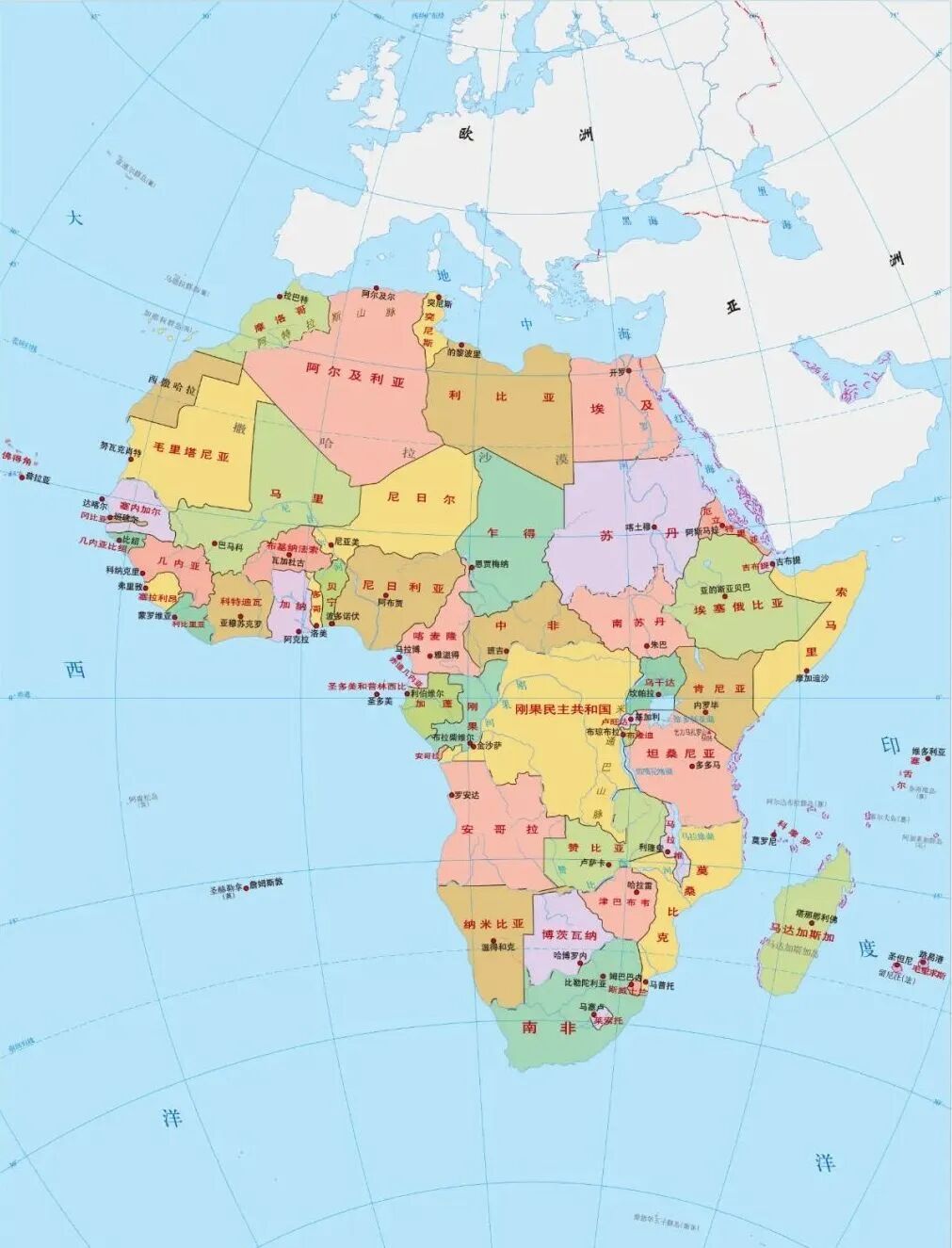
As of 2023, the population is approximately 36.68 million, 49% of whom believe in Roman Catholic and 13% believe in Protestant Christianity. The main ethnic groups include Owenbendu (about 37%), Mbendu (25%), Bakongo (13%), etc., and the official language is Portugal.
Overview of the basic situation in Angola
1. Overview of major cities
Luanda: The capital of Angola, the largest city in the country, and the political, economic and cultural center. According to 2023 data, the population is approximately 9.65 million. Luanda is located on the east coast of the Atlantic Ocean and is one of the natural harbors on the west coast of Africa. Luanda's industrial system is relatively complete, with industrial output value accounting for about half of the country and occupying a dominant position in the national economic system. The oil industry is the backbone of its economy and is known as the "Oil City" of Southern Africa.
Huambo: An important city in central Angola, once named New Lisbon, with a population of about 1.2 million. The economy is dominated by agriculture and minerals, and agricultural income accounts for about 60% of economic activity. There is iron ore mining, copper, uranium and other mineral deposits, and a large railway repair factory and agricultural product processing industry. The Benguela Railway runs through the city and plays an important supporting role in urban economic development.
Benguela: Located on the Atlantic coast, it has excellent port facilities and is a key channel for oil and mineral exports, with a population of approximately 747,000.
Lobito: With a population of about 805,000, Lobito is an important port city in Angola. After the Benguela Railway was completed in 1928, it developed rapidly and played a significant role in the maritime trade of agricultural products and Congolese mineral resources.
2. Mineral resources
The oil industryis the backbone of Angola's economy, which is the second largest oil producer in Africa. Diamonds are the second largest mineral resource in Angola and the fifth largest diamond producer in the world. The government has actively promoted economic diversification and developed agriculture, manufacturing and service industries.
Angola is rich in mineral resources. At present, about 25 kinds of minerals can be mined, mainly diamonds, iron, phosphate, copper, manganese, lead, gold, quartz, marble and granite. In addition, Angola has a forest area of 69.3 million hectares and is the second largest forestry resource country in Africa. It produces precious woods such as ebony, African sandalwood, and rosewood.
Angola's economic policy environment
1. Monetary policy
The currency name of Angola is KWANZA (abbreviation KZ, code AOA), and its Chinese translation is "Kwanza." Angola implements strict foreign exchange controls, and its currency, the kwanza, cannot be freely convertible in the international foreign exchange market. Angola's foreign exchange mainly comes from oil revenue, and its foreign exchange reserve level and exchange rate are influenced by international geopolitics and international oil prices.
2. Foreign exchange policy
Angola implements foreign exchange controls. Foreign exchange payments need to provide corresponding business background materials for review by commercial banks and the National Bank of Angola. After passing the review, you can purchase foreign exchange through commercial banks or use your own foreign exchange funds to remit it. The remittance of profits is strictly controlled. In addition to paying 10% investment income tax, it is also necessary to review the overall tax payment status of the enterprise and relevant supporting documents. With the approval of the Ministry of Finance of Angola, the capital and dividends of foreign-funded companies after liquidation can be remitted.
3. Investment policy
The "Private Investment Law" aims to attract foreign investment and provide foreign-funded enterprises with tax incentives, land incentives, financial subsidies and other policies. The various tax incentives and convenience policies stipulated in it apply to domestic and foreign investment projects, allowing investors and the Angolan government to discuss preferential measures and convenience conditions on a case-by-case basis, and the specific preferential level is generally determined through case-by-case negotiation.
In addition to investments in the petroleum industry and some special mining categories, such as building materials deposits, foreign investors can own 100% equity when setting up companies in Angola, with no local component requirements or minimum investment limit.
4. New energy policy
Encourage the development of new energy industries and formulate plans to promote the development and utilization of solar energy, wind energy and hydropower. Provide subsidies and tax incentives for the production, sales and use of new energy vehicles, and actively build charging facilities.
5. Trade agreements
Angola is a member of the WTO and joined the African Continental Free Trade Area in 2020. Participating regional economic organizations include: Southern African Development Community (SADC), Economic Community of Central African States (CEEAC), Gulf of Guinea Regional Organization, Community of Portuguese-speaking Countries (CPLP), Organization of African Petroleum Producers, etc.
Angola is a typical oil-economy country. Its economic development mainly relies on oil exports. The imported products are mainly fuel oil, electromechanical equipment, building materials, food, vehicles and spare parts, etc. The market radiation scope is limited to SADC and CEEAC countries. In 2023, Angola's total foreign trade volume will be US$51.964 billion, of which exports will be US$36.88 billion and imports will be US$15.084 billion.
Status of external agreements signed by Angola: signed a trade and investment framework agreement with the United States; signed bilateral investment promotion and protection agreements with Portugal, Spain, the United Kingdom, Italy, Portugal, Russia, Switzerland, South Africa, Guinea-Bissau, Japan, and China; signed economic and trade cooperation agreements with Portugal, South Africa, Spain, and the United Kingdom.
6. Regulations for foreigners to obtain land in Angola
The Land Law of Angola stipulates that the country's land belongs to the state and is divided into urban, agricultural and animal husbandry and mining land according to its use. Enterprises can apply for land use rights according to the land use plan, and the land use rights are up to 60 years. The land use right can be sold or transferred, but if the land is not developed and utilized within the specified period (up to 6 years), the government will take back the land.
Foreign-funded enterprises registered in Angola can apply to the local provincial government for temporary land, or they can apply for commercial (construction) land with a use period of up to 60 years. If you purchase land from other companies or private individuals, you need to verify the land certificate, the above-ground building title certificate and the use of the land. If it is commercial (construction) land, a construction permit must be obtained; if it is agricultural and animal husbandry land, its use cannot be changed.
Infrastructure in Angola
1. Transportation and logistics conditions
Ports: Luanda Port (annual throughput of 8 million tons) and Lobito Port (under expansion) are the main automobile import ports.
Roads: The total length of roads in the country is 77,000 kilometers, and the road conditions around Luanda are relatively good.
Railway: The Benguela Railway (1350 kilometers) connects Congo (DRC) and can radiate to the Central African market.
2. Power supply
Total installed capacity: 6.32 million kilowatts, with hydropower accounting for 60%.
Coverage rate: Only 42.8% nationwide, Luanda is relatively stable.
Electricity price: Industrial electricity is approximately 12.82 kwanzas/kWh (US$0.015).
3. Digital infrastructure
Network coverage: The coverage rate of 4G signals in cities and towns is 34.8%. Luanda has piloted 5G.
Data center: Huawei Technology Park (open in 2022) can provide cloud service support.
Major special economic zones/parks in Angola
1.[Angola Dande Free Trade Zone]
Established in July 2021, it is the only free trade zone in Angola. The park covers an area of approximately 5465 hectares, is close to the Atlantic coast, and is 40 kilometers away from the capital Luanda. The Dande Free Trade Zone is regarded as an important platform to promote economic diversification in Angola. The park plans to build fuel storage areas, edible oil refineries and grain storage warehouses, natural gas storage plants, power plants, industrial development zones and ocean integrated terminals.
2.[Luanda-Bengo Special Economic Zone]
Founded in 2009, it is located at the junction of the capital Luanda and Bengo Province. It covers an area of about 7596 hectares and is 38.5 kilometers away from Luanda Port. It is the first special economic zone established in Angola. The park encourages foreign investment with advanced technology to settle in. The park plan includes 7 industrial reserved areas, 6 agricultural reserved areas and 8 mineral reserved areas. It is planned to have 2 power stations, 1 sewage plant, as well as logistics center, communication power lighting system, road network, water supply and drainage pipe network, green space, etc. According to reports, as of the end of 2023, 157 companies have settled in, including the daily chemical factory invested by Naisi, CITIC Aluminum Alloy Profile Factory, etc.
3.[Aode Industrial Park]
Established in 2018, it is the only overseas economic and trade cooperation zone where Chinese-funded enterprises invest, build and operate in Angola. The industrial park is located in Dande City, Bengo Province, covering an area of 400 hectares, accounting for 47% of the total development area of the first phase of the Dande Free Trade Zone. The industrial park has completed the first phase of investment of US$50 million, forming an integrated industrial chain dominated by ceramic tile factories and supporting carton factories, frit factories, paper mills, and Dongfeng Logistics. The ceramic tiles produced not only meet the local market, but are also sold to neighboring countries. Currently, the industrial park is introducing five projects, including electrolytic aluminum production projects, plastic products production projects, sanitary materials (non-woven fabrics) production projects, overseas warehouse projects and its own 230MW substation construction projects.
Source: Yangtze River Delta new energy vehicle industry offshore base
This article is reproduced from the Yangtze River Delta New Energy Vehicle Industry Offshore Base and is only used for information sharing. If infringement is involved, please contact and delete it. This site does not bear relevant legal responsibilities.

 Online Evaluation
 I am Buyer
 Export Services
 subsites


 023-62852688
  No. 1-1, No. 2899, Longzhou Avenue, Banan District, Chongqing City
 Headquarters


