
 Chinese
 Russian
 Arabic
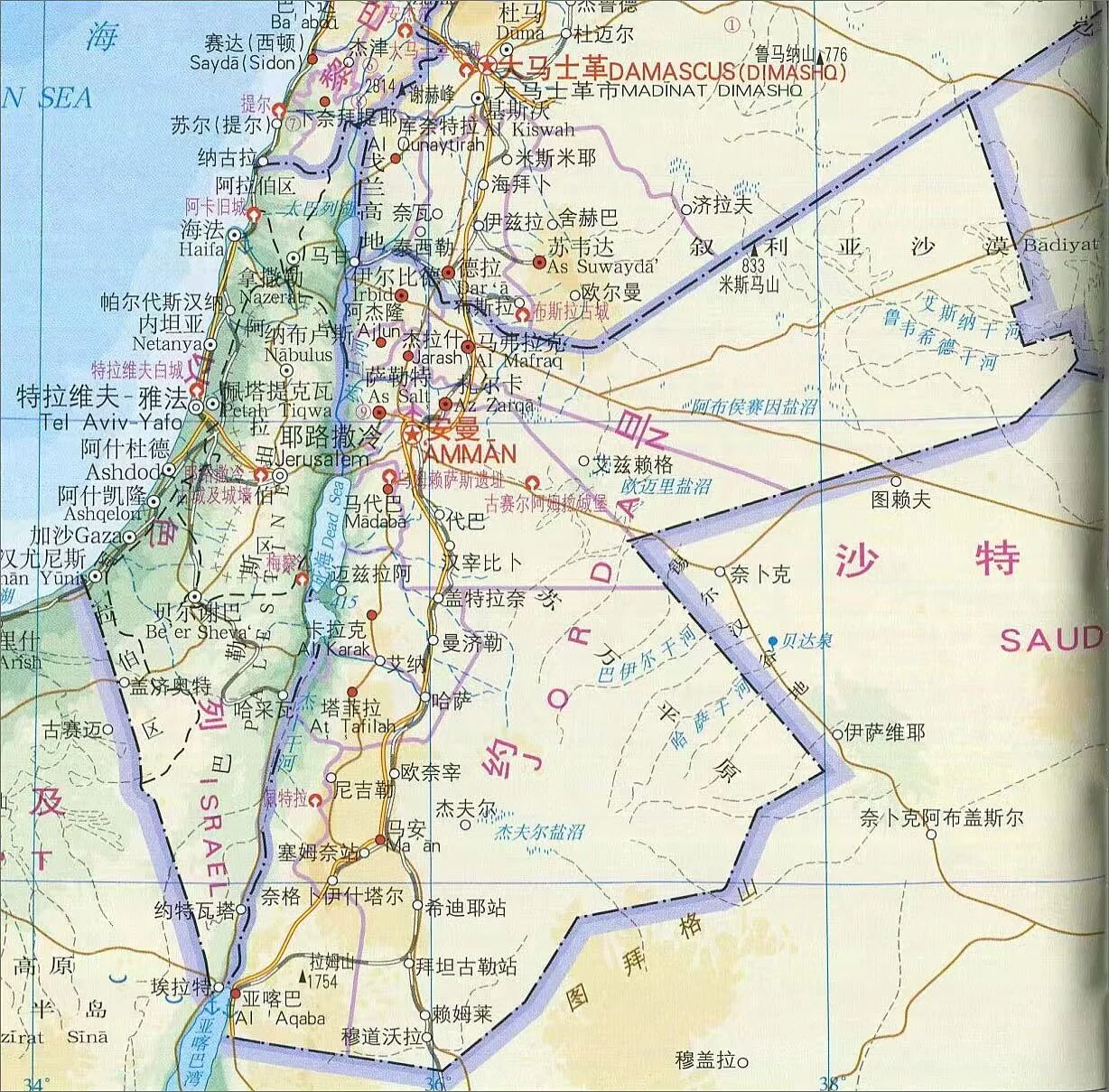
Current situation and market analysis of new energy vehicle industry
1. new energy automobile industry policy
The Jordanian government is actively promoting the development of new energy vehicles to reduce dependence on traditional fossil fuels and promote environmental protection, including the introduction of a number of subsidy policies to provide car subsidies of up to 30% for consumers who purchase electric vehicles, and the exemption from import tariffs and value-added taxes for electric vehicles. In addition, the government also plans to build more public charging stations across the country to solve the problem of inconvenient charging. In addition to the government's support policies, some private companies in Jordan have also begun to enter the field of new energy vehicles.
In 2019, the Jordanian government launched a series of tariff policies. The customs clearance tax rate for hybrid vehicles was increased to 35%, which is scheduled to increase to 40% in 2020, and to 45% in 2021. As of 2023, after adding up various tax rates, the total tax rate on imported gasoline vehicles in Jordan is about 95%, the total tax rate on diesel vehicles is about 66%, the total tax rate on hybrid vehicles is about 55%, and the total tax rate on electric vehicles is about 10% to 15%.
On May 26, 2024, the Ministry of Industry and Trade of Jordan issued the "Regulations on the Conformity Assessment Procedures for Electric Vehicles", stipulating that new electric vehicles imported into Jordan must comply with the EU vehicle type certification or the U.S. federal motor vehicle safety standards, and second-hand electric vehicles must provide the above. One of the two certificates, or obtain the "Certificate on Technical Requirements for Used Electric Vehicles" issued by the Jordanian Standards and Metrology Organization in accordance with the "Regulations" before customs clearance, and the new regulations will take effect when they are issued. After the implementation of the new regulations, only electric vehicles that meet China's national compulsory certification CCC standards or Gulf GCC certification will be restricted from sales in the United States.
2. competition pattern
International brand dominance:Currently, Jordan's new energy vehicle market is mainly occupied by international brands, including Tesla, BYD, Nissan, etc. Tesla entered Jordan through an import model, mainly targeting high-end consumers, but its selling price is higher (starting at Model 3 is about US$60,000) and its market penetration is limited. BYD cooperated with local dealers to launch electric buses and passenger cars (such as Yuan PLUS EV), initially opening up the market with its cost-effective advantage (Yuan PLUS EV is approximately US$35,000).
Gaps in local enterprises: There areno mature new energy vehicle manufacturers in Jordan. Only some companies are trying to assemble low-end electric vehicles, but their technical level and production capacity are limited and are mainly oriented to the short-distance transportation market.
Competitive advantages of China brands:Compared with European and American brands, China new energy vehicles have significant advantages in terms of price, cruising range and localized services. For example, the BYD Yuan PLUS EV has a cruising range of 401 kilometers, sells for only 60% of the price of Tesla models of the same class, and provides Arabic in-vehicle systems and local after-sales outlets.
3. competitive barriers
Import tariffs and certification:Jordan imposes a tariff of 10%-25% on imported complete vehicles. Electric vehicles can enjoy tax exemption policies, but they need to pass EU WVTA certification or U.S. FMVSS standards, which increases the compliance costs of China car companies.
Insufficient charging facilities: There is aserious shortage of public charging piles, mainly concentrated in Amman and Aqaba. Charging networks in remote areas are almost blank, restricting consumers 'willingness to purchase.
Brand recognition:European and American brands have accumulated a long brand history in the Jordanian market, while China brands need to increase investment in localized marketing (such as participating in the Jordan International Auto Show and cooperating with local KOL) to enhance recognition.
4. Consumer demand analysis
Price-sensitive markets:Jordan's per capita GDP is approximately US$4541, and consumers are more price sensitive. The mid-end market (US$20,000-US$40,000) has the greatest demand, with models suitable for family cars and urban commuting (such as compact SUVs and hatchbacks) more popular.
Battery life and charging convenience:Due to insufficient charging facilities, consumers have strong demand for long-range models (≥400 kilometers). At the same time, models that support fast charging technology (charging to 80% in 30 minutes) are more competitive.
Policy-driven purchasing:Government subsidies (up to 30% of car purchase prices) and tax exemption policies significantly affect consumer decision-making. Companies need to strengthen policy interpretation and publicity (such as clearly stating the subsidy amount on official websites and dealers).
5. Market segment opportunities
Private passenger car market:Young families and urban white-collar workers are the main target groups, and a combination of "entry-level electric vehicle + home charging package" can be launched to lower the threshold for use. Based on local income levels, it is expected that models priced at about US$20,000 will be more suitable for first-time car buyers.
Public transportation market: TheJordanian government plans to increase the electrification rate of public transportation to 20% by 2030, and there is strong demand for electric buses and taxis. You can participate in government bidding projects (such as the Amman Public Transport Electrification Plan) to provide integrated solutions of "vehicle + charging piles + operation and maintenance".
Tourism special vehicle market:Tourist cities such as Aqaba and Petra have significant demand for environmentally friendly shuttle buses and electric sightseeing vehicles. Right-rudder models can be customized and operated in cooperation with local tourism companies.
Analysis of supply chain and logistics layout opportunities
1. Localized supply chain construction
Dependence on parts and components imports:Jordan's self-sufficiency rate of auto parts is less than 10%, mainly imported from China, Turkey, and Germany. Enterprises in the Yangtze River Delta can set up parts and components assembly centers in the Aqaba Special Economic Zone (ASEZ) and use policies such as duty-free and 100% foreign shareholding in the zone (such as duty-free imported raw materials and corporate income tax of only 5%) to radiate to Jordan and neighboring countries (such as Saudi Arabia and Iraq).
Cooperation in key parts and components:Jordan is rich in phosphate resources and can be used in the production of battery cathode materials. Chinese companies can cooperate with Jordan Phosphate Company (JPMC) to develop the "phosphate ore mining-battery materials-battery manufacturing" industrial chain to reduce battery costs.
2. Logistics and distribution networks
Port priority layout: ThePort of Aqaba is the core logistics node. It is recommended to establish bonded warehouses near the port to shorten the customs clearance time for imported parts and complete vehicles (the average customs clearance period is about 3 days). At the same time, cooperate with local logistics companies (such as Aramex) to build a three-level distribution logistics network of "port-city-rural".
Cross-border e-commerce channels:Jordan's Internet penetration rate reaches 91%. B2C sales can be carried out through Amazon Zhongdong Station, Noon and other e-commerce platforms, and offline experience centers (such as setting up a display store in the Mall of Jordan in Amman) to achieve "online Online order + offline delivery" model.
risks and challenges
1. Political and security risks: Instability in countries surrounding Jordan (such as Syria and Israel) may lead to supply chain interruptions or increased logistics costs. It is recommended to purchase political risk insurance and add force majeure clauses to the contract.
2. Labor policy restrictions: Jordan requires foreign-invested companies to hire at least 50% of local employees, and the approval of work permits for foreign workers is strict (average cycle is 2-3 months). Companies need to communicate with the Ministry of Labor (MOL) in advance to formulate localized employment plans to avoid employment compliance risks.
3. The construction of charging facilities lags behind: The government's planned construction progress of charging piles may fall short of expectations, making it inconvenient for consumers to use them after purchasing a car. It is recommended to cooperate with local energy companies (such as Jordan Electric Power Company) to invest in charging stations and apply for government PPP project subsidies (such as the Aqaba Port Charging Station Project).
4. Weak intellectual property protection: Jordan has a long processing cycle for trademark and patent infringement cases (an average of 2-3 years). Companies need to register trademarks and patents with the Jordanian Ministry of Industry and Trade (MIT) in advance and hire a team of local lawyers to monitor infringement activities.
5. Data compliance: Jordan's Cybersecurity Law requires companies to store user data locally. Chinese companies need to adjust the data architecture of in-vehicle systems to avoid cross-border data transmission violations.
Source: Yangtze River Delta new energy vehicle industry offshore base
This article is reproduced from the Yangtze River Delta New Energy Vehicle Industry Offshore Base and is only used for information sharing. If infringement is involved, please contact and delete it. This site does not bear relevant legal responsibilities.

 Online Evaluation
 I am Buyer
 Export Services
 subsites


 023-62852688
  No. 1-1, No. 2899, Longzhou Avenue, Banan District, Chongqing City
 Headquarters


