
 Chinese
 Russian
 Arabic
The Philippines is an archipelago country located in the Pacific island country. It consists of more than 7000 islands. It is also known as the Thousand Islands. It is divided into three major island groups: Luzon, Visayas and Mindanao. It faces China Taiwan Province across the Bashi Strait in the north, faces Indonesia and Malaysia across the Sulawesi Sea and the Barabak Strait in the south and southwest, borders the South China Sea in the west and the Pacific Ocean in the east. The coastline is about 18533 kilometers long and has a total area of 299,700 square kilometers.
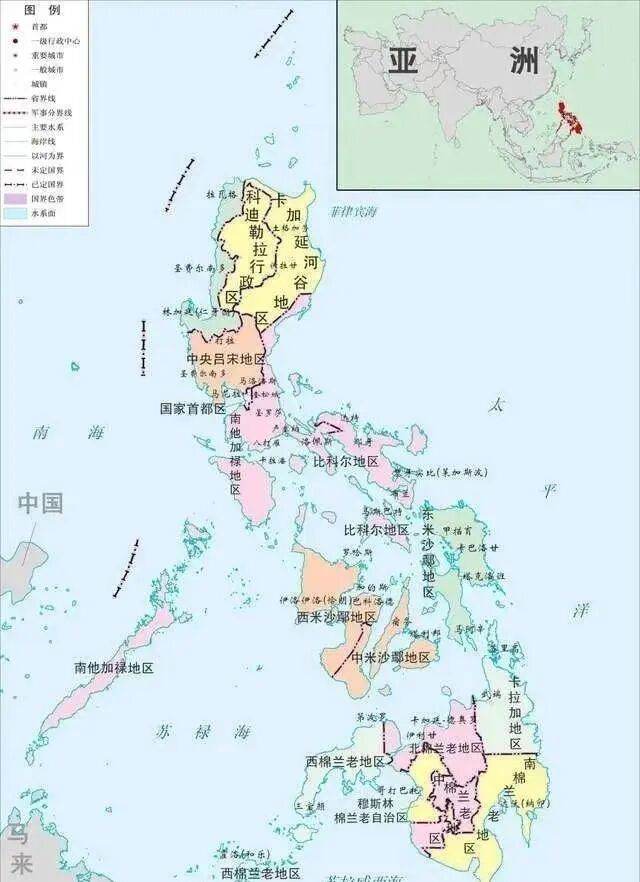
As of December 2023, the total population of the Philippines was 117.34 million, a year-on-year increase of 1.54%. About 85% of the Philippines believe in Catholicism and 5% believe in Islam. A few people believe in Independence and Protestantism. Most of the indigenous people believe in primitive religions, and most of the Chinese believe in Buddhism.
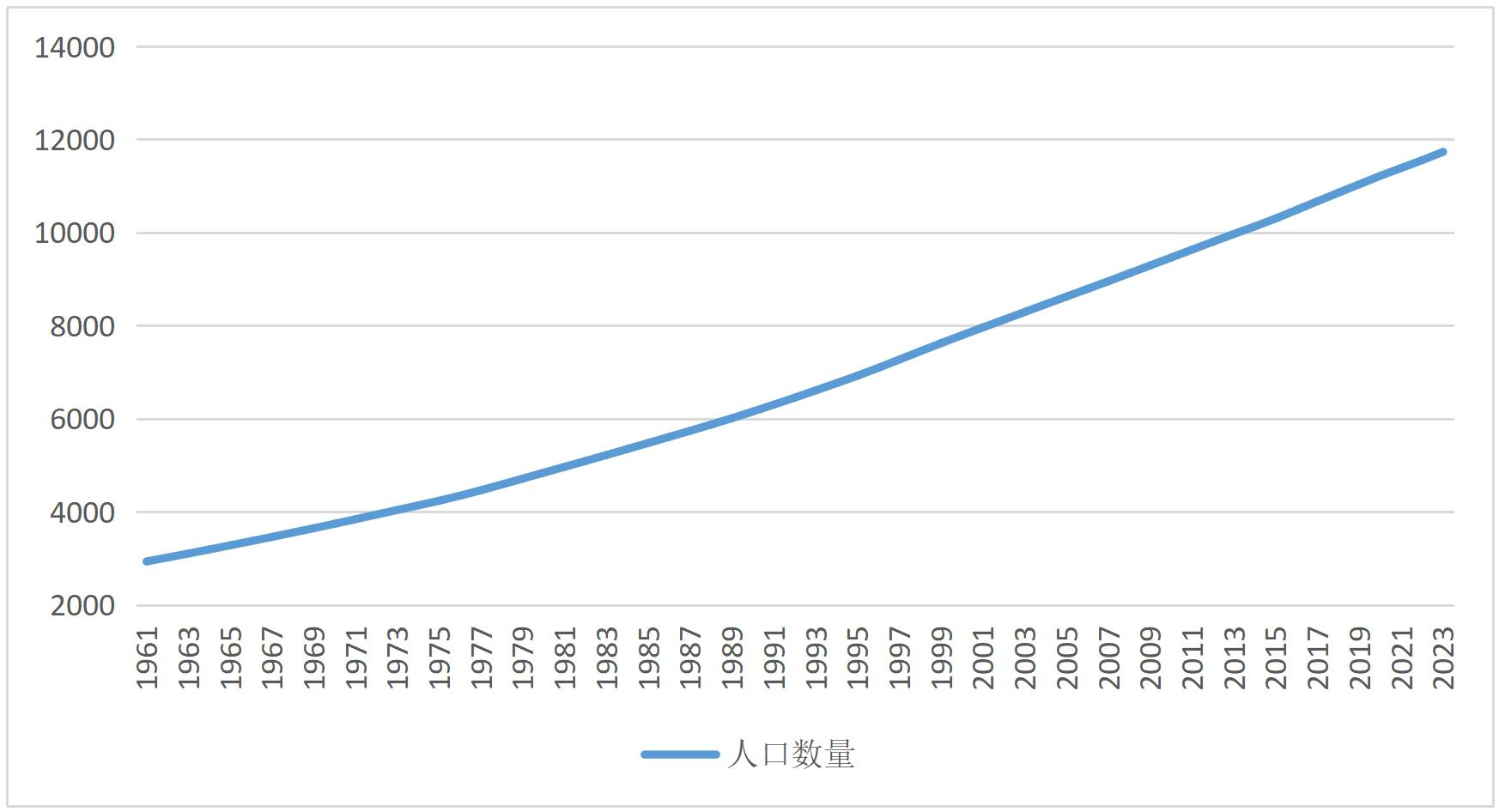
Population of the Philippines, 1961-2023 (unit: ten thousand)
The Philippines is a multi-ethnic country with more than 90 ethnic groups. The main ethnic groups are the Visayas, Tagalus, Ilok, Bicol, Cagayan, etc., accounting for more than 85% of the country's population. The ethnic minorities are mainly local indigenous peoples and foreign populations such as Chinese and Indonesian.
Overview of the Philippine economy
The Philippines is a low-and middle-income country with a per capita national income of US$4051 in 2023. The gap between rich and poor is large. The Manila area is a gathering area of wealthy Filipinos, with an average annual income of US$400,000 to US$500,000, while in relatively remote and poor areas, the average annual income is only US$800.
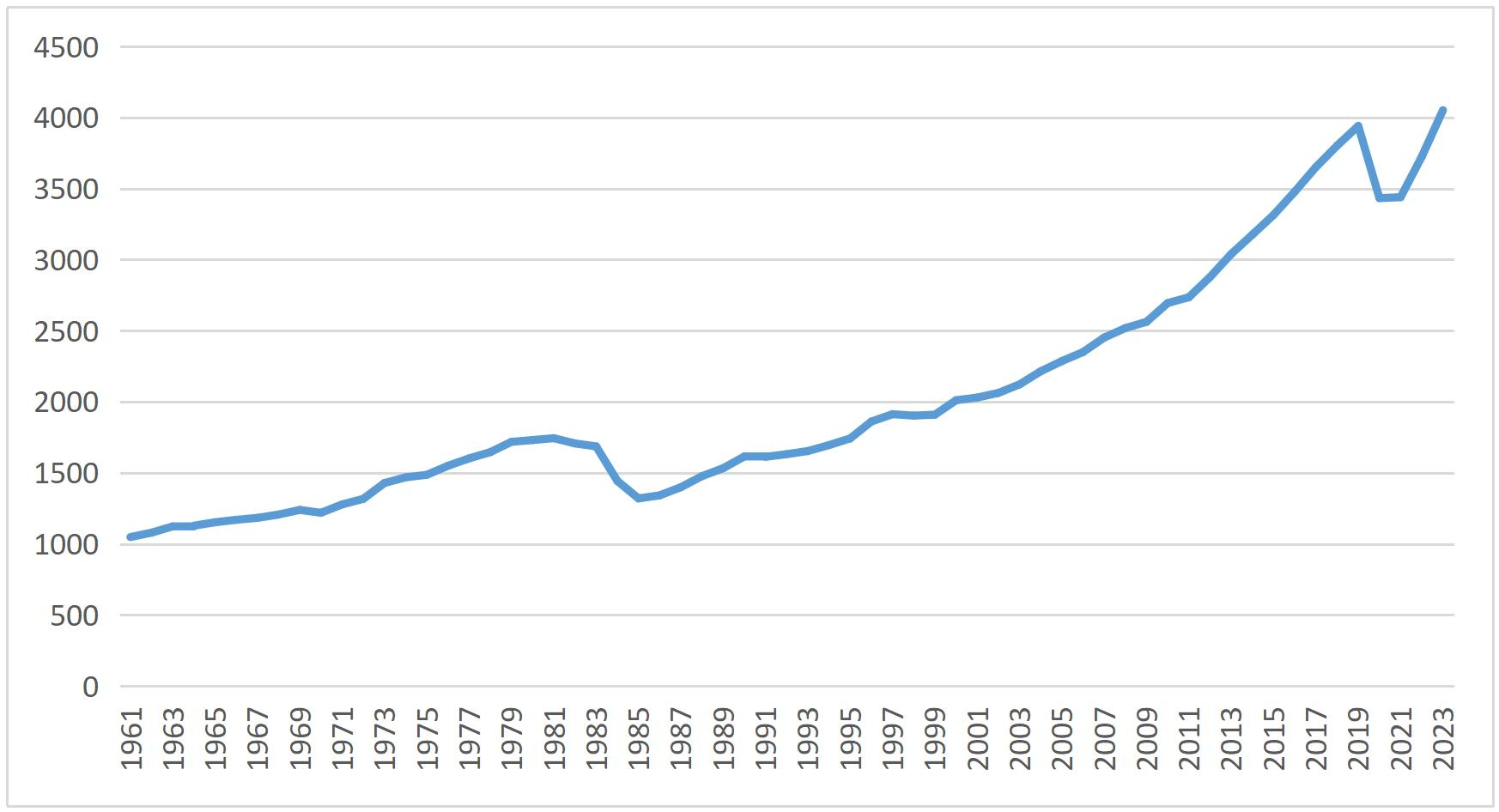
Per capita income of the Philippines, 1961-2023 (in US dollars)
According to data from the Central Bank of the Philippines, the proportion of agriculture, industry (manufacturing, construction, others) and services in the Philippines 'GDP in 2023 will be 8.6%, 29.1%(61%, 25%, 14%) and 62.3%, respectively.
In 2022, the top ten trading partners of the Philippines are the mainland of China, the United States, Japan, South Korea, China Hong Kong, Singapore, Thailand, Indonesia, Malaysia, and China Taiwan. Except for the United States and China Hong Kong, the Philippines has a trade deficit with its other eight major trading partners.
China has remained the Philippines 'largest trading partner and source of imports for many consecutive years, surpassing Japan to become the Philippines' second largest export destination in 2021.
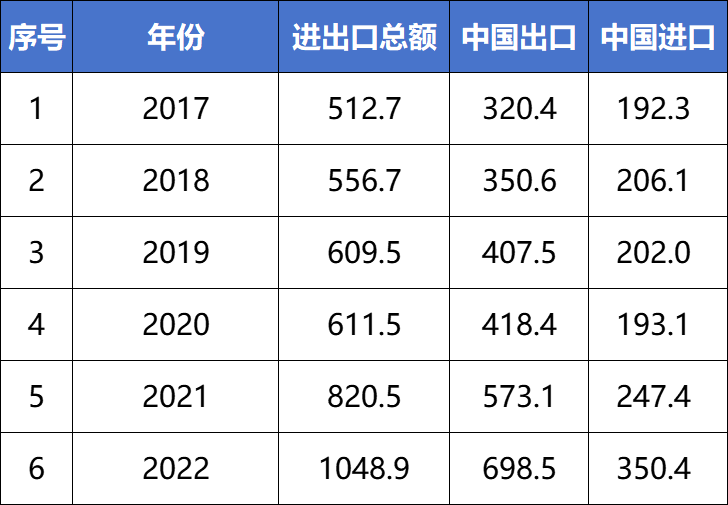
Statistics on trade in goods between China and the Philippines from 2017 to 2022 (Unit: 100 million US dollars)
Data source: General Administration of Customs of China
The Philippines 'automobile market
Production and sales:
The Philippines is Southeast Asia's second most populous country after Indonesia, and is also Southeast Asia's largest left-hand vehicle market. The Philippines has initially established an automobile industry system, and Japanese automobile companies have already set up factories for production there. At present, the Philippines 'self-sufficiency level of automobiles is not high, and local consumer demand mainly relies on imports. At present, the annual automobile output is about 100,000 units, and automobile sales exceed 400,000 units.
In the past 10 years, automobile production in the Philippines has been basically stable. Except for the impact of the epidemic and other factors, the production in 2020 and 2021 has dropped significantly, and the remaining years have been around 100,000 vehicles. In 2023, the Philippines 'automobile production will return to 100,000 units, including 79,000 passenger cars and 21,000 commercial vehicles.
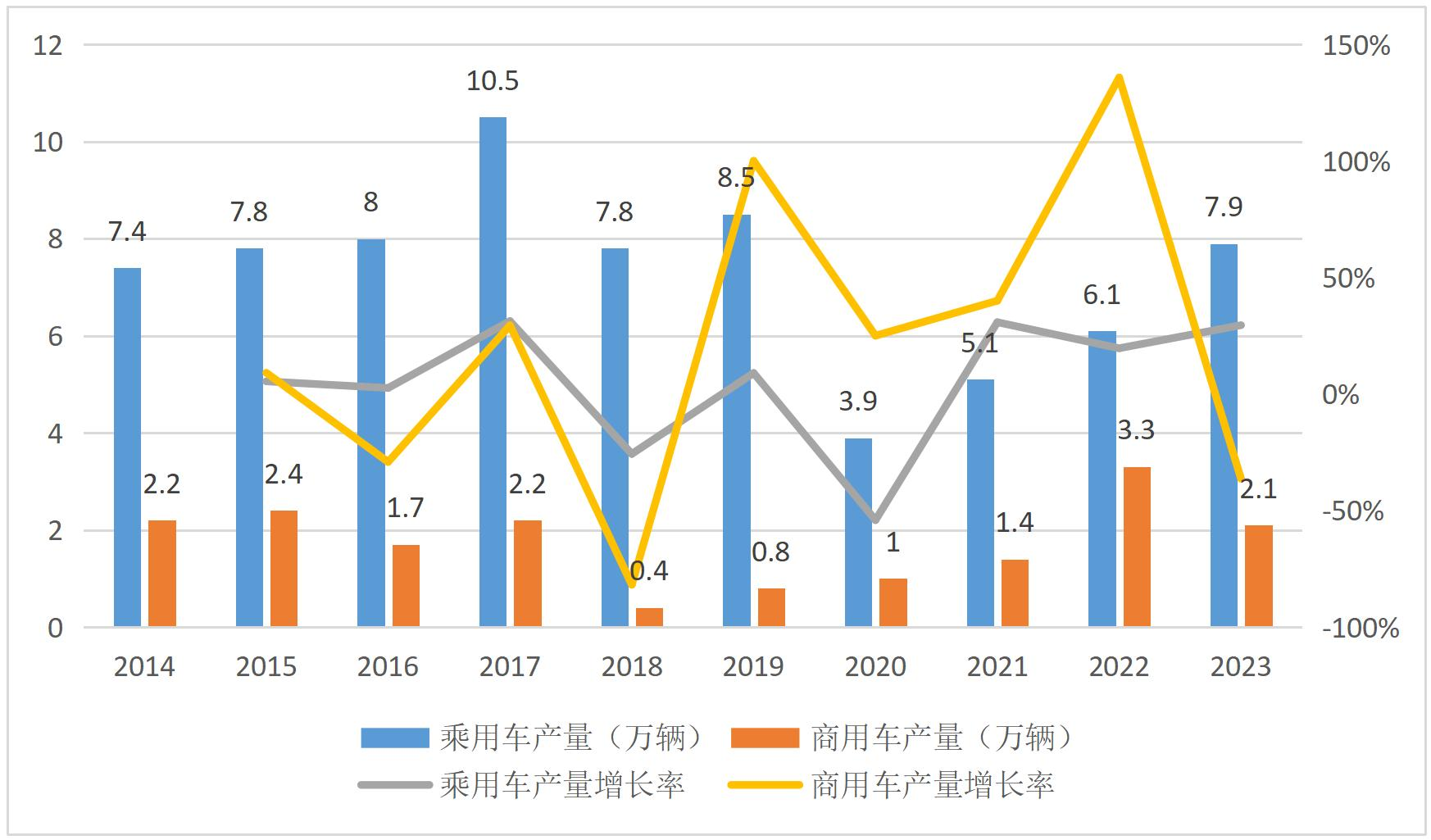
2014-2023 Annual production and growth of passenger cars and commercial vehicles
2011-2023 Malaysia car sales in 2009
Data source: ASEAN Automotive Federation
Philippine automobile consumption demand is also relatively stable. In 2017, car sales peaked at 456,500 units, and fell in the following two years and remained at around 400,000 units. In 2020 and 2021, it fell to below 300,000 units due to the impact of the epidemic, and has since gradually recovered. In 2023, it will return to pre-epidemic levels, reaching 435,000 vehicles. Among them, 320,000 passenger cars were sold and 115,000 commercial vehicles were sold.
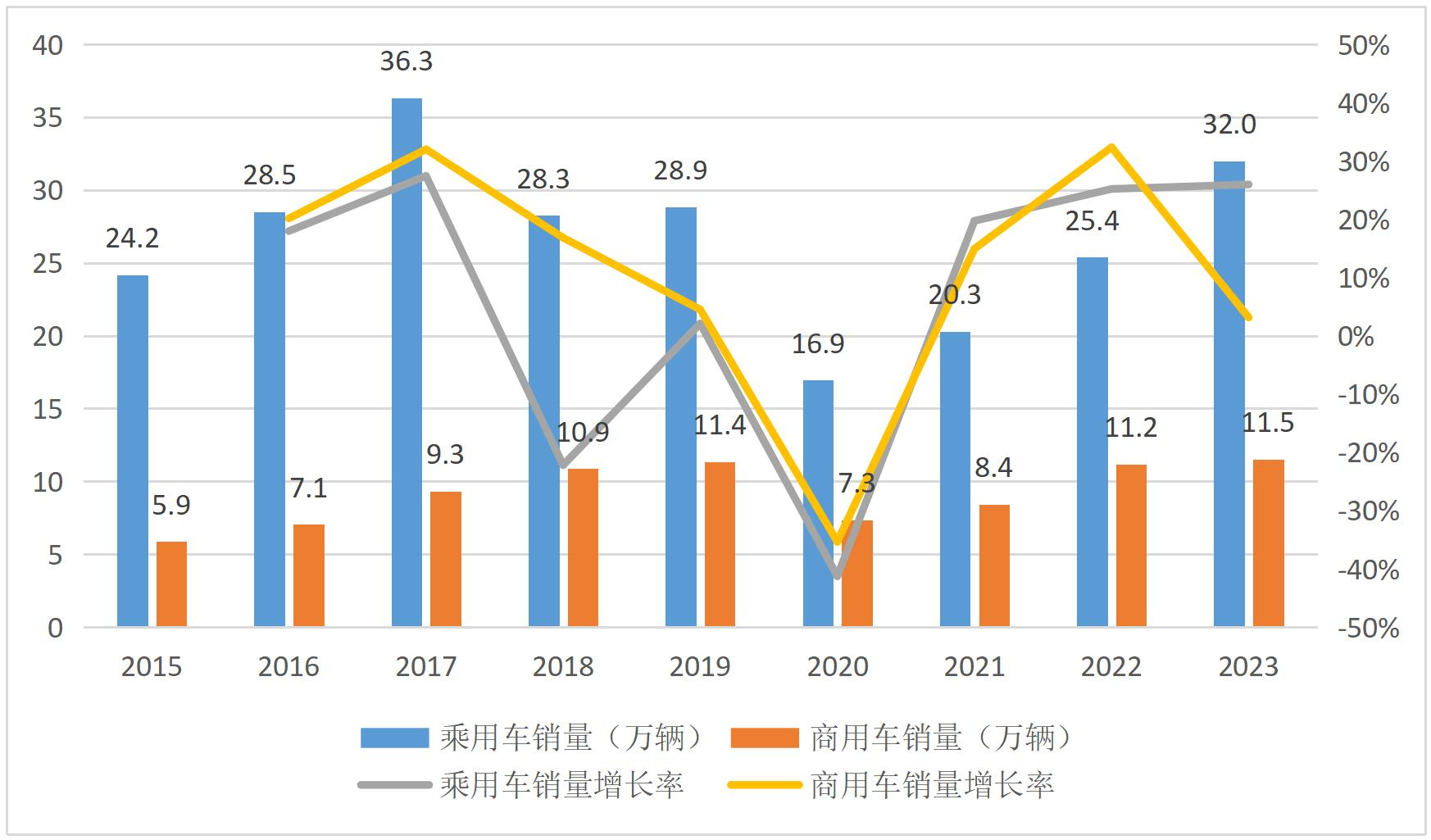
2015-2023 Sales and growth of passenger cars and commercial vehicles in the Philippines in 2001
Data source: ASEAN Automotive Federation
For a long time, the Philippine automobile market has been almost monopolized by Japanese brands. Taking 2023 as an example, Toyota has the highest proportion, leading other brands, and basically accounting for half of the market share in market segments such as cars, SUVs and MPVs.
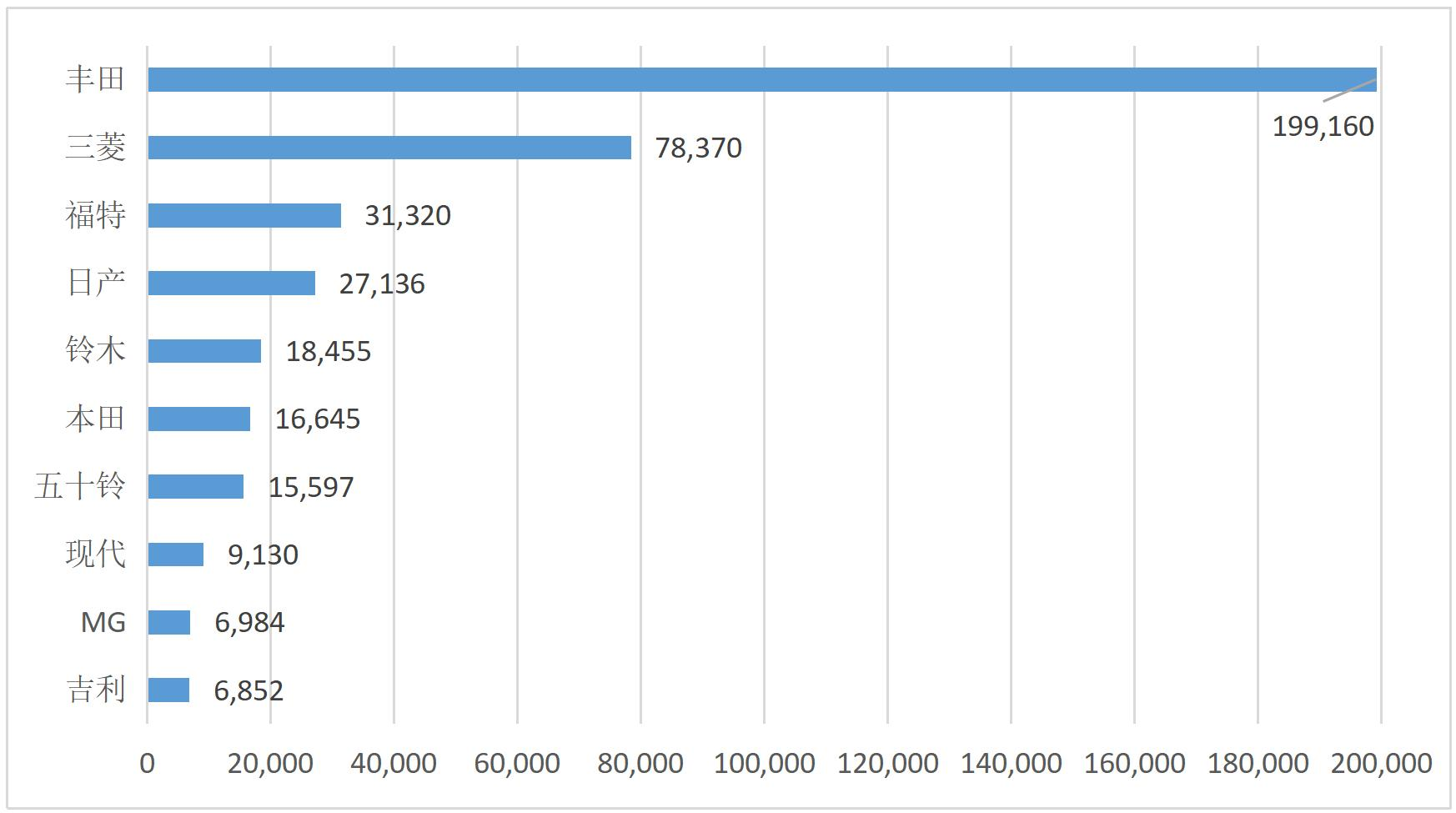
Philippine automobile market sales ranking in 2023 (unit: vehicles)
Data source: MarkLines
In recent years, the top three China manufacturers in sales in the Philippine automobile market are Geely, SAIC and Chery.
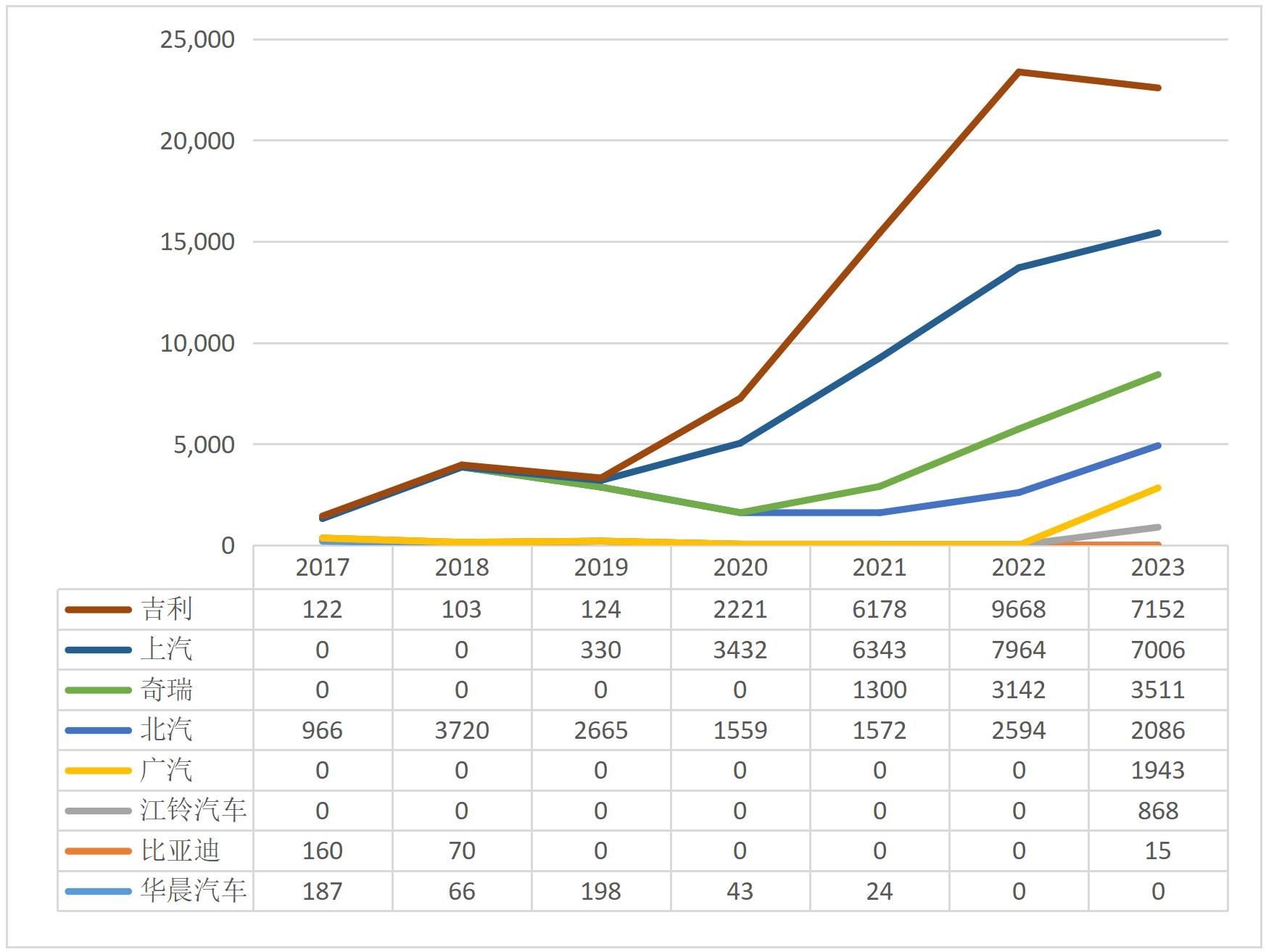
Sales by China automobile manufacturers in the Philippines from 2017 to 2023 (unit: vehicles)
Data source: MarkLines
Major laws and regulations related to automobile access in the Philippines
RA4136, the Land Transport and Transportation Ordinance, governs the registration and operation of motor vehicles and the licensing of owners, dealers, drivers and similar matters. The main contents of the decree include: registration (all vehicles must be registered, and those that pose safety hazards and do not meet the requirements of minimum regulatory standards will not be registered), dealer reporting (dealers shall provide the Land Transport Committee with information and reports on sales, imports, manufacturing, inventory quantities, transfers or other impacts on motor vehicle transactions), the maximum weight and size allowed on the road, regulations on the use of vehicle license plates, and the safety configurations that vehicles must be equipped with.
RA8750 "Seat Belt Use Order"mainly stipulates that drivers and front passengers must wear seat belts; imported vehicles must be equipped with seat belts, and seat belts should comply with the standards and specifications formulated by the Product Standards Bureau (BPS) of the Ministry of Industry and Trade and the Land Transportation Office LTO; seat belts that meet the prescribed requirements will not be registered if they are not installed.
RA8749, the Philippine Clean Air Order,mainly stipulates that any motor vehicle must meet the Philippines 'emission standards and obtain a Certificate of Conformity (COC) before it is allowed to be imported; any vehicle must be tested to meet the requirements of emission regulations before it is allowed to be registered and vehicles must meet the emission limits, etc.
RA10883 "New Anti-theft Act"stipulates that imported vehicles should promptly apply to the Philippine National Police (PNP) for customs clearance certificates. After receiving the application, the PNP should check whether the vehicle and its parts are on the list of stolen vehicles or parts; Vehicles without customs clearance certificates are not allowed to pass customs clearance, etc.

In April 2022, the Philippines passed the Electric Vehicle Industry Development Act (EVIDA). The passage of this law will help the Philippine electric vehicle industry formulate more detailed guidance regulations to promote the private sector's participation in a fair and non-discriminatory competitive environment., effectively promoting the development of the electric vehicle industry. The law establishes the comprehensive plan for the Philippines 'electric vehicle industry, a national development plan for the electric vehicle industry, with an annual work plan designed to accelerate the development, commercialization and application of electric vehicles in the country.
EVIDA's incentives include both fiscal and non-fiscal components.
Fiscal incentives include:
The manufacturing and assembly of electric vehicles, charging stations, batteries and their parts should be evaluated to determine that they are included in the strategic investment priority plan and may be entitled to incentives provided for by relevant laws for a specified period; in accordance with the Railway Law (TRAIN Act, RA No. 10963), fully imported and assembled electric vehicles are usually entitled to incentives; fully imported charging stations are exempt from tariffs for eight years after EVIDA takes effect; within eight years after EVIDA takes effect, pure electric vehicles and hybrid vehicles enjoy a 30% and 15% discount on motor vehicle usage fees, vehicle registration and inspection fees respectively.
Non-fiscal incentives include:
Priority registration, priority renewal of registration and issuance of special types of vehicle licenses; exemption from mandatory unified vehicle capacity reduction plans, digital coding plans or other similar plans implemented by different government agencies; accelerated the processing of utility vehicle franchises for operators who specialize in electric vehicles. Application and renewal of operating rights; Customs Bureau quickly handles imports from electric vehicle manufacturers and importers; In accordance with guidelines from relevant government agencies, foreigners are allowed to find employment in the Philippines under technology transfer agreements.
(Disclaimer: The main content of this article is compiled from China Automobile Manufacturers Association)
Source: Yangtze River Delta new energy vehicle industry offshore base
This article is reproduced from the Yangtze River Delta New Energy Vehicle Industry Offshore Base and is only used for information sharing. If infringement is involved, please contact and delete it. This site does not bear relevant legal responsibilities.

 Online Evaluation
 I am Buyer
 Export Services
 subsites


 023-62852688
  No. 1-1, No. 2899, Longzhou Avenue, Banan District, Chongqing City
 Headquarters


