
 Chinese
 Russian
 Arabic
Kuala Lumpur, the capital of Malaysia, covers an area of about 330,000 square kilometers. Malaysia is located in Southeast Asia, and its territory is divided into two parts: the southern part of the Malay Peninsula (West Malaysia) and the northern part of Kalimantan Island (East Malaysia).
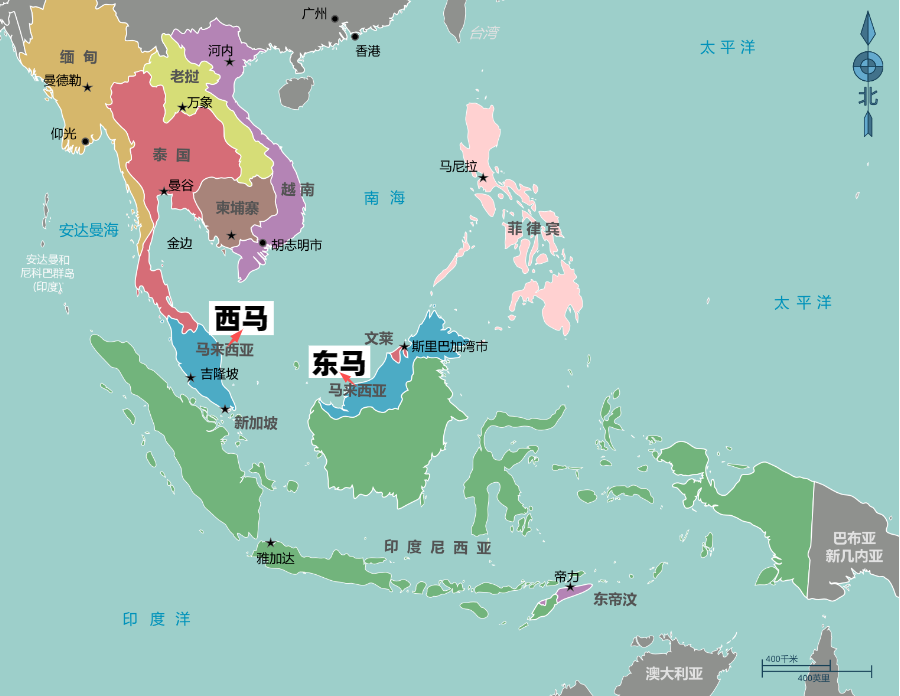
As of 2023, Malaysia's total population is approximately 34.3 million. Malaysia is a multi-ethnic country. The Malay Peninsula is dominated by three major ethnic groups: Malays, Chinese and Indians.
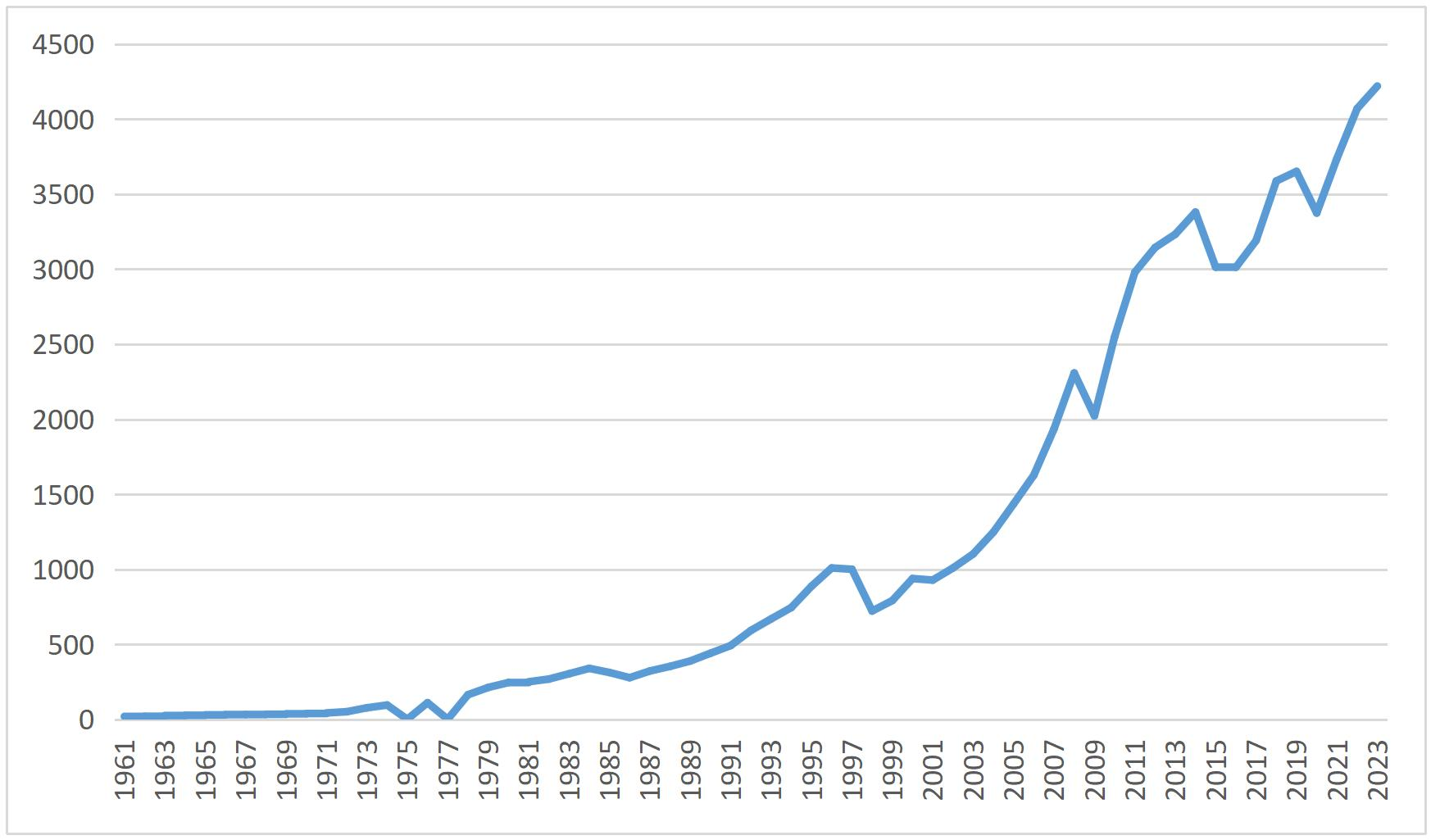
Overview of Malaysia's economy
According to data from the Malaysian Bureau of Statistics, GDP for the whole year of 2024 will reach US$4.3 trillion, a year-on-year increase of 5.1%. This growth was mainly due to strong performance in the services industry, industry and agriculture. The service industry grew by 5.4% year-on-year, industry grew by 4.2% year-on-year, and agriculture grew by 3.1% year-on-year.
In 2023, Malaysia's total foreign trade in goods will be US$597.2 billion, a year-on-year decrease of 7.3%. Among them, exports were US$323.5 billion, down 8% year-on-year; imports were US$273.7 billion, down 6.4% year-on-year.
Trade situation between Malaysia and major trading partners in 2023
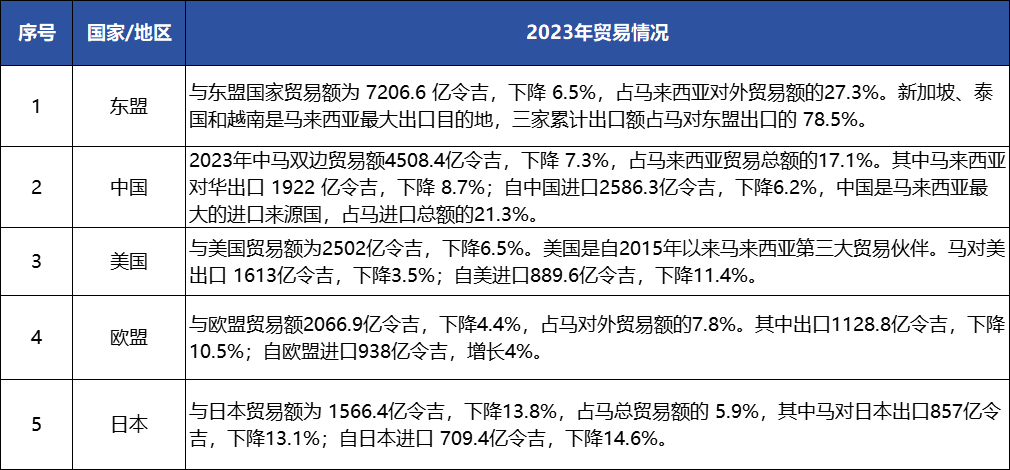
Source: Economic and Commercial Office, Embassy of China in Malaysia
Malaysia's car market
Production and sales: Before 2015, Malaysia's automobile production and sales showed a gradual growth trend, and reached the levels of 615,000 and 665,000 in 2015. In 2016-2017, due to factors such as the economic recession, the automobile market fluctuated, and production and sales dropped significantly, and gradually recovered since then.
Affected by the epidemic in 2020, automobile production and sales declined again. 2022-2023 In 2023, the economy gradually recovered, and automobile production and sales were booming, reaching historical peaks of 775,000 and 800,000 in 2023.
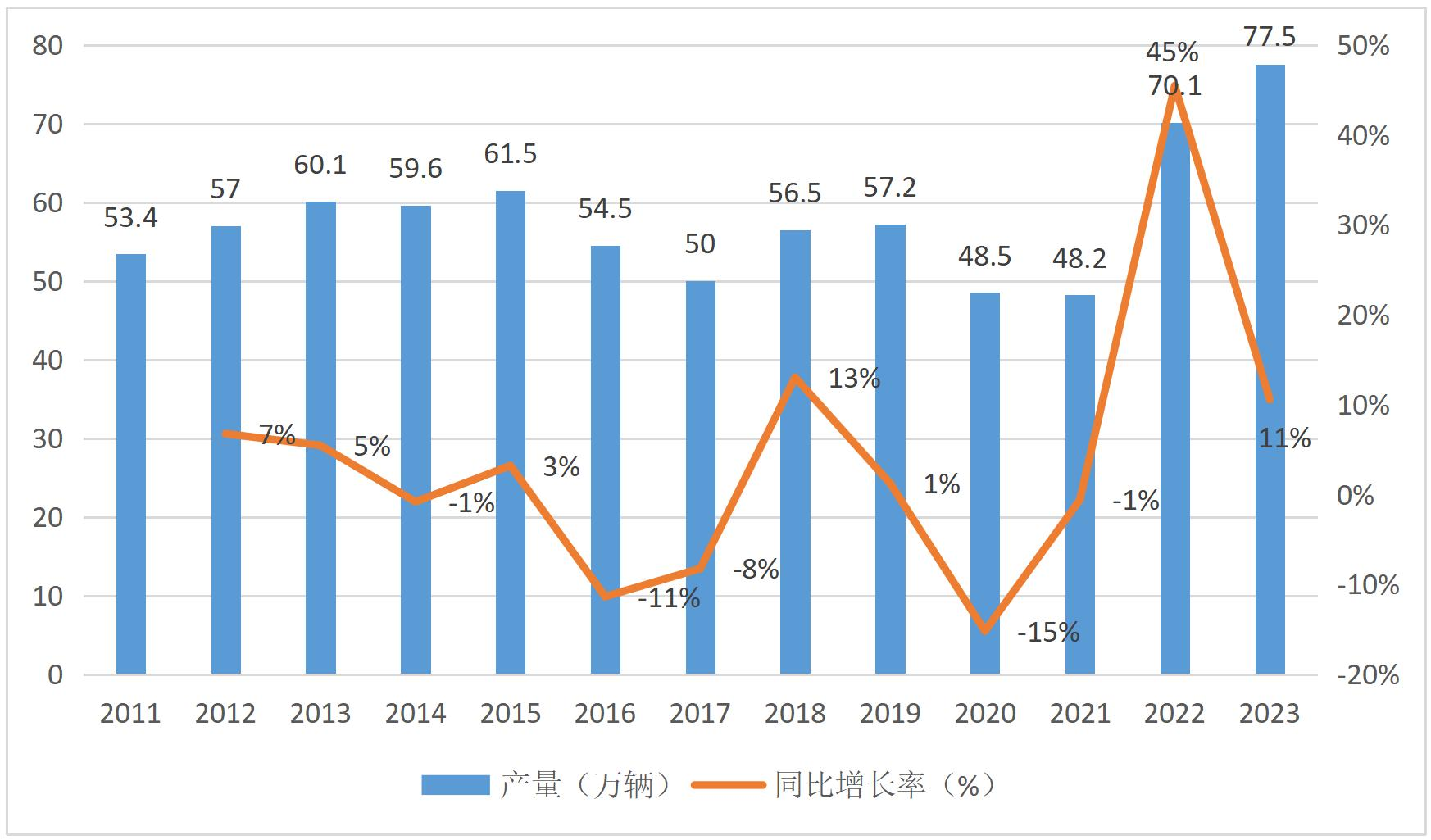
2011-2023 Malaysia's automobile production in 2009
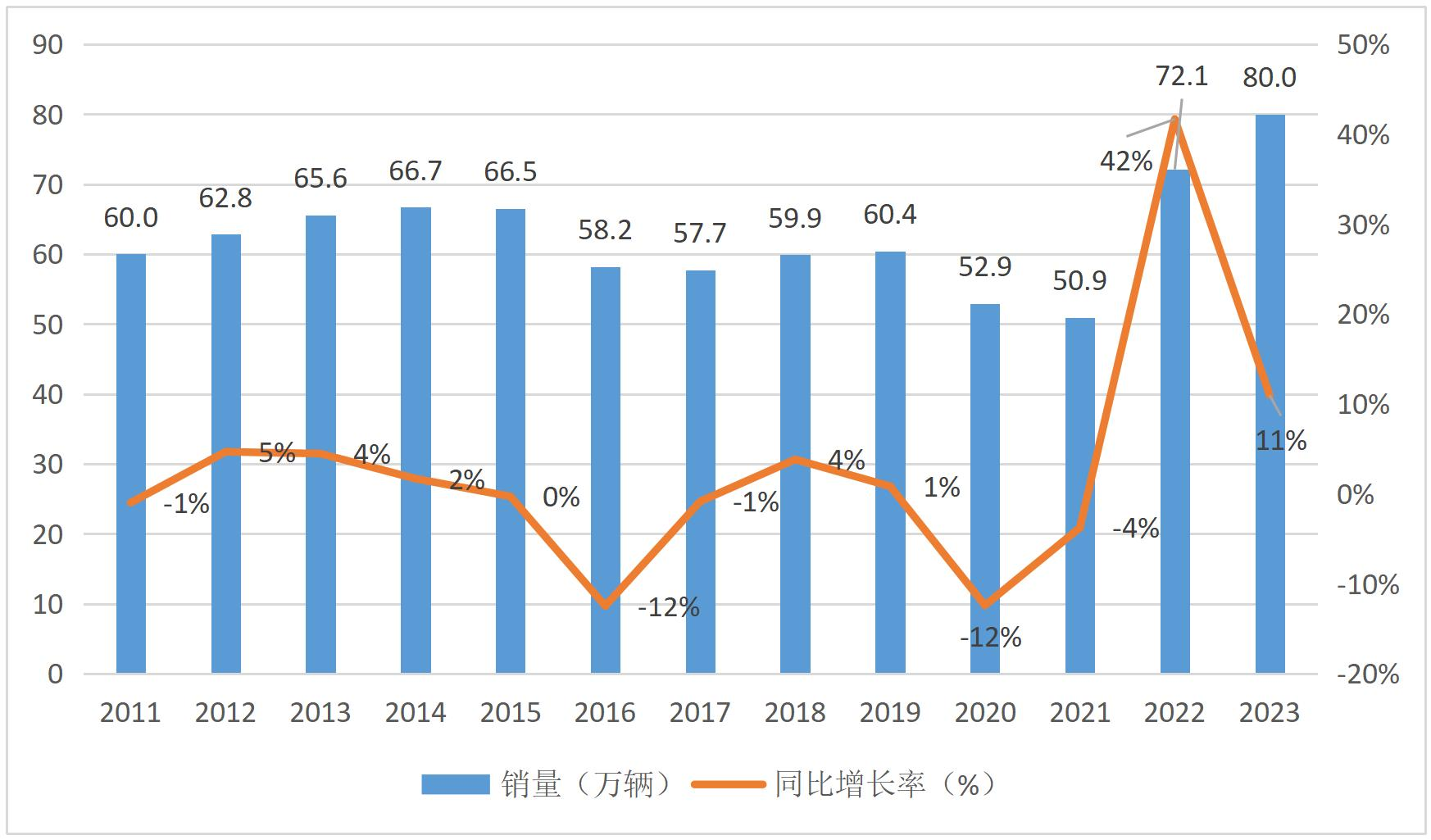
2011-2023 Malaysia car sales in 2009
Source: Marklines
Among the top five Malaysian car sales in 2022, excluding local brands Perodua and Proton, which occupy the first and second place, Toyota sold 100,000 vehicles, accounting for 13.9%; Honda sold 80,000 vehicles, accounting for 11.1%; Mitsubishi Motors sold 24,000 vehicles, accounting for 3.3%; other brands sold 98,000 vehicles, accounting for 13.6%.
In recent years, China automobile companies have accelerated their deployment in Malaysia. In July 2022, Great Wall Motor used Thai production capacity to radiate to the Malaysian market and established a Malaysian subsidiary in Malaysia. In October of the same year, BYD announced the deployment of the Malaysian passenger car market and plans to achieve localized production. At present, China brand companies selling in Malaysia mainly include Geely, Chang 'an, BAIC, Jinlong, Dongfeng, Jiangling, etc. In 2022, the above companies will sell a total of about 4300 vehicles.
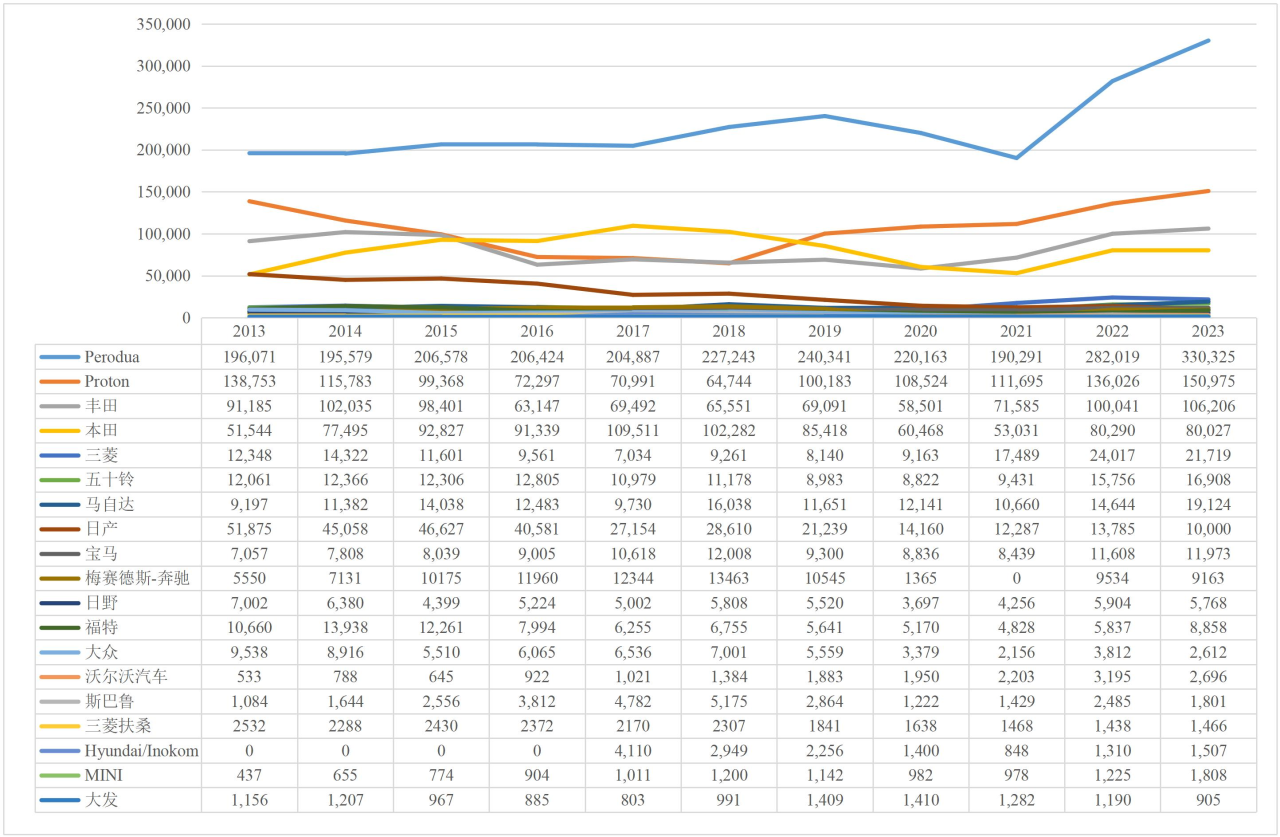
Sales of some brands in Malaysia from 2013 to 2023
Data source: Malaysian Automotive Association (MAA), Marklines Note: Due to the diversity of information sources, there may be omissions or deviations, and the data is for reference only
Malaysia Automobile Import Conditions
At present, the Malaysian government issues a certain amount of automobile import licenses to those eligible for franchised automobile import licenses every year. The amount is 10% of the country's total automobile production in the previous year, that is, the total amount of imported automobiles per year does not exceed the total automobile production in the previous year. 10%.
Malaysia mainly has the following conditions for automobile imports:
1. Import license:
Malaysia has strict automobile import regulations and requires an import license before importing. This permit is issued by the Malaysian Motor Licensing Authority (AP). The application materials include: invoices and packing lists, certificates of origin, vehicle registration certificates, compliance certificates, transportation documents, insurance documents, and import license application forms. Prepare the above materials, submit the application documents to the customs, pay the fees and wait for approval.
2. Vehicle age limit:
Malaysia has certain restrictions on the age of imported cars. Normally, the limit for cars and MPVs is less than 5 years, while the limit for trucks and buses is less than 8 years. In addition, some specific car brands and models may have stricter restrictions.
3. Customs declaration and tax payment:
In accordance with Malaysia's customs declaration procedures, declare the vehicle and pay the appropriate tariffs, excise taxes and other applicable fees. These fees are calculated based on the total value and emission class of the vehicle.
4. Driver's seat position:
In Malaysia, only right-hand steering cars are allowed to drive on the road.
5. Certificate of exporting country:
A certificate from the exporting country of the car needs to be provided to prove that the car is legally registered in the exporting country.
6. Standards and specifications:
Imported cars must provide valid certification that meets Malaysia's safety and environmental standards.
In order to promote the development of new energy vehicles, the Malaysian government continues to launch various measures to establish a sound new energy vehicle consumption ecosystem.
In February 2023, Malaysia once again significantly increased tax incentives for new energy vehicles, with the specific terms as follows:
As of December 31, 2027, import tariffs will be exempted from imported auto parts for local assembly;
As of December 31, 2027, locally assembled electric vehicles (CKD) will be exempted from consumption tax and sales tax;
As of December 31, 2025, all imported electric vehicles (CBUs) will be exempted from import tariffs and consumption taxes;
Charging equipment manufacturers are exempt from income tax for fiscal years 2023 to 2032, as well as a 100% investment tax allowance for five years.
Source: Yangtze River Delta new energy vehicle industry offshore base
This article is reproduced from the Yangtze River Delta New Energy Vehicle Industry Offshore Base and is only used for information sharing. If infringement is involved, please contact and delete it. This site does not bear relevant legal responsibilities.

 Online Evaluation
 I am Buyer
 Export Services
 subsites


 023-62852688
  No. 1-1, No. 2899, Longzhou Avenue, Banan District, Chongqing City
 Headquarters


