
 Chinese
 Russian
 Arabic
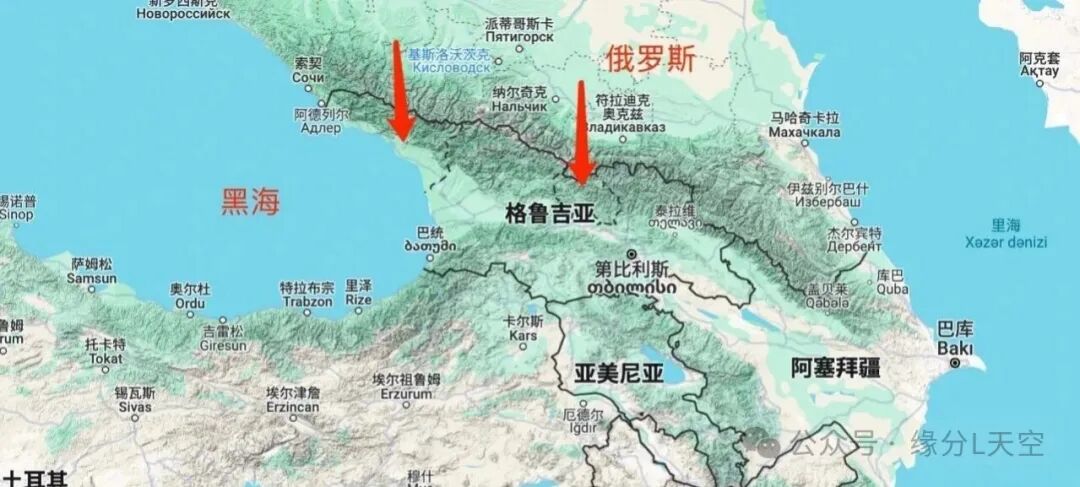
Georgia is located in the central and western parts of the South Caucasus, bordering Russia in the north, Azerbaijan and Armenia in the southeast and south respectively, Turkey in the southwest, and the Black Sea in the west. It has a coastline of 309 kilometers and a land area of 69,700 square kilometers. In January 2024, the population is approximately 3.7 million, mainly Georgian. The official language is Georgian, and most residents are fluent in Russian.
In terms of economy, Georgia's GDP will reach US$30.5 billion in 2023, a year-on-year increase of 7.5%. Among Georgia's economic industries, agriculture and tourism are more prominent, and agricultural products such as wine are well-known in the international market. In terms of foreign trade, the foreign trade volume in 2023 will be US$21.5 billion, a year-on-year increase of 12.5%.
In terms of foreign trade, from January to March 2025, Georgia's largest import was automobiles, with a total amount of US$620 million, accounting for 14.8% of total imports. This was followed by paintings, sketches and pastels (done purely by hand), with a total amount of US$480 million (11.4%), while oil and petroleum oils ranked third, with a total amount of US$301 million (7.1%).
During the reporting period, Georgia's top ten import trading partners together accounted for 73.2% of Georgia's total imports. The main importing partners are the United States (US$654.4 million), Russia (US$587.3 million) and Turkey (US$512.9 million).
Georgia's automobile market
In the first quarter of 2024, Georgia imported a total of 32,200 vehicles, with a total value of 48.6575 million US dollars (approximately 353 million yuan). Among them, there are 547 China cars, accounting for only 1.7% of the total, valued at US$7.824 million. The average price of each China car is US$14,300 (approximately RMB 103,600).
Although Georgia's automobile market is small, thanks to its geographical location (hub of the Eurasian Corridor), low labor costs (US$720/month) and open trade policies (more than 90% of imported goods are exempt from tariffs, and only 12% of tariffs are applicable to agricultural products, building materials, etc.), China automobile companies can quickly enter through the SKD model in the short term and use the free trade agreement between the two sides to reduce tariffs.
The Associated Countries Agreement and the China-Georgia Free Trade Agreement signed between Georgia and the European Union have reduced the cost of trade in automobiles and parts (the bilateral trade volume between China and Georgia in 2023 will be US$2.049 billion, with China's automobile exports dominating).
In terms of new energy vehicle policies, Georgia has incorporated green development into its national strategy (National Energy and Climate Plan 2021-2030). The local government actively encourages the development of electric vehicles, providing subsidies and building charging stations. In addition, the government also plans to build a special market for imported cars from China, which provides good development prospects for China's car exporters.
The overall power supply is relatively stable, providing a certain basic guarantee for the charging of new energy vehicles. As the proportion of renewable energy in the power supply gradually increases, the ability to support the charging of new energy vehicles is expected to be further enhanced in the future.
Warning of risk points in Georgia's automobile market
In terms of brand recognition,internationally renowned brands such as Toyota and Volkswagen have high local visibility and market recognition. Although China brands such as Lifan and Chang 'an have entered the Georgian market, overall brand recognition is relatively low, and marketing promotion and brand building need to be further strengthened.
In terms of local technology ecology,Georgia has extremely weak supporting capabilities in the battery industry chain, lacks local lithium resources, and does not have large-scale battery factories. In terms of the level of intelligent technology research and development, there is a large gap with the international advanced level, making it difficult to provide strong support for the technological upgrading of the automobile industry.
In terms of standard barriers,charging interface standards may be inconsistent with international mainstream standards, making it more difficult to adapt imported new energy vehicles.
In terms of data security regulations,Georgia has its own data management regulations. Foreign automobile companies must comply with local regulations when entering to ensure data security compliance.
In terms of intellectual property rights,Georgia has laws related to intellectual property protection. Foreign automobile companies need to pay attention to the risk of patent infringement litigation locally and ensure that their technologies and products comply with local intellectual property regulations. Regarding localized technology transfer requirements, the government encourages foreign-funded enterprises to cooperate with local enterprises to promote technology transfer and localized production, and improve the technological level of the local automobile industry.
Source: Yangtze River Delta new energy vehicle industry offshore base, Tuyuan Network
This article is reproduced from the Yangtze River Delta New Energy Vehicle Industry Offshore Base and is only used for information sharing. If infringement is involved, please contact and delete it. This site does not bear relevant legal responsibilities.

 Online Evaluation
 I am Buyer
 Export Services
 subsites


 023-62852688
  No. 1-1, No. 2899, Longzhou Avenue, Banan District, Chongqing City
 Headquarters


