
 Chinese
 Russian
 Arabic
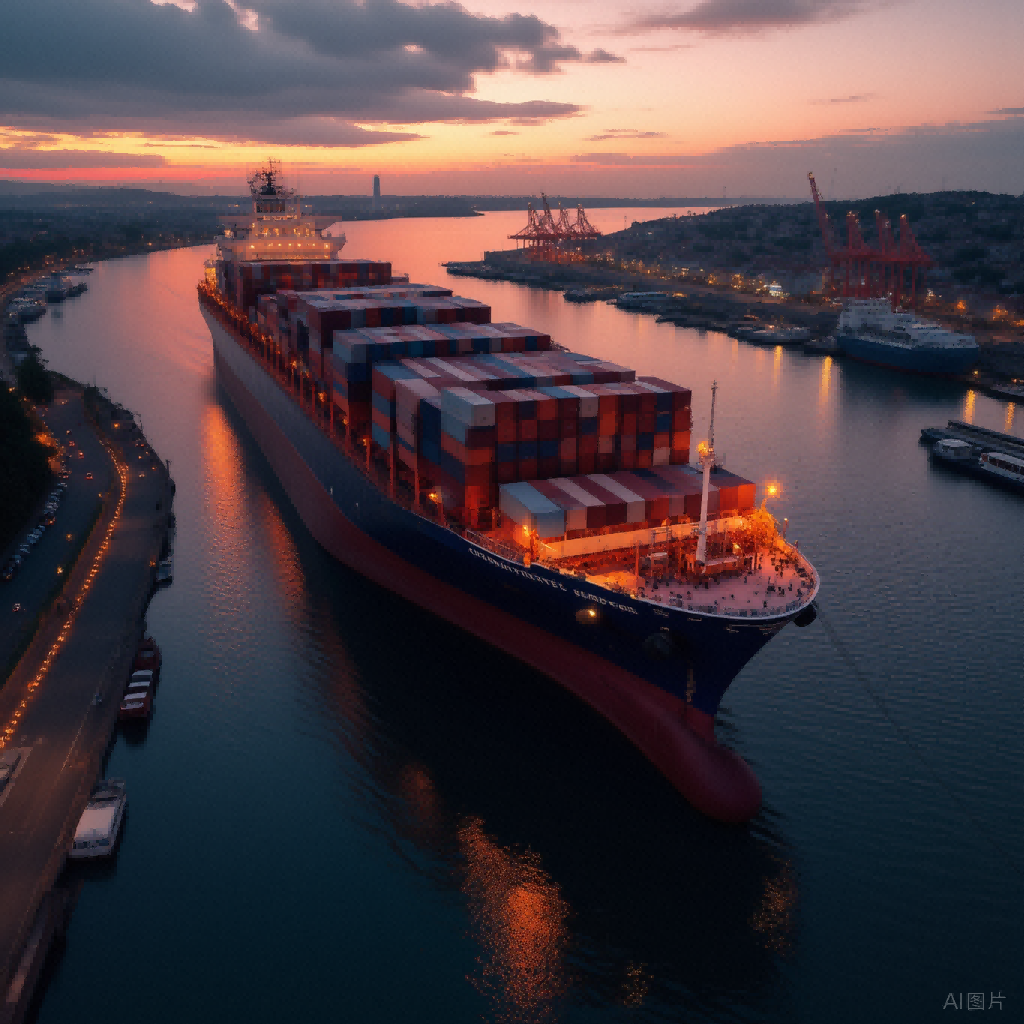
Relying on the dividends of electrification and intelligent industrial transformation, China's automobile exports will hit a new high in 2025, ranking first in global automobile exports for three consecutive years. Industrial globalization has entered a new stage of parallel scale, high-end, and localization. The current industry presents distinctive characteristics of "leading scale, optimized structure, and upgraded brand", but the export quantity advantage has not been completely transformed into the voice of international brands.
Based on the current situation of the industry, in order to achieve high-quality "going to sea", China automobiles need to work hard from three dimensions: ESG social responsibility, industrial chain supply chain coordination, and brand culture communication: automobile companies and supply chain companies must regard ESG compliance as overseas market access. Hard threshold, use the entire industry chain to "go to sea" to consolidate the foundation of overseas production capacity, and use localized narratives to tell the story of warm and powerful China automobile brands.
China's automobile industry must not only continue to strengthen its hard-core scientific and technological capabilities such as vehicle manufacturing, three electric technology, and intelligent driving, but also deepen the construction of brand culture soft power and accelerate the transition from product "going out to sea" and industry "going out to sea" to brand "going out to sea", helping my country accelerate its move towards the ranks of the world's automobile power.
1. China's automobiles have entered a critical period of quality improvement and upgrading
The global automobile industry is in a historical cycle of in-depth transformation of electrification, intelligence and greening. The restructuring of the global industrial chain is accelerating, and geographical trade barriers and regional protection policies continue to increase. Relying on the advantages of a complete industrial chain and the first-mover advantage of new energy transformation, China's automobiles have maintained a high growth trend in "going out to sea". According to data released by China Association of Automobile Manufacturers, my country's total automobile exports in 2025 will be 7.098 million, a year-on-year increase of 21.1%, ranking first in the world's automobile exports for three consecutive years; among them, the export of new energy vehicles will be 2.615 million, a year-on-year increase of 100.2%, and the penetration rate of new energy exceeded 36.8%, becoming the core driving force for export growth. The annual automobile export trade volume exceeded US$92 billion, the average export price of complete vehicles continued to increase, the proportion of exports of high-end models and intelligent models increased significantly, and the "going to sea" structure continued to be optimized.
Objectively speaking, my country's automobile industry has now completely bid farewell to extensive trade exports and entered the stage of quality improvement and upgrading of localized factories, localized operations, and deep branding. However, the industry still faces the structural contradiction of "big but not strong, high volume and low profit". Although the export scale is far ahead, the penetration rate in high-premium high-end markets such as Europe and North America is low. Pain points such as bias from overseas public opinion, carbon tariff barriers, insufficient localized supply chains, and imperfect international compliance systems still restrict the development of the industry.
As the competition among global automobile companies enters an intense stage, the traditional model of relying solely on cost performance and production capacity scale to seize the market is unsustainable. If China's automobiles want to truly gain international industry recognition and heartfelt respect from global consumers, they not only need excellent vehicle products and independently controllable core technologies, but also need a high-standard ESG governance system and a highly coordinated industrial chain layout and an international brand image with cultural heritage.
Based on the new stage of industry development, China's automobile industry should build a new "going out to sea" system of "responsibility empowerment + synergy + cultural soul building" and embark on a high-quality, sustainable and standardized global development path.
2. ESG is the core enabling factor for China automobile brands to "go out to sea"
Against the background of accelerating low-carbon development and improving market access standards around the world, ESG has transformed from a bonus for corporate development to a rigid entry threshold for China cars to "go out to sea." Mainstream overseas markets such as Europe and the United States regard environmental governance, social responsibility, and corporate governance as the core evaluation criteria for the access, cooperation, and investment of foreign automobile companies. The ESG level directly determines the overseas viability and development space of enterprises.
From an environmental perspective, green and low-carbon are the development background of the automobile industry. Domestic automobile companies need to integrate low-carbon concepts throughout the entire life cycle of R & D, production, manufacturing, and recycling, and build a sound carbon management system. At present, leading car companies have established a global carbon footprint traceability system, strictly benchmarking against stringent standards such as the EU CBAM carbon border adjustment mechanism and EU battery regulations. For example, BYD's Hungarian Green Factory and Geely's British Low-Carbon Manufacturing Base fully adopt clean energy production, water resource recycling, and zero-carbon emission control. They use world-class green manufacturing standards to circumvent overseas green trade barriers and become overseas low-carbon production benchmarks for China companies.
From a social perspective, localized symbiosis is the key to long-term roots of an enterprise. "Going to sea" car companies must respect local laws, regulations, cultural customs, actively integrate into local society, absorb local labor, and drive the development of local parts and components industry clusters. In 2025, the proportion of overseas and local employees in mainstream automobile companies such as Great Wall, Chery, and SAIC will generally exceed 75%. At the same time, they will actively carry out social activities such as road public welfare, new energy science popularization, and people's livelihood assistance, deeply integrate into the local people's livelihood system, and complete the transformation from foreign-invested enterprises to local partners and consolidate the foundation of long-term stable social trust.
From a governance perspective, compliance operations are the bottom line of global operations. Automobile companies need to improve their modern corporate governance structures, standardize overseas business processes, strictly control trade compliance, legal compliance, and financial compliance risks, eliminate vicious competition, illegal operations and other behaviors, and establish an honest and reliable image of Chinese companies through standardized governance.
All in all, ESG and corporate social responsibility are the core starting points for China automobiles to break down barriers of overseas trust and realize value export. Only by adhering to green development, fulfilling social responsibilities, and standardizing corporate governance can we continue to improve brand credibility and empower and increase efficiency for global development.
3. Supply chain collaboration is a solid foundation for enterprises to "go out to sea" together
The automobile industry has a long chain, high correlation, and strong driving force. It is difficult for a single automobile company to cope with complex and ever-changing overseas market risks alone. Current problems such as increasing international trade frictions, fluctuating logistics costs, and lack of overseas supporting facilities continue to test the comprehensive ability of "going out to sea" enterprises to withstand pressure. In this context, the upstream and downstream of the industrial chain collaborate to "go out to sea" and develop together, which has become an inevitable choice for China's automobiles to stabilize overseas markets and reduce operational risks.
Vehicle companies and parts companies are interdependent and co-prosperous. In the past two years, the domestic "complete vehicle + parts" collaborative "going out to sea" has accelerated significantly, forming a large-scale overseas industrial cluster. Representative by SAIC Thailand Industrial Park and Chery Mexico Industrial Base, leading automobile companies have taken the lead in driving domestic core component companies such as chassis, electronics and electrical appliances, thermal management, and battery materials to simultaneously land overseas, sharing land production capacity, logistics and warehousing, and local channels, and greatly reducing the cost of "going out to sea" alone. Data shows that last year, more than 230 parts and components companies in my country went to sea with complete vehicles, and the overseas localization matching rate continued to rise, effectively solving the industry pain points of lagging overseas parts supply and high costs.
Parts and components companies need to keep up with the pace of complete vehicles going to sea, benchmark international standards, continue to upgrade manufacturing processes, optimize product performance, and develop supporting products that adapt to overseas road conditions, regulations, and usage habits. Strengthen self-research capabilities in technology, make up for shortcomings in high-end parts, and jointly improve the comprehensive competitiveness of China's automobile industry chain.
At the industry level, self-discipline and guidance should be strengthened, and industry associations should be relied on to build platforms for information sharing, risk early warning, and experience exchange. Standardize the order of "going out to sea" competition, eliminate bad behaviors such as low-cost involution and malicious competition, and promote the misplaced development of enterprises and complement each other's advantages. Holding a group to "go out to sea" is not a simple gathering of enterprises, but resource integration, coordinated efforts, and joint risk resistance to build a solid industrial chain foundation for China's automobile industry to "go out to sea".
4. Telling the story of China brands well is the key path to win the global market
In the early years, China's automobiles left a stereotype of low-end, affordable, and low-quality in the international market. Brand shortcomings have become the core pain point that restricts the high-quality "going out to sea" of my country's automobile industry. According to horizontal comparison data on global brand trust released by an institution, there is still a gap between the global brand trust of China brands and German and Japanese brands. The technical level of China's automobile export products is not low, and the breakthrough in export volume is even more exciting, but the brand reputation needs to be improved. Sales volume can open up the market, and brands can win respect. The "going to sea" of China's automobiles is not only a global export of products, technology, and production capacity, but also a global dissemination of culture, concepts, and values. Telling the story of China automobile brands well is a key path to break prejudice, create image, and enhance brand premium.
First of all, the brand story must be based on hard-core technology and demonstrate the strength of "China Intelligent Manufacturing". All brand communication must be based on high-quality products and core technologies, and rely on my country's leading advantages in the fields of power batteries, high-voltage fast charging, intelligent driving, vehicle architecture, smart cockpit and other fields to visually display industrial innovation results. At this stage, my country's self-developed blade batteries, global 800V high-voltage platforms, urban NOA intelligent driving, global thermal management systems and other technologies have realized large-scale overseas loading, completing strict road conditions and climate measurements in Southeast Asia, Latin America, and European markets. With true technical performance, reliable product quality, and all-weather after-sales protection, we rewrite the inherent perceptions of overseas consumers and consolidate the brand's hard power.
Secondly, the brand story should incorporate the humanistic temperature and convey the oriental cultural heritage. It is necessary to dig deep into the ingenuity spirit and iterative and enterprising innovation culture that China's automobile industry has adhered to for decades, and integrate Chinese minimalist aesthetics, oriental ergonomics, and warm and restrained design language into vehicle shape and interior research and development. At this stage, NIO's European user service system, BYD's global motorists community, and SAIC MG's overseas cultural activities all focus on the needs of localized people, tell the real stories of ordinary overseas users 'cars, travel, and life, and use empathy narratives to resolve cultural barriers., create an international China automobile brand with warmth, emotion and heritage.
Finally, communication methods must be in line with the international discourse system. Abandon the rigid one-way publicity model, adapt to the logic of overseas communication, and use overseas mainstream media, social platforms, industry exhibitions, authoritative KOL and other communication channels to carry out diversified, precise and localized communication. Tell the development history, technological achievements, and social responsibilities of China's automobiles in a way that overseas audiences can understand and are willing to see, and create a true, three-dimensional and high-quality image of China's automobile industry.
At present, China's automobile industry is standing at a critical historical juncture from large to strong. The wave of "going out to sea" is vast, and opportunities and challenges coexist. ESG social responsibility is the value rudder for the industry's long-term voyage, supply chain collaboration is the cornerstone of the industry for stable and long-term development, and brand culture is the spiritual soul of cohesion and trust enhancement. The entire industry must abandon low-cost "involution" and disorderly competition, work together and work together, continue to improve the global production, R & D, sales, and service layout, steadily increase the voice of the international industry and the premium of high-end brands, and accelerate the construction of a world-class automobile industry cluster allows China cars to ride on the global mainstream track and contribute solid and profound China power to the innovation and development of the world automobile industry.
(The author Anqing Heng is director of the China Automobile Industry Advisory Committee)
Source: China Automobile News
Statement: The copyright belongs to the original author. If you believe that content is infringing, please contact us.

 Online Evaluation
 I am Buyer
 Export Services
 subsites


 023-62852688
  No. 1-1, No. 2899, Longzhou Avenue, Banan District, Chongqing City
 Headquarters


